
AC Maintenance in Emmett, ID
Air conditioners here run from July through August, so June is the time for a tune-up. Tell us about your system, and a licensed contractor who covers Gem County will get in touch.
Tell us about the job
It takes about a minute.

Two months of hard work after months of sitting
Your air conditioner in Emmett only has to work July and August, when afternoons average 85°F. Most of the year it sits idle, and a system that sits that long doesn't always start up clean when the heat arrives. A tune-up before summer catches a dirty coil, a weak capacitor, or a loose connection before the first hot day asks the system to prove itself.
Gem County has also logged 12 damaging wind events over the past ten years. Wind like that can rock an outdoor unit, loosen panels, or blow debris into the coil, and none of that shows up until the system is asked to run.
- 2 months
- July through August, your air conditioner is on duty
- 85°F
- the average summer afternoon it cools against
- 1 hail events
- in ten years, and hail bends the fins on outdoor coils
- 12 wind events
- in ten years, and wind drives debris into outdoor units
NOAA nClimDiv, 1991–2020 normals

Book your AC tune-up in June, before homes here start needing cooling in July.
- Jan
- Feb
- Mar
- Apr
- May
- Jun
- Jul
- Aug
- Sep
- Oct
- Nov
- Dec
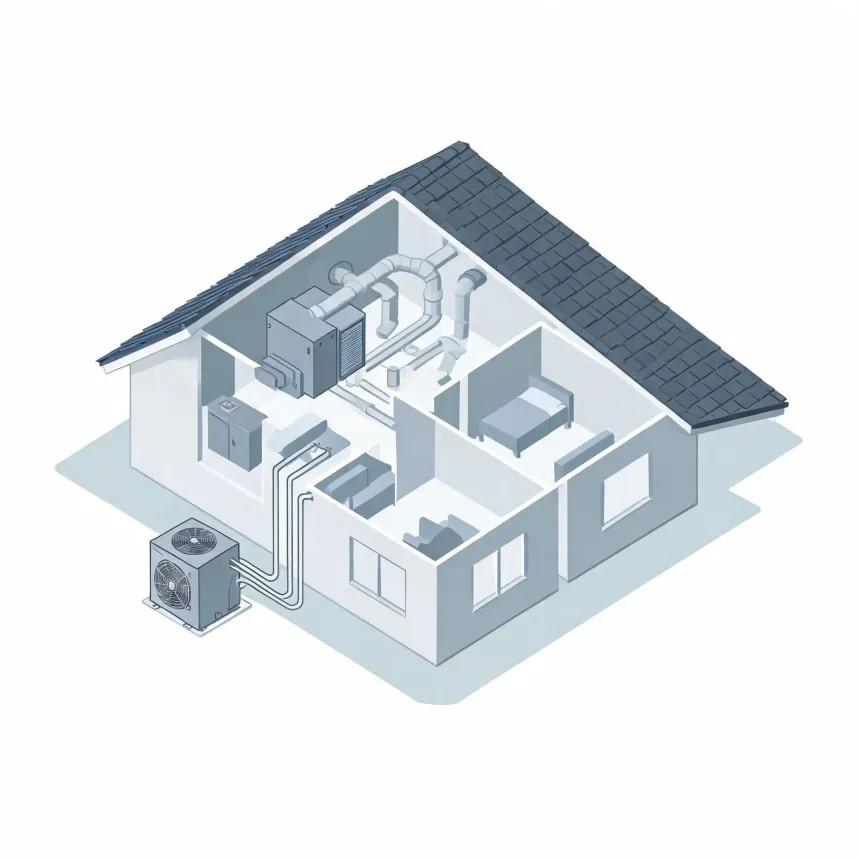
A tune-up checks the refrigerant charge, cleans the coils, tests the capacitor and tightens the electrical connections.
Idaho requires HVAC contractors to hold a state license.
The state license is issued to the contractor, not to each job, so it stays with the business across every service call rather than getting reissued for this particular visit. The HVAC Board is the body that tested and licensed them in the first place, and Gem County falls under that same statewide rule.
For a maintenance visit, that license is what stands behind the person in your home. If the work involves opening up the refrigerant side of your air conditioner, checking pressures or handling the coil, the technician also needs EPA Section 608 certification, which is a federal requirement that applies no matter what state you're in.
Sources: Idaho Legislature · Idaho Division of Occupational and Professional Licenses
- What does AC maintenance include?
- A technician checks refrigerant pressure, cleans the condenser coil outside, and inspects the electrical connections and capacitor. They also check the blower and the filter, and run the system to see if it's cooling the way it should. Anyone touching the refrigerant lines has to hold an EPA Section 608 certification, so that part of the job is never optional to skip properly.
- How often does an air conditioner need maintenance?
- Once a year, ideally before the weather turns hot. Here that means getting it done before July, since your cooling season only runs through July and August. A checkup before that stretch catches a weak capacitor or a dirty coil while there's still time to fix it before you need the system every day.
- Is AC maintenance worth it?
- Yes, because most breakdowns trace back to something small that maintenance would have caught. A dirty coil makes the compressor work harder, and a weak capacitor can strand you on the one week you need cooling most. With only two months of real cooling season here, you want the system working on the days you actually need it, not down for repair.