Idaho HVAC Pros
A broad sagebrush plain under a clear pale blue sky, with a forested mountain ridge and rocky peaks rising along the right horizon.Hand it off

Does closing vents save heat in an Idaho home

One request and finding someone for the tune-up is handled.

Closing the vents in a room you don't use sounds like it should save gas. It doesn't work that way. Your furnace moves a set amount of air, and closing a vent just forces that air somewhere else or back against the blower. It doesn't burn less gas because a few rooms are shut off.

What it can do is cause trouble. Furnaces are built to push air against a certain amount of resistance. Close enough vents and you raise that resistance past what the system expects. Air that can't get out through the ducts can leak out around the furnace cabinet instead, or push back through the return side. Over a winter in Idaho, running a furnace that way puts strain on the blower motor and can crack a heat exchanger that was never built for that pressure.

If a room runs cold, the vent usually isn't the problem. It's more often a duct that was never balanced right for that room, or a return that's too small for what the furnace is trying to move. Someone who services furnaces for a living can check the static pressure and tell you whether your ductwork is actually set up to handle a closed vent, or whether it's fighting the furnace even with everything open.

That's the kind of thing worth having a local contractor look at, someone who works on Idaho furnaces all winter and has seen what a blower motor looks like after a season of fighting bad airflow. Send the request and you're done with the search part of this. One licensed contractor in your area gets it, not five companies competing for the callback. You stop hunting for a name and move on with your evening.

Closing a vent doesn't save gas, and in a lot of Idaho homes it causes a new problem. Your furnace is sized to move a certain amount of air through the whole duct system. Shut a vent and that air has to go somewhere. Some of it pushes back toward the blower, raising pressure inside the ducts. The furnace keeps running the same cycle to reach the temperature on your thermostat, so it burns the same gas whether that room gets warm or not. The real effect shows up as strain: ducts can leak more at the seams under that extra pressure, and the blower works harder against it. Over a winter of that, you're more likely to see a cracked seam, a struggling blower motor, or a furnace that short cycles. None of that shows up on the gas bill right away. It shows up as a repair.

A gray metal furnace with louvered vent panels stands on a concrete basement floor beside galvanized ductwork, gas and plastic pipes, and foil-faced insulation along the ceiling and wall.
Before you get your furnace maintenance
A basement utility area with a gray furnace, sheet-metal ductwork, pipes, plastic-covered walls, a concrete floor, and a black shelving unit holding storage bins.
After you get your furnace maintenance

Your furnace has one blower moving one set volume of air, and that air has to go somewhere. Close a vent and the duct system pushes back against the blower instead of releasing that air into the room. The pressure has to find a way out. Sometimes it finds a loose duct joint and leaks warm air into the attic or crawlspace before it reaches any room. Sometimes it backs into the return side and passes over the heat exchanger more times than the furnace was built for. The blower motor feels that resistance too. It can draw more current trying to push air through a system that's fighting it, and that shows up on your electric bill even though the furnace itself runs on gas. Meanwhile the room next to the one you closed off often gets colder, not warmer, because the air that should have gone there is tied up pushing against ductwork instead. None of this is about willpower or waste. It's airflow behaving exactly as the pressure and the ducts direct it.

What Closing A Vent Actually Does

  • Your furnace runs a blower fan built to move a fixed volume of air, measured in cubic feet per minute, across its duct system.
  • Closing a vent raises static pressure in the ducts, and that pressure works against the blower rather than reducing its workload.
  • Higher static pressure can push warm air out through gaps in duct joints before it ever reaches a room you do use.
  • Some of that redirected air works back through the return side and can run across the heat exchanger more than it was designed to.
  • A blower working against higher resistance can draw more amps, and that shows up on the electric side even though your heat is gas.
  • Rooms next to the closed one often end up colder, because the air that would have warmed them is now stuck fighting pressure instead.
A gray furnace with white PVC vent pipes stands beside sheet-metal ductwork in a basement with a smooth concrete floor, exposed wood framing, and plastic sheeting on the walls.
Leave the vents open and the furnace pushes air through the ducts the way it was set up to, no extra strain on the blower.
A beige furnace with two access panels stands against a concrete basement wall, with galvanized sheet-metal ductwork, a white PVC pipe, flexible conduit and insulated ducting around it.
Close enough vents and the pressure backs up through the system, the kind of strain a yearly check would catch early.
A man in a gray sweater reclines in a brown leather armchair with his eyes closed, beside a wooden side table holding a mug, a folded newspaper and a potted plant, with a bookshelf and sunlit window behind him.
A man with greying hair and a dark sweater leans back on an armchair with his eyes closed and a slight smile, in a living room with a bookshelf, plant, folded newspaper and mug on a wooden table.
A man in a gray fleece jacket sits reclined in a leather chair with his eyes closed, in a room with bookshelves, a table lamp, a window, and a desk holding a folded newspaper and a dark mug.
A bearded man in a gray fleece pullover sits with eyes closed in a brown leather armchair in a living room, with a floor lamp, bookshelf, potted plants, a side table holding newspapers and a dark mug, and a bright window behind him.

One request and it's handed off

A licensed local pro takes the request for your furnace tune-up.

No charge to send it. You decide if you hire them.

The gable end of a dark wood-clad building with a thick layer of snow on its roof, with snow-covered conifers and falling snowflakes behind it under a pale sky.

Statewide, winter nights here average 22°F, according to NOAA climate data. That kind of cold means your furnace is running long stretches, not just quick bursts in the morning and evening. The colder the air coming into the return, the harder the blower works to bring it up to temperature, and the more hours it logs doing it. Close off a vent somewhere in the house during a stretch like that and the pressure it creates has more time to work against the system, not less. You'd likely notice it first as a room that won't hold heat, or a furnace that seems to run longer than it used to for the same result.

NOAA nClimDiv 1991-2020 county normals weighted by homes

Is one room in your house still cold no matter what?

You closed a vent or two in a spare room to save money, but now the furnace seems to be working harder, not less. You might notice a hot, stuffy smell near the furnace closet, or the blower running longer than it used to before it shuts off. Rooms near the ductwork can feel warmer than usual while the room with the closed vent never warms past cold. If this goes on through a full winter, the pressure that builds up has somewhere to go, and over time that strain on the blower and the seams in your ductwork is what a yearly check is built to catch before it turns into a repair.

A dark high-efficiency furnace on a concrete pad in a basement, connected to galvanized ductwork, white PVC vent pipes, and copper and black gas piping, with concrete walls and wood framing nearby.

Furnace with the vents open

Air moves through the ducts the way the system was built for. The blower runs at the pressure it was set to, the gas line and condensate drain do their jobs without added strain, and nothing is pushing back against the cabinet.

A gas furnace with a louvered upper panel stands on a concrete pad in a basement, flanked by sheet-metal ductwork, white PVC and metal pipes, and insulated columns.

Furnace fighting closed vents

Here the air has fewer places to go. The blower works against higher pressure in the ducts, and a furnace built decades ago has less room to absorb that before a part gives out. A yearly check catches it before it does.

Why does closing a vent make the furnace work harder?

You closed the vent in the guest room expecting to save a little gas. Instead the furnace sounds like it's running longer, and you've started to wonder if you made things worse instead of better. It's a fair thing to notice, because a furnace isn't just blowing air into one room at a time, it's moving one steady volume of air through the whole house at once, and that's the part that changes when a vent shuts.

It raises the pressure the blower has to push against

A closed vent doesn't stop air, it dams it up. The blower is still pulling in the same volume of air it was built to move, so when one path closes, that air backs up into the ducts and pushes against the blower housing instead of flowing out into the room. The motor has to work harder to move the same amount of air through a smaller number of open vents. Close two or three in an Idaho winter, with the furnace already running long stretches against nights near freezing, and that extra strain adds up over the whole season. A technician checking static pressure during a tune-up would catch this before it wears on the blower motor.

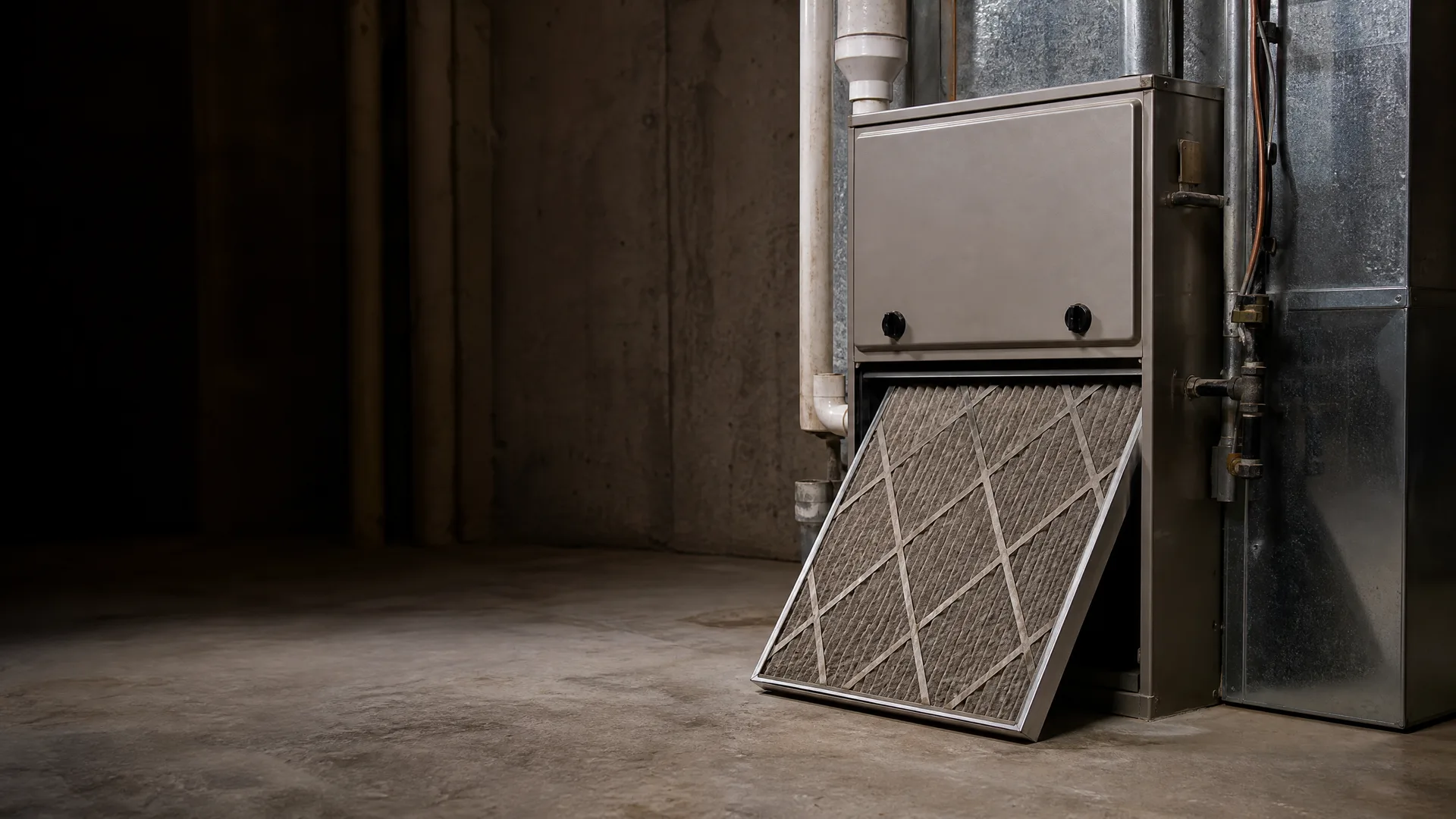
A dirty pleated air filter leans against a furnace with metal ductwork in a dim concrete basement.

You're down in the basement on an October afternoon, pulling the filter to check it before the cold really sets in. It slides out grey, coated thick with dust, the kind that builds up over months without anyone noticing. You hold it up to the bulb overhead and can barely see light through it. You think back to the spare room vent you shut last winter to save a little gas, and wonder if that had anything to do with this. The furnace ticks as it cools behind you, waiting on a new filter before it runs again tonight.

Winter nights average 22°F statewide

At 22°F, your furnace is cycling on for long stretches most winter nights, not quick bursts. Closing vents to save gas adds backpressure right when the blower is already working its hardest to keep up with that cold.

NOAA nClimDiv 1991-2020 county normals weighted by homes

Leave the Vents Open

  • Closing a vent does not lower your gas use, since the furnace still moves the same volume of air.
  • Shut vents push air back toward the blower and raise pressure inside the duct system instead of reducing the furnace's workload.
  • Idaho winter nights average 22°F statewide, so the furnace is already running long stretches to keep up.
  • A stuffy smell near the furnace closet or a blower that won't shut off points to pressure building up somewhere in the ducts.
  • Leaving every vent open lets the system run at the pressure it was built for, with no added strain on the blower or gas line.
  • A yearly furnace check catches the kind of strain closed vents cause before it turns into a bigger repair.

So no, closing vents does not save you anything on gas. Your furnace is built to move a set volume of air through the whole duct system, and that doesn't change because a door is shut in a spare room. What changes is where the air goes when it can't get out where it's supposed to. It backs up, pushes against the blower, and raises the pressure inside ducts that weren't built to hold it. On a 22°F night, with the furnace already running long stretches to keep the house warm, that's the last thing the system needs working against it. A stuffy smell by the furnace closet or a blower that won't cycle off are both signs the air isn't moving the way it should. None of that shows up because you're saving fuel. It shows up because the system is straining against itself. The fix isn't complicated. Open the vents, all of them, and let the furnace run the way it was set up to run. That's the only way the blower and the gas line work at the pressure they were designed for, without anything pushing back. Where the real savings come from is maintenance, the kind that catches a clogged filter or a blower pulling too hard before it turns into a repair you didn't see coming. A furnace that's been checked going into winter is one less thing to worry about once the cold settles in for good.

An older man with gray hair and a beard leans back on a beige sofa with his eyes closed, in a sunlit room with potted plants, a wicker chair and large windows behind him.
A woman in a cream knit sweater sits in an armchair with her eyes closed and a slight smile, beside an open window showing orange autumn foliage, with a mug, books and a lit candle on a small side table.

Furnace Maintenance

Done looking for a furnace pro

Only one pro gets your request, so you hear from one company.

A black-framed smartphone standing upright against a plain white background, its screen filled with solid green.
Tune-up, service, or cleaningFurnace or heatingIdaho
Step 1 of 2

What ZIP code is the job in?