Why your heat won't reach upstairs in Idaho

RepairFurnace or heatingIdaho
Step 1 of 2

What ZIP code is the job in?

Upstairs stays cold because heat rises and your furnace was likely balanced for the ground floor, so the second story gets whatever warm air makes it up the ducts last. In a lot of Idaho houses the upstairs runs on a longer duct branch, and air cools and loses pressure the farther it travels, so by the time it reaches the top of the stairs it's weaker than what's blowing out downstairs. A closed or undersized return vent upstairs makes it worse, since the furnace can't pull cold air back down to recirculate it. None of this means the furnace is failing. It usually means the airflow was never balanced right for a two-story layout, or a damper, blower setting, or duct run needs adjusting. Left alone through a hard Idaho winter, the gap between floors tends to get worse, not better, as the system works harder to compensate and still leaves the upstairs short.

A dark interior hallway with a dim window at the end, a wooden floor, a stair railing on the right, and a bench or rug in the foreground.

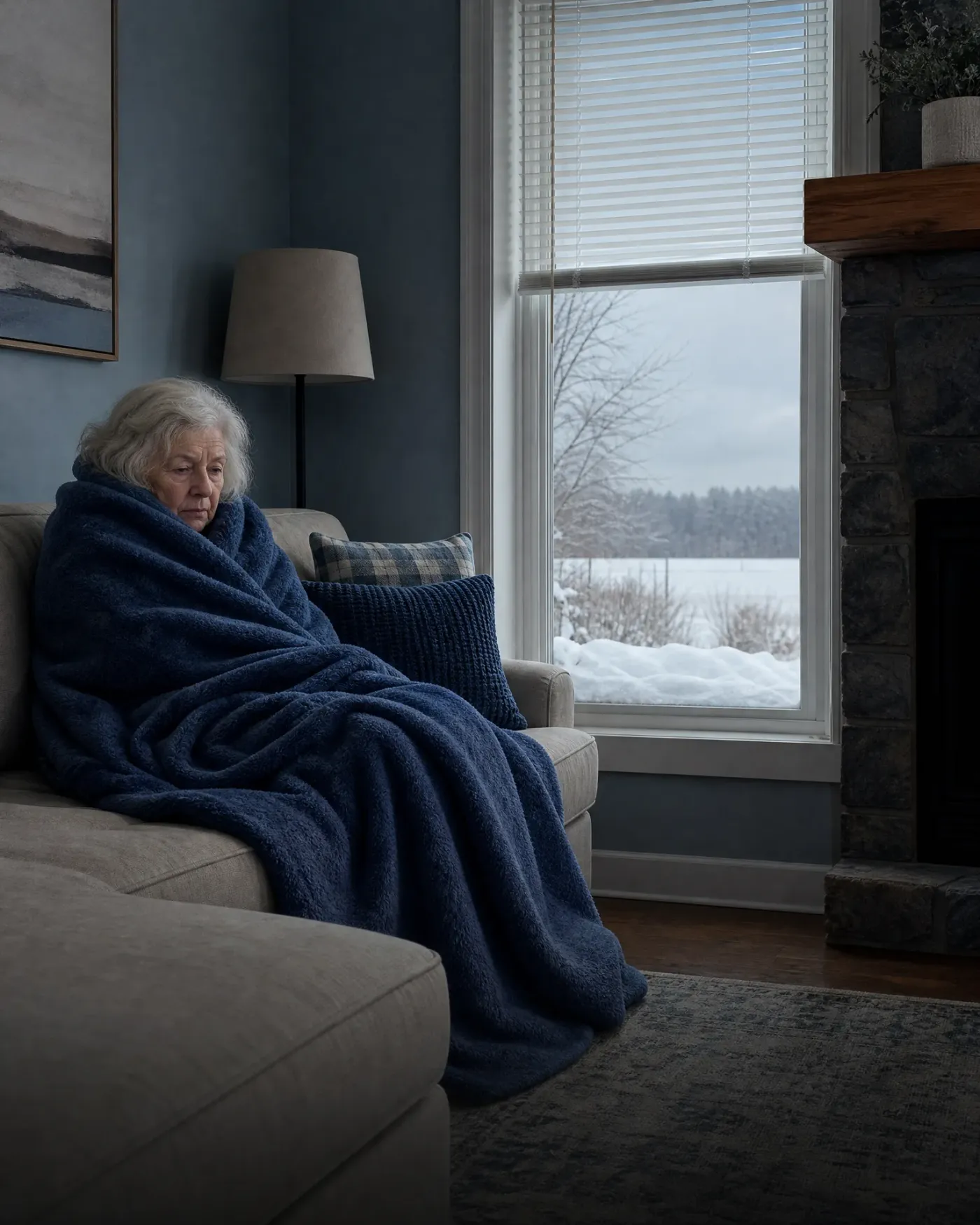
You wake up at 2 a.m. because your feet are cold outside the blanket. The house is quiet. Down the hall the floor vent isn't ticking or humming, just sitting there silent, and when you hold your hand over it there's nothing coming up. Outside the window the frost has crept in from the edges, thick enough that you can't see the street. You walk the hallway in socks and the cold comes right through the floor. Downstairs the furnace is running, you can hear it faintly through the vents. Up here it isn't doing much good at two in the morning in January.

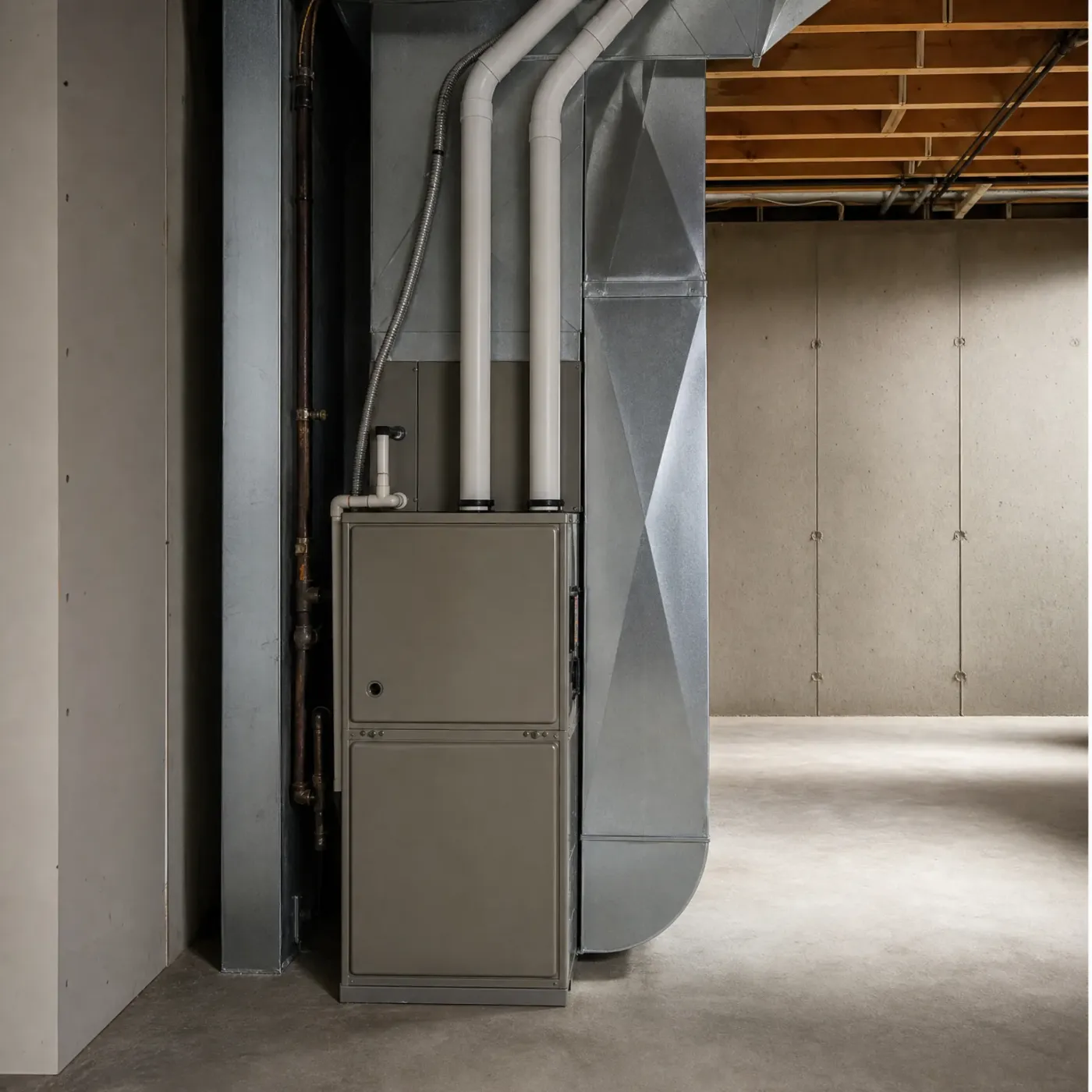
A gray high-efficiency furnace with white PVC vent pipes stands beside sheet-metal ductwork and a water heater in an unfinished basement with concrete walls and wood framing.
A furnace with a balanced duct system pushes enough air up to the second floor to keep pace with the heat loss on a cold Idaho night.
A beige gas furnace with a metal flue pipe stands in a basement against concrete block walls, beside sheet-metal ductwork, copper and white plastic pipes, and a water heater at right.
A furnace that's lost its balance over time sends less and less air upstairs, leaving the branch that feeds those rooms running weak.

Your furnace has one blower moving air for the whole house, not a separate setting for upstairs. That air has to travel further to reach the second floor, through more duct and more turns, and it loses pressure along the way. Dampers inside the trunk lines are supposed to correct for that, sending more air to the longer branch, but they get bumped during other repairs or closed years ago and forgotten. A dirty filter makes the problem worse before you'd notice it downstairs, because the branch with the least pressure to begin with is the first to lose airflow when the whole system is choked. Upstairs also needs a way to pull air back down to the furnace. Without a return grille up there, the blower is pushing air into a room with nowhere for it to go, so less arrives in the first place. Sometimes the air gets most of the way and leaks out through a duct joint that's worked loose in the attic or inside a wall, warming space it was never meant to heat.

Why Airflow Favors the Ground Floor

  • A furnace blower runs on a fixed speed set for the whole duct system, not for one floor over another.
  • Dampers inside the trunk lines are supposed to be adjusted so each branch gets its share of air, and they can get bumped or left closed from past work.
  • The upstairs branch usually runs longer and through more turns than the ground floor branch, so static pressure drops off before the air gets there.
  • A clogged filter cuts total airflow first, and the longest branch feels that loss before the rooms closest to the furnace do.
  • Return air matters as much as supply; if the upstairs has no return grille pulling air back down, the blower has nothing to push against up there.
  • A duct joint that's come loose in the attic or a wall cavity lets heated air escape before it ever reaches the upstairs vents.
A woman in a cream cowl-neck sweater sits by a window with snow outside, in a dimly lit living room with a sofa, lit lamp, mirror, candles and a fireplace.
A woman in a gray turtleneck sweater sits beside a large window looking out at snow-covered evergreen trees, in a dimly lit living room with a lit fireplace, lamps, couch and houseplant.
A woman in a cream turtleneck sweater stands beside a large window with snow-covered ground and bare trees outside, in a dimly lit living room with lamps, a sofa and framed art.
A woman in a grey cowl-neck sweater stands indoors near a window, looking out at falling snow, with a lamp, framed picture and couch in the warmly lit room behind her.

Get your furnace to the right pro

Describe what your furnace is doing once, in one form.

You're not committing to anything by asking.

What's Actually Happening in Your Ducts

  • Cold air near the floor registers means the duct run to the second floor has slipped open, pulling warm air back down before it reaches the room.
  • Static pressure builds when a filter clogs, and the blower sheds that extra resistance by sending less air through the longest branch, which is almost always upstairs.
  • A return air grille upstairs that's too small or blocked forces the blower to work against itself, so supply air backs up and never makes the trip.
  • Insulation wrapped around attic ductwork slows heat loss along the way, and where it's thin or missing the air arrives cooler than it left the furnace.
  • Zoning dampers, if your system has them, fail most often in the closed position, which starves the upstairs branch while the rest of the house stays warm.
  • A duct run with too many turns adds friction the blower has to overcome, and the upstairs branch usually has more turns than the one feeding the main floor.

Your furnace has one blower moving air through every branch of the duct system, and that branch running up to the second floor has a harder job than the one feeding the main floor. It's longer, it usually has more turns, and every turn is a place the moving air loses some of its push. If a seam in that run has worked loose, which happens over years as metal expands and contracts with the heat, some of the warm air meant for upstairs leaks out into the attic or a wall cavity before it ever reaches a register. Check the filter too. A clogged one raises the resistance the blower is pushing against, and the blower responds by sending less air down the longest, hardest path, which is almost always the one going up. If there's a return grille upstairs, look at its size. A return that's too small for the rooms it serves backs up the whole loop, so supply air has nowhere to go and stalls before it arrives. Where the ductwork runs through the attic, bare or thin insulation lets heat bleed out along the way, so what left the furnace warm arrives upstairs cooler than it should. And if the system has zone dampers, those fail shut more often than open, which would explain a branch that gets nothing at all rather than just less than it needs.

An older beige furnace with two louvered vent panels stands on a concrete basement floor, connected to galvanized ductwork and a metal flue pipe, with gas piping and flexible conduit on the wall behind.
Before you get your furnace repair
A beige high-efficiency furnace in an unfinished basement, with white PVC vent pipes, a yellow gas line, metal ductwork, and exposed wood framing on a concrete floor.
After you get your furnace repair
A gray high-efficiency furnace in a basement, connected to sheet-metal ductwork on the left and white PVC vent pipes above, with black gas and drain piping and an exposed wood-stud wall with OSB sheathing on the right.

Furnace running balanced

This is a furnace pushing air through the system the way it was set up to. The trunk lines are sealed, the dampers sit where they should, and the blower moves enough air to cover the whole house, upstairs included, on a cold Idaho night.

An older gas furnace with two louvered front panels stands on a concrete basement floor beside galvanized sheet-metal ductwork, pipes, and a weathered concrete wall.

Furnace losing the upstairs

This is a furnace that's fallen out of balance. Age and moisture around the unit often come with duct joints that have worked loose or dampers nobody's touched in years, and the upstairs ends up on the losing end of whatever air makes it that far.

A bearded man in a blue and brown plaid flannel shirt stands indoors looking out a window at snow-covered trees, with a ceramic mug on the windowsill.
A man in a blue T-shirt sits on a light gray sofa, laughing while looking at an open laptop in the foreground, with a framed picture, lamp and potted plant behind him.

One blower, two floors

Your furnace moves one volume of air for the whole house. If the trunk line feeding upstairs is leaking or a damper's closed, that floor gets whatever's left over.

Connect with a pro

A clogged filter changes where air goes

When a filter loads up, the blower meets more resistance and pushes less air out to the farthest branch, usually the one running upstairs.

Connect with a pro

Winter nights average 22°F statewide

At 22°F on a winter night, the air upstairs loses heat fast through the walls and windows, and that floor needs steady airflow to keep up. If the duct feeding it is leaking or closed down, the gap between floors shows up right when you need the heat most.

NOAA nClimDiv 1991-2020 county normals weighted by homes

A gray high-efficiency furnace with white PVC vent pipes stands against a concrete basement wall beside sheet-metal ductwork, a small condensate pump on the floor, and exposed wood framing at left.

Furnace feeding both floors the way it should

This is what a balanced system looks like. The flue pipes and trunk lines are intact, the condensate pump is doing its job, and the blower has a clear, sealed path to push air through the whole house, upstairs included.

A gray sheet-metal furnace with flue pipe and adjacent ductwork stands against a stone basement wall on a concrete floor, with white PVC and metal pipes running nearby.

Furnace losing ground to an older setup

Gas lines, flex tubing and condensate pipes crowd this one, and the stone and block walls around it tell you the ductwork has had time to shift, loosen or get patched. Any one of those can be why the upstairs rooms run cold.

A woman in a cream cardigan and jeans stands with one hand raised facing an open front door of a gray horizontal-siding house, with a black lantern wall light, a potted shrub with yellow flowers, and a stone-faced porch column.

Your upstairs is cold because the air isn't getting there

A furnace that heats the ground floor fine but leaves the second story cold usually has a specific, findable cause. A leaking trunk line, a closed damper, a clogged filter choking off airflow. Not a bigger problem than the furnace itself, just one part of it not doing its job. That's worth knowing before you spend another winter piling on blankets upstairs.

Tracking down which one it is means pulling off filter covers, checking duct runs, sometimes getting into the attic above the second floor. Most people don't have the time to call around, explain the cold upstairs room three different times, and sort through quotes to find someone who'll actually look. Answer a few questions here and a contractor who handles this in Idaho homes will reach out directly, so you can skip straight to getting it looked at.

Interior corner of a room with a window and sheer curtain at left, a gray upholstered sofa with a cushion at right, and a round wooden table holding stacked books and a round vase with an olive branch.
A gray high-efficiency furnace in an unfinished basement, connected to sheet-metal ductwork and two white PVC vent pipes, with copper piping and exposed wood floor joists nearby.

Matched to your furnace job

Find a pro near me

Describe your furnace job once, to one pro.

No charge to send it. You decide if you hire them.