
HVAC Installation in Kellogg, ID
Tell us about the house, and a licensed contractor who covers Shoshone County will get in touch.
Tell us about the job
It takes about a minute.

Kellogg asks a lot of a heating system
Winter nights here average 22°F from December through February, and homes need heat from September through June. That is ten months of the year with the system running most days, not just a few weeks of hard cold. A new system has to be sized for that stretch.
Summers stay mild, averaging 73°F in the afternoon, so cooling is not what drives this decision. What matters more is standing up to the season that does. Shoshone County has logged 189 winter storms and 13 damaging wind events over the past ten years, and across Idaho about 11% of households lost power for a day or more in 2024. A new install is worth planning around that, including how the system handles a cold restart once the power comes back.
- 10 months
- September through June, your system heats
- 22°F
- the average winter night it heats against
- 73°F
- the average summer afternoon it cools against
Idaho requires HVAC contractors to hold a state license.
That license is held by the contractor, not by the job, so the same license that lets them take on this installation covers whatever else they work on too. The Idaho HVAC Board is the one that tested and recorded them, and that record is what stands behind the work here.
In most cities and counties in Idaho, installing a new furnace or air conditioner needs a permit from the local building office, with an inspection once the work is done. That permit and inspection are separate from the license, and they apply to the installation itself rather than to the contractor.
Sources: Idaho Legislature · Idaho Division of Occupational and Professional Licenses
- When should I replace my HVAC system?
- Replace it when repairs start happening every year or the system can't keep the house warm anymore. In Kellogg that second part matters, since you're relying on heat from September through June and a furnace that struggles in a mild month will fail you when it hits 22°F. Age is a factor too, and a contractor can tell you whether yours is old enough that repairs are no longer worth it. Once one major part fails, the rest usually aren't far behind.
- Should I replace my furnace and air conditioner at the same time?
- If both are old, yes, and it matters more in Kellogg than most places. Cooling barely runs here, so an AC often lasts long past the point where the furnace, which runs nearly ten months a year, is worn out. Replacing them together also means the two are matched to work as one system, which matters for efficiency and for how long each part lasts. If your AC is still young, there's no reason to swap it out just because the furnace is due.
- What happens during an HVAC installation?
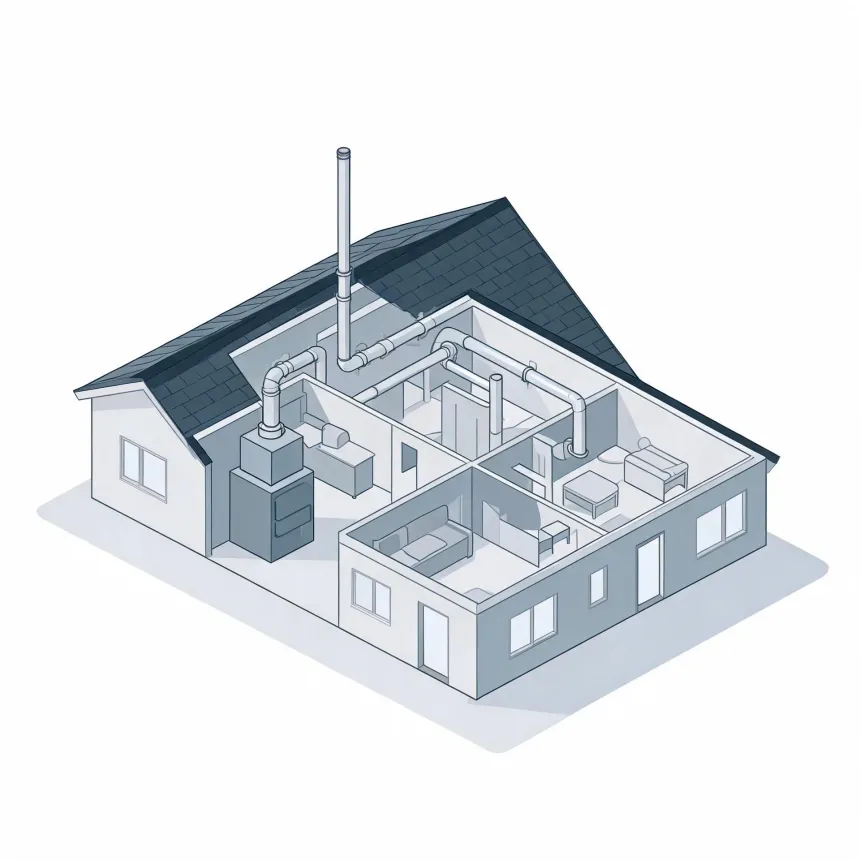
- A contractor removes the old equipment, sets the new furnace or AC in place, and connects it to the ducts, gas line or electrical circuit, and the vent or flue. They'll check the ductwork for leaks or sizing problems, since new equipment runs poorly if the ducts weren't right to begin with. Once it's running, they test it, and in most areas this work needs a permit and a final inspection before it's done. A contractor can walk through what the job looks like for your specific house.