
HVAC Installation in Moscow, ID
Tell us about the house, and a licensed contractor who covers Latah County will get in touch.
Tell us about the job
It takes about a minute.

Moscow asks a system to heat for ten months straight
Winter nights here average 25°F from December through February, and homes need heat from September through June. That is ten months of the year the furnace or heat pump is the thing standing between your family and the cold. Summers stay mild, averaging 79°F in the afternoon, so the cooling side of a new system has little to prove here.
That long heating season puts the weight on one part of the equipment, month after month. About half the homes in this area heat with electricity, so when the power goes out, heat goes with it. Idaho saw 11% of households lose power for 24 hours or more in 2024, and this area has logged 251 winter storms and 25 damaging wind events over the past ten years. A new system should be sized and installed with that in mind, not just the cold.
- 10 months
- September through June, your system heats
- 25°F
- the average winter night it heats against
- 79°F
- the average summer afternoon it cools against
Idaho requires HVAC contractors to hold a state license.
The license belongs to the contractor, not the job. Idaho's HVAC Board tests and records contractors before they can take on work like the installation on this page, and that record covers the company, not each system it installs.
For this job, the permit is what covers the installation itself. In most cities and counties in Idaho, putting in a new furnace or air conditioner needs a permit from the local building office, and an inspection once the work is done.
Sources: Idaho Legislature · Idaho Division of Occupational and Professional Licenses
- When should I replace my HVAC system?
- Replace it when repairs start getting frequent, when it's old and struggling to keep up, or when a technician tells you the heat exchanger or compressor is failing. Here, the furnace runs September through June, so a breakdown in the middle of that stretch is not a small problem. If yours is already struggling on the 25°F nights in December through February, waiting for it to fail completely just means picking a system in a hurry instead of choosing the right one.
- Should I replace my furnace and air conditioner at the same time?
- If both are old, yes, it usually makes sense. They wear down on a similar timeline, and pairing a new furnace with an old air conditioner (or the reverse) can mean the two don't work well together, plus a second round of labor and permits down the road. That said, homes here need cooling 0 months a year, so if your air conditioner is newer and running fine, there's no reason to replace it just because the furnace is due. A contractor can look at both and tell you what actually needs doing.
- What happens during an HVAC installation?
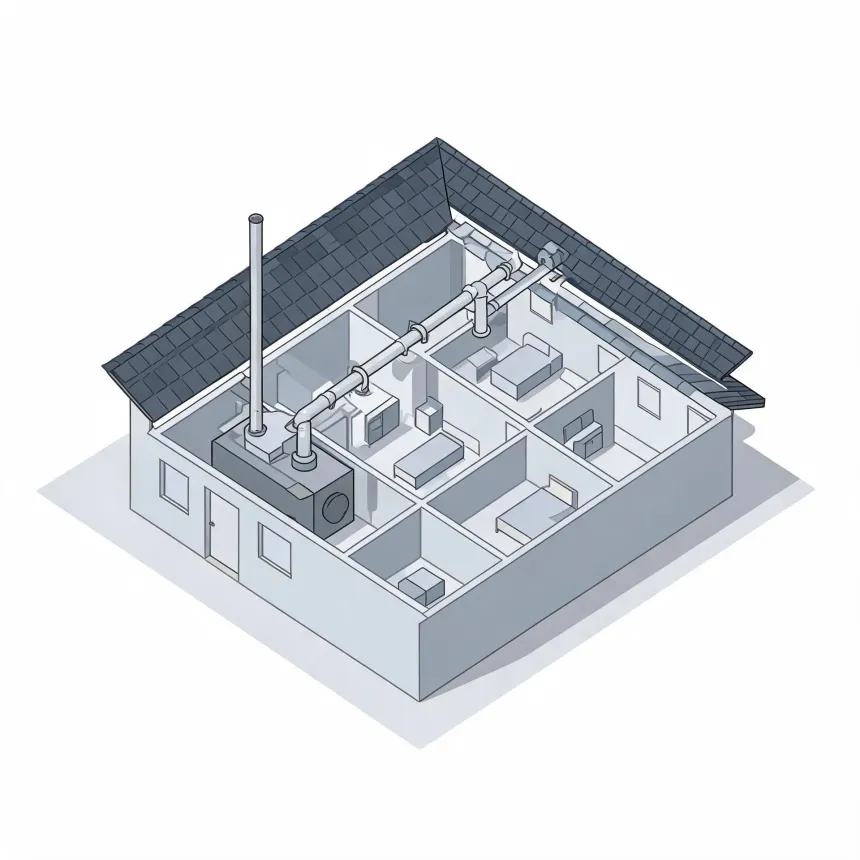
- A contractor removes the old furnace or air conditioner, sets the new equipment in place, and connects it to the existing ducts, gas line, electrical, and venting. They'll check that the ducts and the new unit are matched for size, since equipment that's too big or too small for the house won't heat or cool it evenly. Once it's running, they test it and walk you through the thermostat. Most cities and counties around here require a permit for this work and an inspection afterward, and the contractor typically handles pulling that permit.