Mini Split Installation in Coeur d'Alene, ID
A new system here will heat from September through June and cool from July through July every year. Tell us about the house, and a licensed contractor who covers Kootenai County will get in touch.
Tell us about the job
It takes about a minute.
Ten months of heat, one month of cooling
Coeur d'Alene asks a mini-split to run heat almost year round, September through June, then switch to cooling for a single month in July. Winter nights average 25°F through December, January and February, so the heat pump side carries most of the load. Summer afternoons average 77°F, a mild cooling job by comparison.
A new mini-split has to meet the federal minimum for a split-system heat pump. That means 14.3 SEER2 for cooling and 7.5 HSPF2 for heating. Given how much of the year this area runs on heat, the HSPF2 number is the one that matters most here.
- 10 months
- September through June, your system heats
- 1 months
- July through July, it cools
- 25°F
- the average winter night it heats against
- 77°F
- the average summer afternoon it cools against
NOAA nClimDiv, 1991–2020 normals
Idaho requires HVAC contractors to hold a state license.
Idaho licenses HVAC contractors through the state's HVAC Board. That license is tested and recorded, and it belongs to the contractor, not to any one job.
For this install, that license is what stands behind the work. Most cities and counties also require a permit for a job like this, with an inspection once it's done, so check whether that applies here before the work starts.
Sources: Idaho Legislature · Idaho Division of Occupational and Professional Licenses
- Is a mini split worth it?
- For most homes here, yes, especially in a room that never quite gets warm enough or a space with no ductwork running to it. Winters here average 25°F from December through February, and a mini split's heat pump side handles that as long as the head is sized right for the room it serves. It also covers the one month of real cooling need you get in July. The best fit is usually one room or an addition the furnace can't reach well.
- How many rooms can a mini split cover?
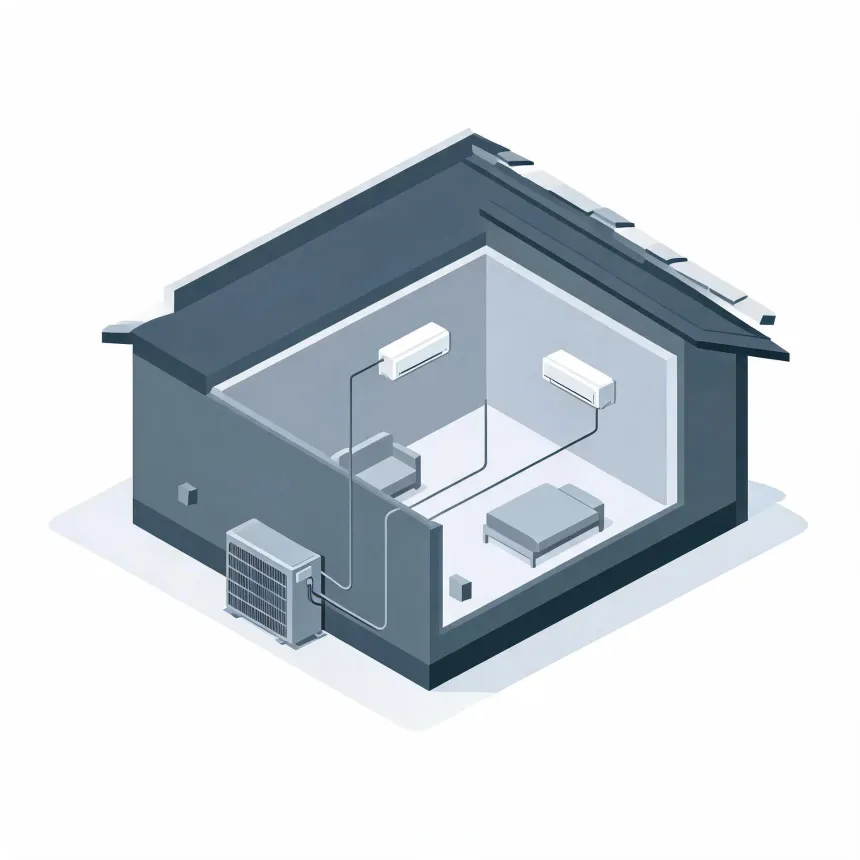
- A single outdoor unit can run one indoor head or several, depending on the system. Each head is sized to the room it serves, so a contractor will look at the square footage, the windows, and how the rooms connect before deciding how many heads the house needs. A one-room addition usually needs just one head. A whole floor with several bedrooms needs more heads, and that changes the size of the outdoor unit the job calls for.
- Can a mini split heat a whole house?
- It can, if it's designed as a whole-house system with enough indoor heads placed in the right rooms and an outdoor unit sized for your coldest nights. That matters here, since winter lows average 25°F and homes need heat from September through June. A single ductless head in one room won't carry a whole house through that stretch. A contractor will run a heat loss calculation on the house to confirm the system keeps up on the coldest nights, not just on a mild day.