
Clean duct run
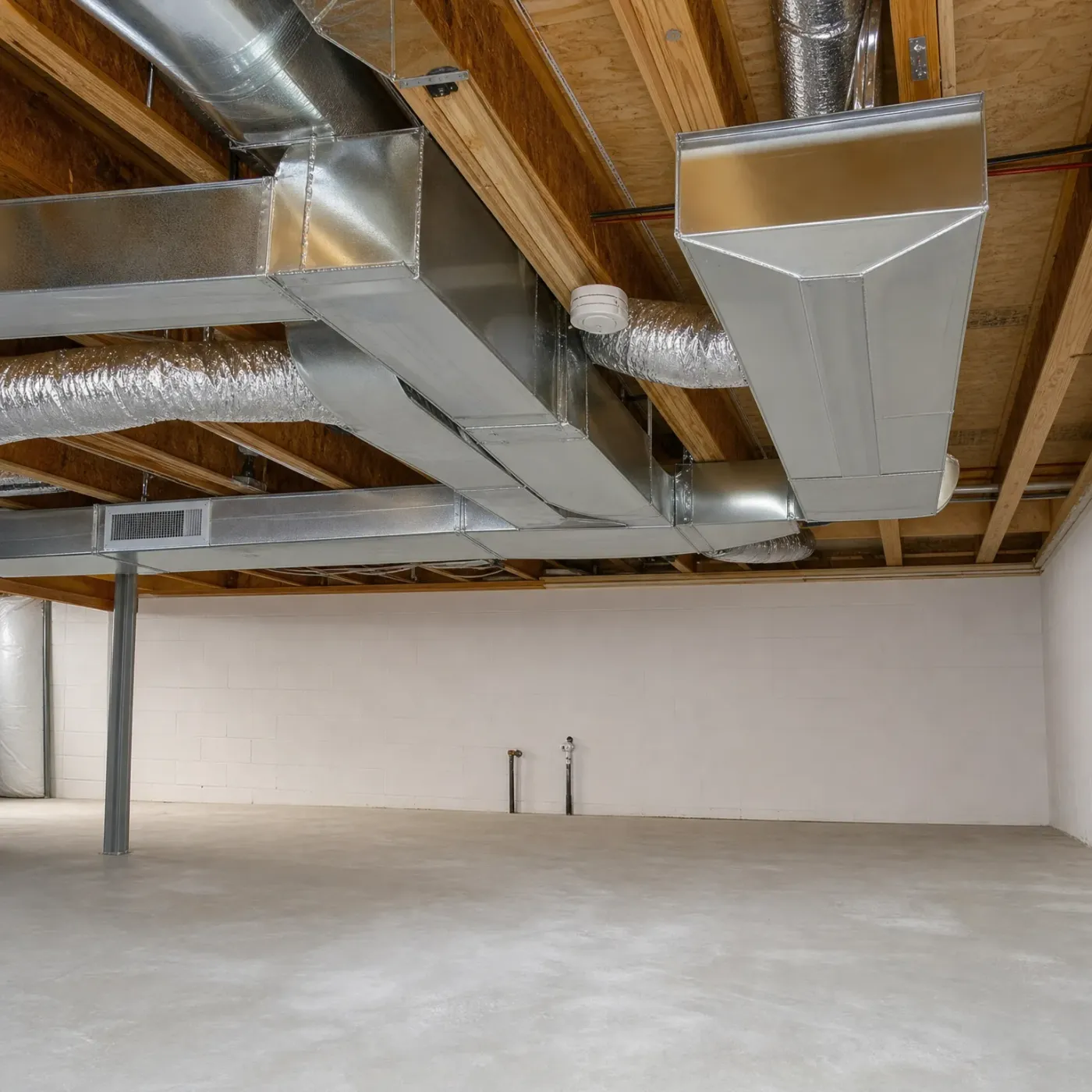
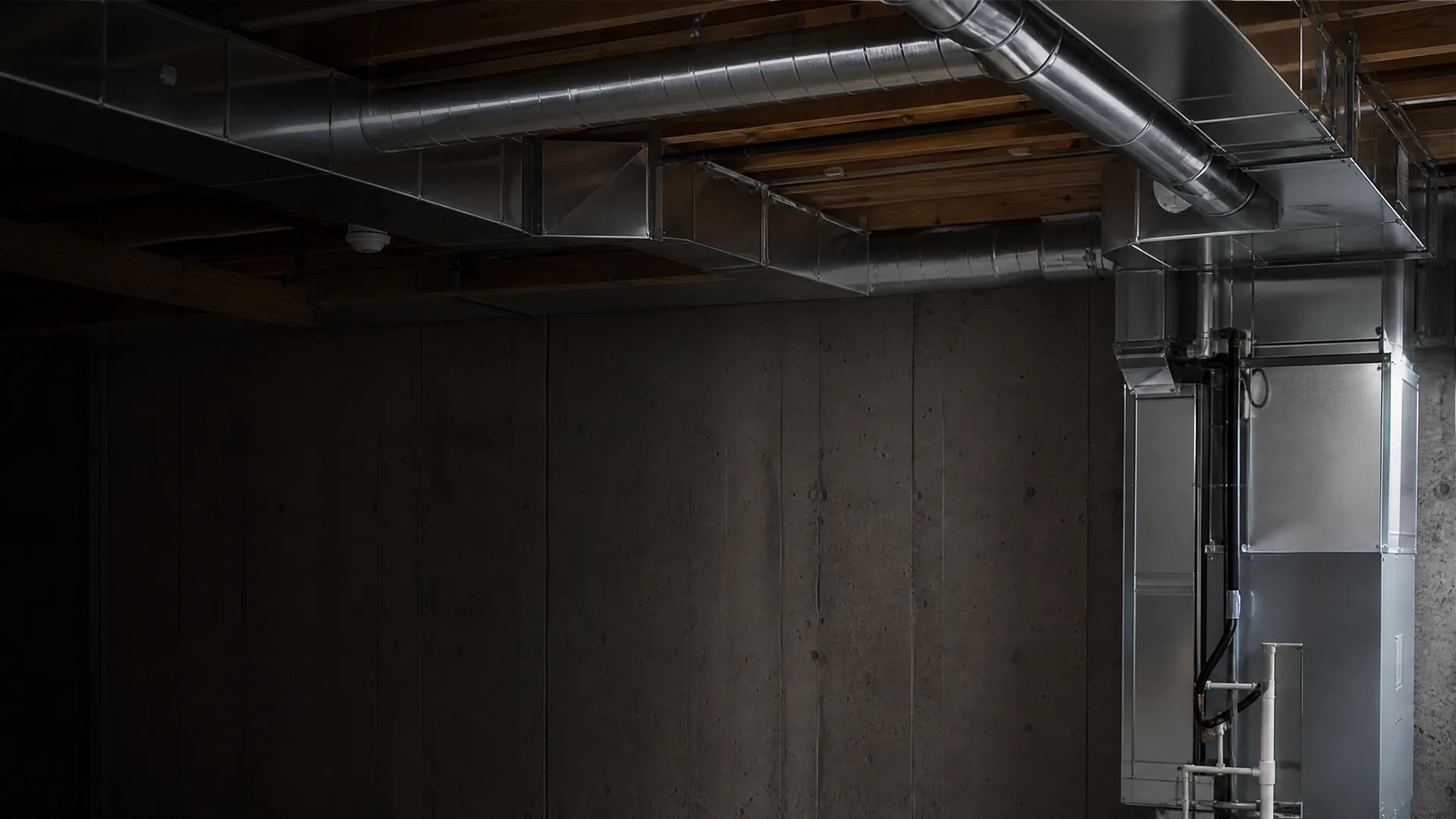
This is what a duct run looks like with no smell to chase. Bare metal trunk lines, exposed joists, nothing clinging to the surfaces. Air moves through dry and comes out the vents the same way it went in.
You turn on the furnace or the AC and get a musty smell out of the vents, the kind that reminds you of a damp basement. It might only show up when the system first kicks on, or it might hang around the whole room. Either way it's coming from somewhere in the ductwork or the equipment itself, and it usually means moisture is sitting somewhere it shouldn't.
That smell is mold or mildew growing on moisture somewhere in your system, most often on the evaporator coil or in the ductwork near it. Every time your AC runs it pulls humidity out of the air, and that water has to drain away through a condensate line. If that line is slow or clogged, or if the coil doesn't dry out between cycles, mold gets a place to grow and the smell rides the airflow into every room. Summers in Nampa are hot and dry, so you may not notice it until the AC has been running steadily for a while. Dust sitting in the ducts can hold onto that moisture too, which keeps the smell coming back even after a day or two with the system off.

Half the homes here were built by 1999
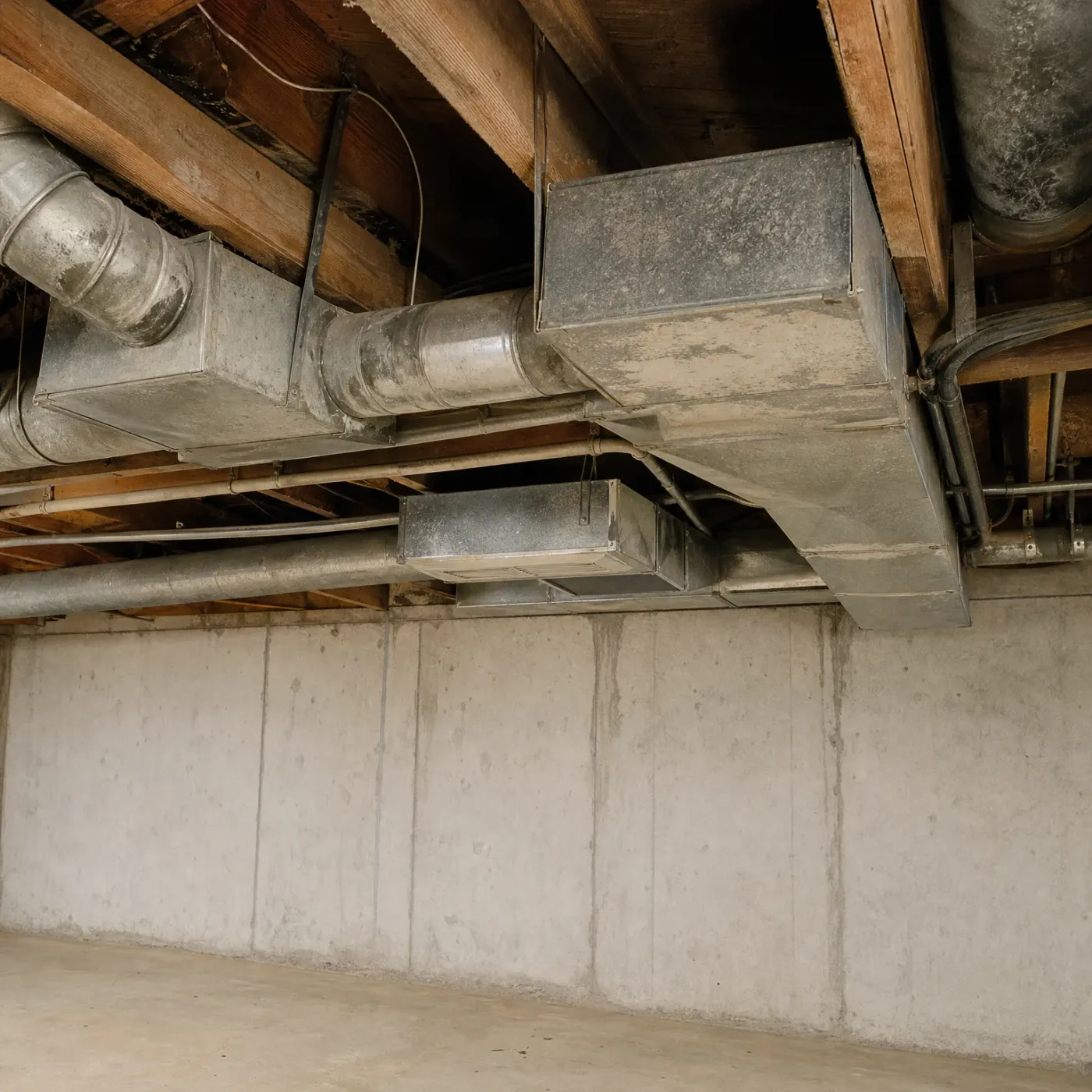
Half the homes in Canyon County were built in 1999 or earlier. Older duct runs have had more years for dust and moisture to build up inside.
Heat runs October through May
Heat runs about eight months a year here, October through May. That's eight months of warm, dry air that should keep ducts from staying damp.
Cooling runs June through August
Cooling runs June through August. Those three months push humid air through the same ducts, and that's when a musty smell is most likely to turn up.
ACS 2020-2024 · NOAA nClimDiv 1991-2020
That musty pull of air lands differently once the furnace and the AC share the same ducts all year in your house. Whatever grew in there during one of Nampa's hot dry summers gets pushed into every room the day you switch to heat in the fall, and it keeps circulating until the system shuts off for the season. You smell it most in the rooms you use the most, the bedroom at night, the living room in the evening, because that's where the air actually reaches you. Dust mixed with trapped moisture doesn't go away on its own between seasons. It sits in the trunk line through the dry months and waits for the next time warm or cool air moves past it. If anyone in the house has allergies or breathing trouble, a duct system carrying that smell is also carrying whatever is growing where the smell comes from, every time the blower kicks on.


Most of this traces back to the evaporator coil inside the air handler. Every time the AC runs, that coil gets cold enough to pull moisture out of the air, and that water has to go somewhere. It's supposed to drip into a pan and out through a drain line. If that line is clogged or sloped the wrong way, water sits instead of draining, and the coil stays wet longer than it should. Dust that's settled in the ducts over the years gives mold something to grow on once that moisture is around. A return duct that runs through a crawlspace or attic can make it worse, pulling in damp air and sending it straight through the trunk line to every room. A dirty filter adds to the problem too, since it slows the air moving across the coil and keeps it wet between cycles. That's why the smell is often strongest right when the system kicks on, before the air has had a chance to dry things out.




Skip searching for someone who cleans ducts in Canyon County.
Asking costs nothing, and the choice to hire stays yours.
A furnace and an AC in Nampa share the same blower and the same ducts, so whatever starts on the coil doesn't stay on the coil. Every time the AC runs, moisture collects on the evaporator coil's fins. A clean system dries that off between cycles and nothing comes of it. A dirty filter changes that, because it slows the air moving across the coil, so the coil stays wet longer after the compressor shuts off. That wet metal, sitting for hours, is where a musty smell usually starts. The same thing happens if the condensate drain is clogged or pitched wrong. Instead of draining away, water sits in the pan under the coil and goes stale sitting there. Return ducts that run through a crawlspace or attic add another way in. If the insulation around those ducts is torn or squashed flat, warm humid air touches the cold duct wall and sweats on the inside, the same way a cold glass does outside on a July afternoon. Once any of that moisture sits long enough for something to start growing, either on the coil, in the drain pan, or on the dust lining the duct walls, the blower moves it through the whole house on the next cycle. How long the smell lasts after the system kicks on is a clue to where it's coming from. A smell that fades after a few minutes points to the coil. One that keeps building week over week points to something established and spreading.
At 11.78 cents a kilowatt-hour, running the blower longer or adding a dehumidifier to dry out that duct run costs less here than in most places. That's worth knowing if a contractor suggests either one alongside the cleaning to keep the smell from coming back.
EIA-861 2025
This is what a duct run looks like with no smell to chase. Bare metal trunk lines, exposed joists, nothing clinging to the surfaces. Air moves through dry and comes out the vents the same way it went in.
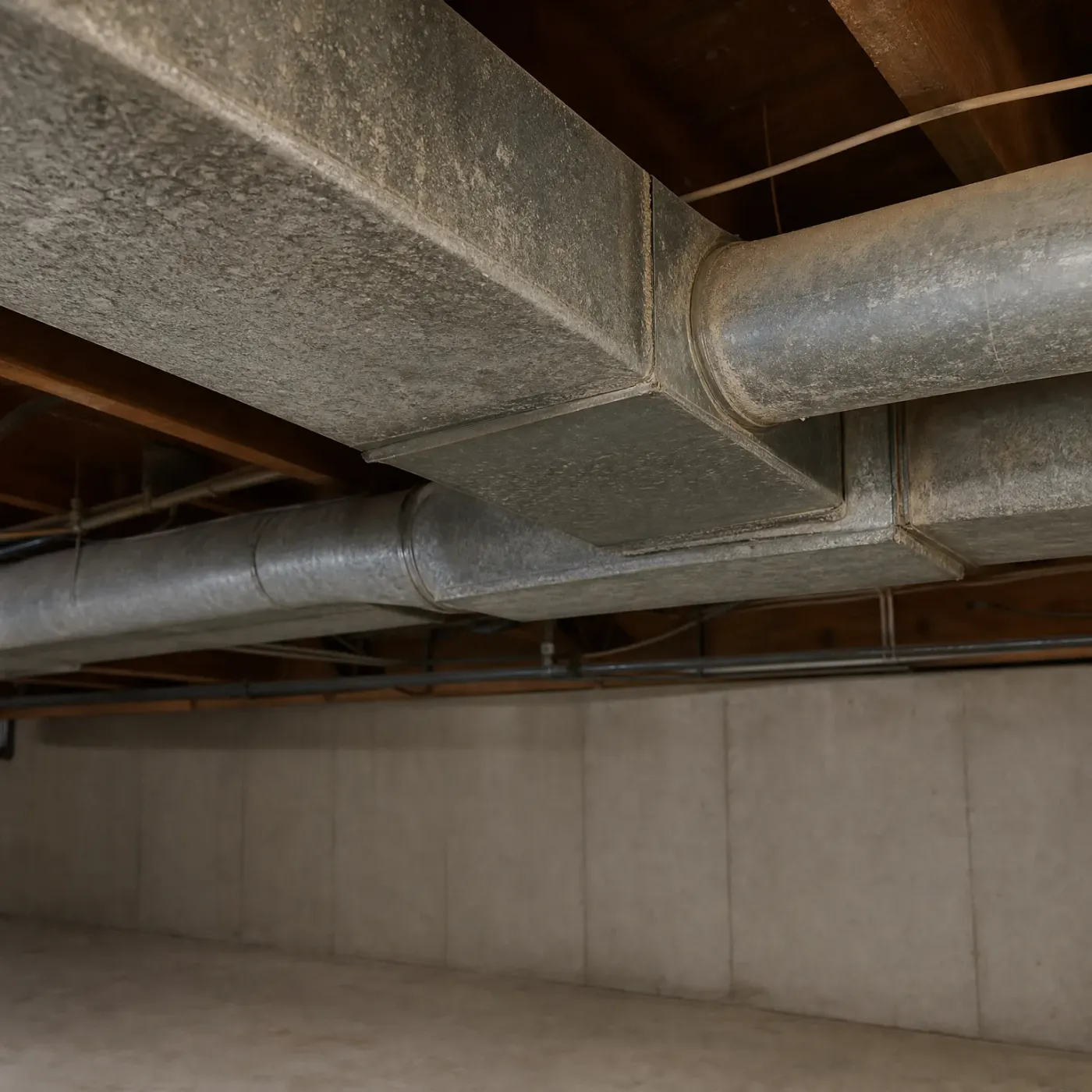
This is the kind of buildup that holds a musty smell. Dust and grime coat the trunk line and the branch duct feeding off it, thick enough to see from across the room. Moisture gets into dust like that and stays, and every time the blower runs it pushes that smell into the house.

The smell is coming from somewhere specific: the coil, the drain line, or dust built up in the ducts themselves. A cleaning deals with the dust and buildup. If the cause is a clogged drain line or a coil that stays wet too long, that's worth asking about too, since cleaning alone won't fix a drainage problem that keeps bringing the smell back.
You don't have to figure out which contractor in Canyon County handles duct cleaning, call around to compare what they charge, or explain the same thing about your vents to three different people before picking one. Send the form once and that part is off your plate. What's left is the straightforward part: someone qualified looks at your ducts, finds where the moisture or buildup is sitting, and clears it out.

Answer a few questions about the duct cleaning and skip the search.