
Unfinished basement with concrete floor and walls, exposed wood joists, steel support columns, and two furnace-type units connected to sheet-metal and flexible insulated ducts.

Done looking for a duct system pro

How often to clean air ducts in Idaho

Idaho's dry summers and gas heat both put dust through your ducts, and most homeowners don't know what sets the clock for cleaning them. This page gets into what actually brings dirt into a duct system, what signs mean it's time, and how to find someone local who checks your system before telling you anything. Send the form and the search is off your plate.

Hand off the search

Most homes in Idaho do fine with duct cleaning every three to five years. Dry summers pull dust through the return side of the system, and gas furnaces push air through the same ducts for most of the year, so dust and pet hair build up steadily on the inside walls even when nothing seems wrong. You don't need to clean them on a strict schedule. Watch for dust coming back fast after you vacuum, a musty smell when the furnace or AC first kicks on, or more dust around the vents than you remember from last year. If anyone in the house has allergies that flare up indoors, or you've had rodents or a leak near the ductwork, that moves the timeline up regardless of how long it's been. Otherwise, the three to five year range holds for most houses here, and checking your return vents for buildup once a year will tell you if you're ahead of schedule or behind it.

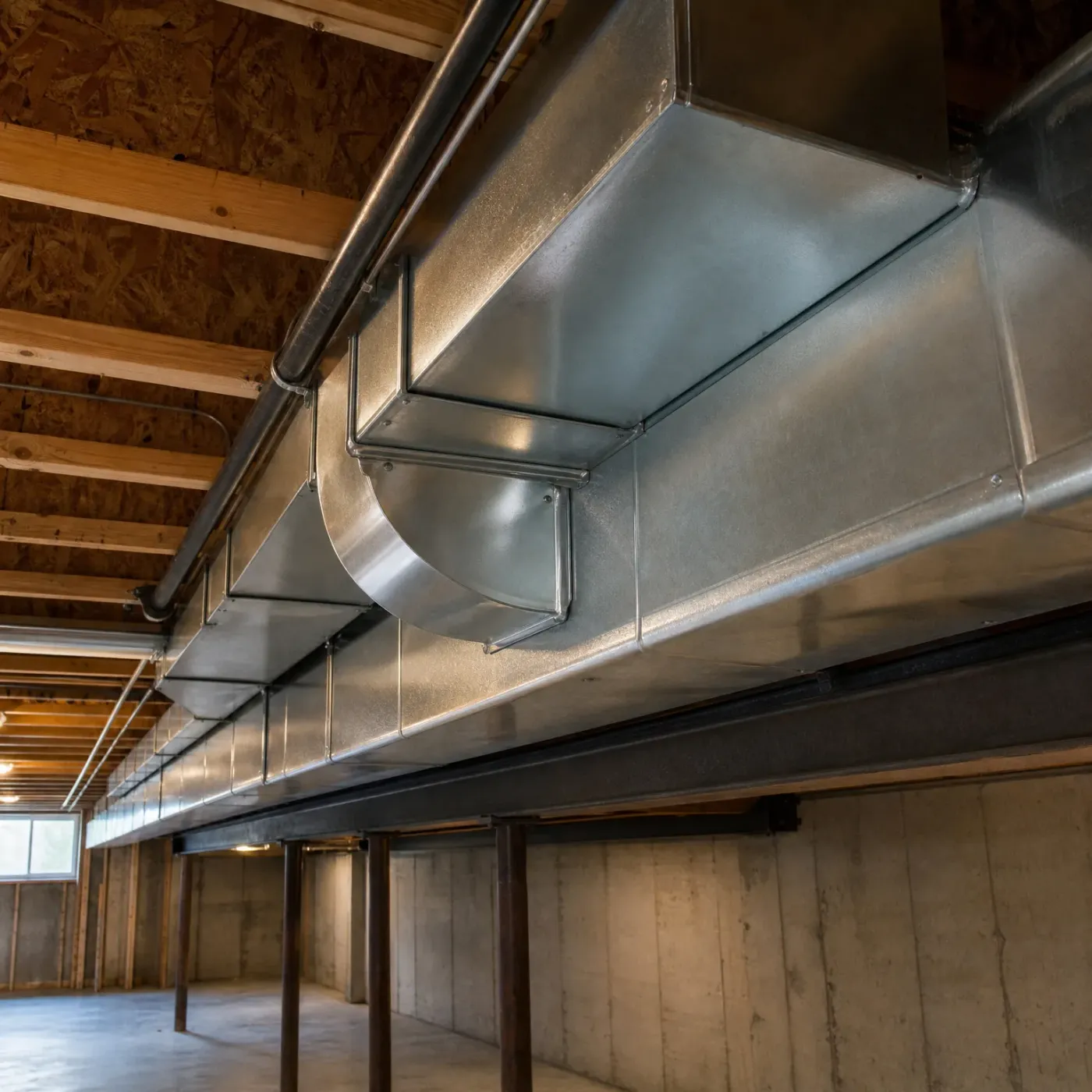
Empty basement with bare concrete walls and floor, a small window at left, and exposed wood joists with galvanized sheet metal ductwork and pipes overhead.

Ducts running clean

This is what a duct system looks like when it's keeping up. The metal stays bright, the joints are tight, and air moves through without dragging dust along the way. A system cleaned on schedule looks close to this inside, year after year.


Dusty sheet-metal HVAC ducts with a rectangular vent register run beneath wooden floor joists above an empty concrete-walled basement.

Ducts overdue

Dust has built up on every surface here, coating the metal dark and thick. This is years of dry summer air and furnace exhaust settling layer on layer with nowhere to go. Once it looks like this, the buildup feeds back into the air moving through your home.

A smiling man in a blue denim shirt over a white tee sits at a light stone kitchen counter with a grey mug and a bowl of oranges and bananas, with pendant lights and shelving behind him.
A smiling bearded man in a grey long-sleeved shirt sits at a kitchen counter with a dark mug, with a dining table, pendant light and glass doors onto greenery behind him.
A bearded man in a dark green knit sweater smiles and looks off to the side while standing at a kitchen counter with a white mug of coffee, with open shelving, a potted tree, and a dining table near large windows behind him.
A man with dark curly hair in a dark green sweater stands smiling and looking to the side in a kitchen with white cabinets, a potted plant, a stone countertop with a ceramic mug, and a dining area with framed art in the background.

3 to 5 years

That's the stretch most Idaho homes go between cleanings. Dry summer dust and steady gas furnace use both work on the inside of the ducts the same way.

Send my request

Dust at the vents

A return vent that collects dust fast, or a furnace filter that's dirty again within weeks, points to buildup inside the ducts worth having a local tech look at.

Send my request

Clean Now or Let It Build

Clean on schedule

  • You catch a damaged duct joint or a crushed section before it starts pulling dust or losing air into a crawlspace.
  • A tech who works on ducts all season in Idaho knows the dry summer dust pattern and checks the return side first.
  • Vents stay clear, so a room that's been running dusty or weak on airflow gets looked at before it turns into a bigger repair.
  • You get one licensed local contractor on the job instead of chasing bids from several companies.
  • Pet hair and dust that built up over the past few years comes out before it packs tight against the duct walls.
  • A furnace that's been short-cycling or working harder than usual often clears up once the ducts carrying its air are clean.

Wait and see

  • Dust keeps building on the inside of the ducts every month the gas furnace runs, since nothing clears it on its own.
  • A small duct leak or loose joint goes unnoticed longer, so it has more time to pull dust from a crawlspace or attic into the airflow.
  • Vents that are already collecting dust fast keep collecting it, and a dirty filter has to work against more buildup behind it.
  • You lose the chance to have one tech who knows the system look it over while they're already working on something else.
  • The dust sitting in the ducts keeps circulating through every room on the system, not just the one where it first shows up.
  • Once you do call someone, there's no local contractor already familiar with how your ducts have been building up.
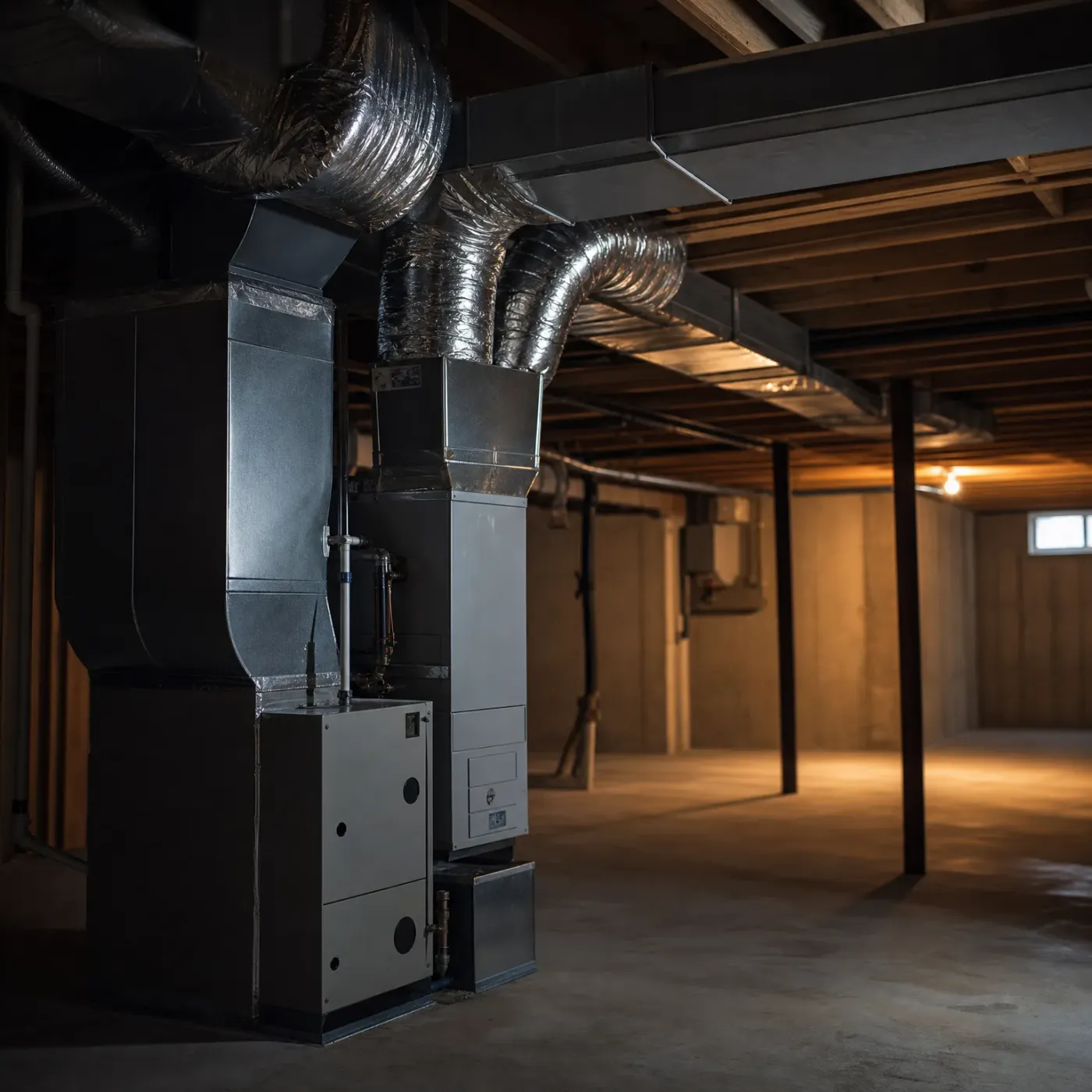
A basement with a gray furnace on a concrete pad connected to large sheet-metal ducts running along an exposed wood joist ceiling, with PVC pipes and plastic sheeting on the walls.

Normal, working ductwork

The plenum and duct runs stay tight against the furnace, with no gaps where they meet the joists overhead. Air moves through the metal without catching on loose seams. Nothing is pulling dust into the basement or losing air before it reaches a vent.

Galvanized sheet metal HVAC ductwork with a vent grille running along a wooden joist ceiling above a bare concrete wall.

Ductwork under strain

A run like this, boxed in tight against the floor joists with wiring crossing nearby, hides a lot from view. A seam that's come loose here won't show up until dust starts collecting faster at the vents or a room stops getting enough air.

An unfinished basement with bare concrete walls and floor, showing exposed wooden floor joists, pipes, wiring, and metal HVAC ducts with a vent grille overhead.
Before you get your ductwork cleaning
Unfinished basement with galvanized sheet-metal rectangular and round ductwork running along a wood-joist ceiling, two steel support columns, a small window, and a furnace unit against the far right wall.
After you get your ductwork cleaning
Galvanized sheet metal HVAC trunk ducts and branch takeoffs running below a wood-joist ceiling in an unfinished basement with concrete walls, steel support columns and a concrete floor.

Stop chasing a duct system pro

Only one pro gets your request, so you hear from one company.

Send the form and the duct cleaning stops sitting on your list.

Get a licensed local pro

You're not committing to anything by asking.

Power costs 11.83 cents per kilowatt-hour statewide

At 11.83 cents a kilowatt-hour, running the furnace blower harder than it needs to doesn't hit your bill the way it would elsewhere. That's not a reason to skip cleaning. Clogged ducts still choke airflow and shorten the life of the blower motor, even when the power to run it stays cheap.

EIA-861 2025 statewide residential average

Unfinished basement with bare concrete walls and floor, showing exposed wood floor joists overhead with sheet-metal rectangular ductwork, insulated flexible ducts, and pipes.
Sheet-metal trunk lines and flex duct run tight across the joists, with every seam sealed and no dust ring at the register.
Basement ceiling with galvanized sheet metal rectangular ducts and round pipes running between wooden joists above a bare concrete wall and floor.
Loose flex connections and sagging sections like these let dust into the basement air instead of carrying it to the vents.

Why does dust keep piling up around your vents?

Check the vent covers. If dust builds back up within a week or two of wiping them down, the ducts behind them are feeding it. Look at the return grille too, since that's where dry outside air gets pulled in and filtered before the furnace pushes it through the house. A filter that turns gray fast, or a musty smell when the furnace first kicks on in the fall, both point the same direction. Left alone, the buildup gives the blower motor more resistance to push against, and it can work harder than it needs to just to move air through rooms that still end up dustier than they should be.

A smiling bearded man in a green t-shirt sits on a gray sofa, looking down toward a device at the bottom of the frame, with a bookshelf and a green plant blurred behind him.
A bearded man in a plaid flannel shirt stands indoors looking out a window at snow-covered conifers, with a ceramic mug on the wooden sill and wooden cabinets behind him.

Where That Leaves You

  • Three to five years keeps most Idaho duct systems ahead of dry summer dust and steady gas furnace use.
  • Dust back at the vents within a week or two of wiping them, or a filter that's dirty fast, both point to the ducts themselves.
  • Loose flex connections and sagging sections let dust into the basement air instead of carrying it to the register.
  • A local tech who works on ducts all season here knows to check the return side first.
  • One contractor takes the call for your system, not a handful of companies working the same lead.
  • Cheap power here doesn't undo what a clogged duct run does to airflow or to the blower motor over time.

Three to five years is the span that keeps a duct system ahead of what Idaho does to it. Dry summers feed dust through the return side, and a gas furnace moves air through those same ducts most of the year, so the buildup is steady rather than sudden. You don't need a schedule written down to know when the stretch is up. Dust at the vents that comes back within a week or two of wiping it, or a filter that's dirty faster than it used to be, both say the same thing about what's inside the ducts. A loose flex connection or a sagging run does the same work from the other direction, letting dust into the basement air instead of pushing it out to the register. None of that gets better on its own, and cheap power doesn't change what a clogged run does to a blower motor working harder than it should.

When you're ready to have someone look at it, the request goes to one local contractor, not a handful of companies bidding on the same lead. Someone who works on ducts all season here checks the return side first, because that's where the dry summer dust shows up, and knows the difference between a joint that needs sealing and a section that needs replacing. That's the kind of call this page is built to get you to.

A dark-clad house with large windows beside a gravel driveway lined with in-ground path lights, ornamental grasses and hydrangeas, with distant hills and an orange sunset sky.

Ductwork Cleaning

Send one request and you're done looking

Duct and vent cleaningDucts or ventsIdaho
Step 1 of 2

What ZIP code is the job in?

  • A ceramic vase holding leafy green branches and a shallow wooden bowl sit on a wooden window ledge beside a sunlit window, with a cream upholstered chair and knit throw in the foreground.
    • A local pro who cleans ducts gets in touch with you.
    • Your duct cleaning request goes to a local pro who does this work.
  • Sunlit living room corner with a beige upholstered sofa, a round wooden side table holding a ceramic vase of olive branches, linen curtains at a window, a floor vent in the baseboard, and a woven jute rug on hardwood flooring.
    • After this form, you can stop searching for a duct system pro.
    • One request and the search for a pro is handled.
  • A wooden side table with a single drawer holds a shallow carved wood bowl and a white ceramic vase of green eucalyptus stems, beside a window and an upholstered chair draped with a cream knit throw.
    • Answer a few questions about the duct cleaning and skip the search.
    • Answer a few questions instead of calling shop after shop.
  • Corner of a house with horizontal siding, a white-framed window and stone veneer base, beside a covered entry with wooden steps, a potted plant, mulched beds of green shrubs and a flagstone path.
    • Your duct cleaning request goes to one local pro.
    • Your request goes to one pro, not a list of companies.