A local pro who cleans ducts gets in touch with you.
Idaho air is dry most of the year, so the dust in your house isn't coming from humidity holding it in the air. It's settling because your ducts are moving it around every time the furnace or the AC kicks on.
Summers here are hot and dry, and that means the blower runs long hours pulling air through the return and pushing it back out through the supply vents. Winters mean the gas furnace running just as hard the other direction. Either way, the same ductwork is handling the air in your house day after day, and anything sitting in there, dust, pet hair, construction debris from when the system was put in, gets stirred up and redistributed every cycle.
A dirty filter catches some of it, but the filter only cleans what passes through it. Dust that's settled in the duct runs themselves, in the elbows and joints and the slow spots in the line, doesn't go through the filter. It gets pushed out the next register over.
This is where duct cleaning earns its keep, but it's not a job to guess your way through. How your house is laid out, how long the runs are, where the dust is actually collecting, that's specific to your system and worth a second look before anyone pulls out a vacuum hose.
If you want that second look, you can be matched with a licensed Idaho contractor who works on ducts in this kind of climate all year, through hot dry summers and cold winters, and has a good sense of where dust tends to build up in a system like yours. It's one contractor reaching out to you directly, not a handful of companies competing for your callback. They'll look at your setup and tell you what they find.
From there, the next step is in your hands.
Why is my house so dusty in Idaho?
You vacuum and dust every week and the house still looks gray within a few days. Shelves, windowsills, the TV screen, all of it. You've checked for obvious culprits and come up empty, so it feels like the dust is coming from nowhere, and you're starting to wonder if something in the house itself is putting it there.
Your ducts are stirring up dust that's already built up inside them
Idaho's dry air doesn't trap dust the way humid air does, so that's not what's holding it in your rooms. The real source is usually inside the ductwork itself. Dust settles in the duct runs between uses, and every time the furnace or AC cycles on, that air gets pushed back into your living space. Gas furnaces here run for long stretches through the winter, which means a lot of cycles pushing that dust around. With power cheap in Idaho, people tend to run the AC often in summer too, so the system rarely sits idle long enough for the dust to just stay put. A duct cleaning clears out what's built up so each cycle isn't redistributing it through the house.
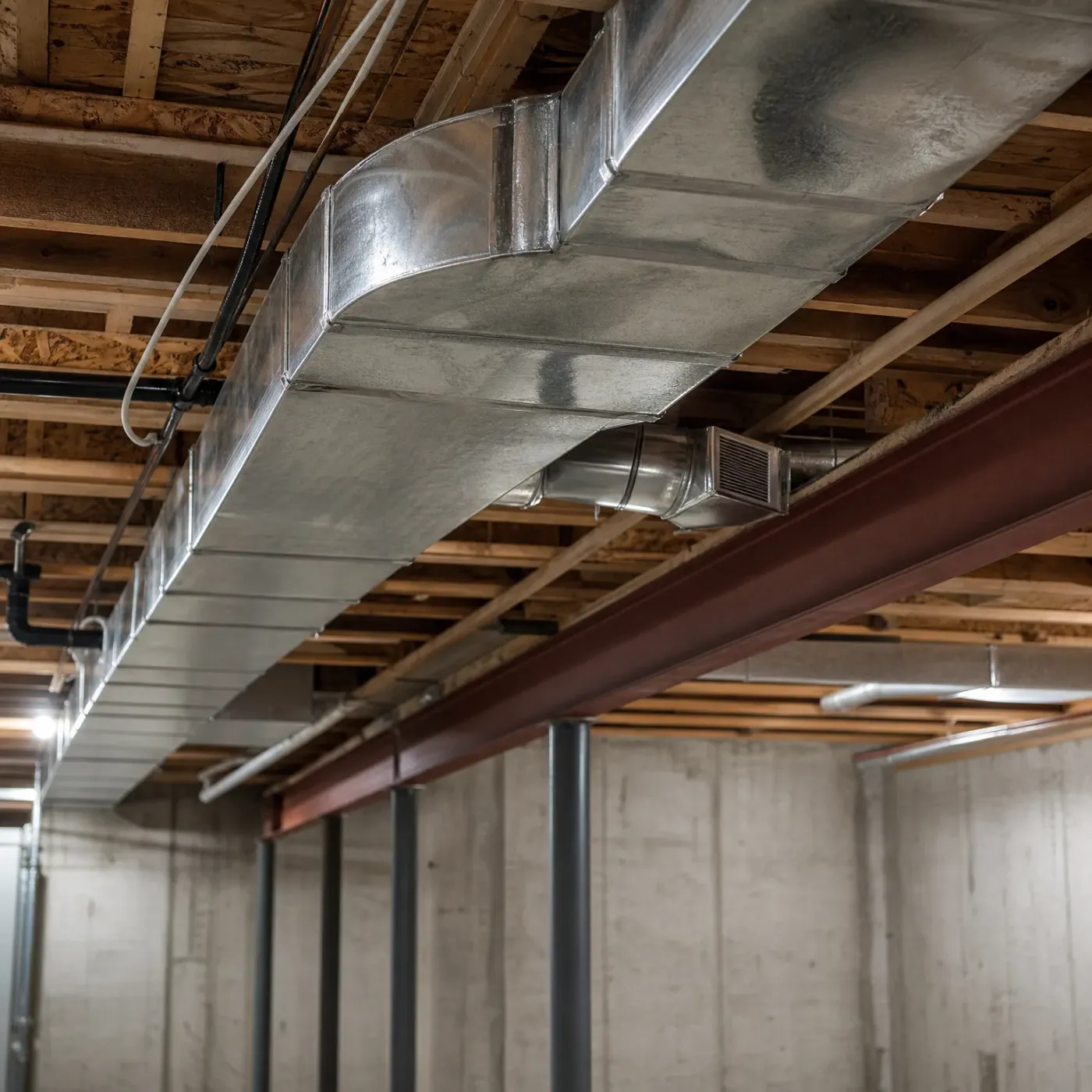
Ducts moving clean air
This is what a duct system looks like when it isn't the problem. The metal is sealed and the runs are clear, so air passes through on its way to the rooms instead of picking anything up. The furnace and water heater sit below, tied into clean supply and return lines.
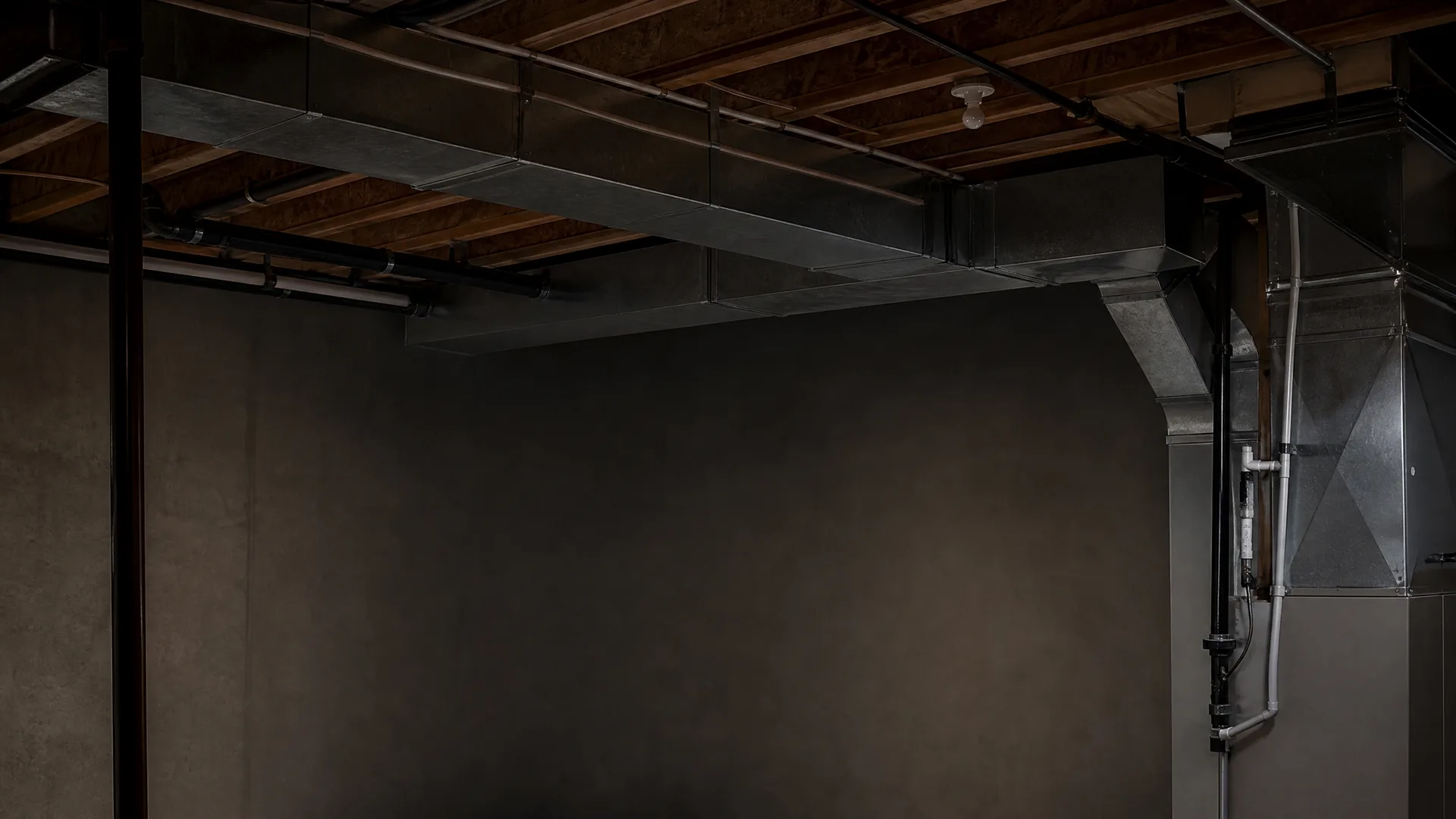
Ducts stirring up dust
Here the ducts are doing the opposite job. Loose joints, dust built up inside the sheet metal, or a gap where a line meets the furnace, and every cycle pushes that dust back into your rooms instead of just moving air. You won't see this from the basement floor. It takes someone opening the line.
What's actually settling on your furniture every few days
Run your finger along a windowsill a day after cleaning and it comes back gray. Check the return vent cover and you'll likely find a soft layer built up on the grille, even with the filter doing its job. You might notice a faint burnt smell the first time the furnace kicks on after sitting idle, or a musty note when the AC starts up on a hot afternoon. Register covers near the floor often show the heaviest buildup, since that's where air moves fastest. Left alone, this keeps circulating through rooms where people sleep and breathe, and it makes the furnace and AC work harder to push air through ducts that are carrying more than they should.
1
Return air pulls dust off floors, shelves, and bedding into the vent.
2
Air passes through the filter, which catches what it can hold.
3
Air moving past loose duct joints picks up dust sitting in the metal.
4
The furnace or AC blower pushes that air back into every room.
The right pro for this job
Your duct cleaning request goes to one local pro.
Your duct cleaning request goes to a local pro who does this work.
Sealed joints and smooth metal runs mean the air moving through this basement picks up nothing extra on its way to your rooms.
Loose joints at this junction near the drain pipes let dust sitting in the metal mix into the air every time the blower runs.
Think about what this means for your own week. You dust the living room on Sunday, and by Wednesday the shelves need it again. That's the blower running every time your furnace cycles on, pushing air through joints that are feeding dust back into the rooms instead of just warming them. Idaho winters mean that furnace runs for months, so the cycle repeats for as long as you're heating the house. Your filter can only catch what passes through it, and dust picked up inside the ducts after the air has already gone by the filter never gets caught at all. It just rides along to the next vent. Beyond the extra cleaning, that's air you and your family are breathing every day the system runs, and it keeps the furnace working harder than it should to move air through runs that are collecting debris instead of staying clear.
Power costs 11.83 cents per kilowatt-hour statewide
At under 12 cents a kilowatt-hour, running the blower longer than it needs to isn't what's driving your bill up. So there's no cost reason to cut fan time short. A duct cleaning fixes the dust problem without you having to think about the power it takes to move that air.
EIA-861 2025 statewide residential average
Where the dust is coming from
Dust that comes back days after cleaning is coming from the ducts, not the dry air.
Loose joints feed dust into the air every time the blower cycles on, whether it's the furnace or the AC.
A filter only catches what passes through it, not what's already loose in the duct runs.
Clearing out what's sitting in the metal stops the dust before the blower has a chance to spread it.
A contractor who works on Idaho duct systems all year knows where these joints tend to loosen and what to check first.
Getting matched with one local contractor for your home means one call back, not several companies competing for your job.
The house gets dusty again a few days after cleaning because the ducts are putting dust back into the air, not because Idaho's dry air lets it hang around. Every time the blower cycles, air moves past joints that have come loose, and whatever has settled in that metal gets carried into your living room, your bedroom, wherever the vent opens. The filter was never going to stop this. It only catches what passes through it on the way back to the furnace. Dust sitting in the ducts themselves never gets near the filter until the blower has already pushed some of it out into the room first.
Clearing that out is what breaks the cycle. Once the ducts are clean, the blower is just moving air again, not air plus whatever has been sitting in the runs.
This is also the kind of job where it helps to have someone who already knows Idaho duct systems, not someone learning on your house. A local contractor who works on these systems through the hot summers and the gas-heat winters here has seen where joints tend to loosen and knows what to check first, rather than working through a generic list. When you get matched, it's with one contractor suited to your home, not a handful of companies all calling about the same job. That's one visit, one person who already has a sense of what they're walking into, and a clearer path to getting the dust problem actually solved instead of just swept off the shelf again next week.