Is duct cleaning worth it in Idaho Falls, ID

Find a duct system pro

You're trying to figure out if duct cleaning is worth paying for, not just whether it exists as a service. That's a fair question in a place like Bonneville County, where dust and dry summer air move through the house for months and the furnace runs hard all winter on gas. Whether it's worth it for your home depends on things a search result can't tell you: how your system is set up, what's actually built into your ducts, how long it's been since anyone looked at them. That's a judgment call for someone who can see your house, not a generic answer. Skip the usual run of calling around, describing your ductwork to three different companies, and trying to compare quotes that aren't quite answering the same question. Answer a few questions here and get matched with a contractor who works on duct systems like yours in the Idaho Falls area. They'll follow up with you directly to look at what you've got and tell you straight whether cleaning makes sense.

For most homes in Idaho Falls, duct cleaning is worth doing once if you can't remember the last time it happened, and worth skipping if it was done recently and nobody in the house has new allergy symptoms. The dry summer air here carries fine dust, and that dust settles in the ducts year round, then gets stirred up every time the furnace or AC kicks on. If you're seeing dust collect fast on furniture again a day or two after cleaning, or a musty smell when the vents first turn on, that's dust and buildup moving through the system, and cleaning solves it. If the air in your house seems fine, you're not getting that payoff, and the money is better spent on a furnace tune-up or a new filter. It's not a yearly task like changing a filter. Most houses need it only every few years, and some go longer than that without any real difference in the air.

Does duct cleaning actually matter for a house like yours?

  • Half the homes here were built by 1985

    Half the homes in the county were built in 1985 or earlier, which means half the duct systems have had decades to collect dust nobody's looked at.

  • Heat runs September through June

    Heat runs here from September through June, about ten months of air moving through the same ducts, carrying whatever has settled in them.

  • Power here costs 11.19 cents per kilowatt-hour

    Power costs 11.19 cents per kilowatt-hour here, cheap enough that a dirty duct run restricting airflow won't show up clearly as a spike on the bill.

ACS 2020-2024 · NOAA nClimDiv 1991-2020 · EIA-861 2025

How a duct cleaning job actually goes

  • A duct cleaning job uses a truck-mounted or portable vacuum to pull air through the whole system while an agitator knocks dust loose inside each run.
  • The technician puts the system under negative pressure first, so loosened dust moves toward the vacuum instead of back into the rooms.
  • Every supply and return register gets opened and brushed out, including the ones behind furniture that never get vacuumed.
  • The furnace blower compartment and the coil area get cleaned too, since dust there affects airflow more than dust in the ducts themselves.
  • A real cleaning job seals each register once it's done, so you can see which ones were actually touched.
  • Dryer vent cleaning is a separate job with its own line, and a duct cleaning quote that skips it isn't covering your whole system.

A technician doesn't just stick a hose in one vent and call it done. The system gets put under negative pressure first, usually with a truck-mounted vacuum parked in the driveway, so that when dust gets knocked loose inside the ducts it has somewhere to go besides your living room. An agitator, a brush or a whip on a flexible rod, runs through each duct run to knock years of settled dust off the metal. That's the part most people picture, but it's only half the job. Every supply and return register in the house gets opened and brushed out, including the ones behind the couch or under the bed that haven't seen a vacuum attachment in years. The furnace blower compartment and the coil area get attention too. Dust sitting on a blower wheel or coil does more to choke off airflow than dust sitting in a duct run ever will, so skipping that part leaves the main problem untouched. When the job is finished right, each register gets sealed up as it's closed out, which is a simple way for you to see afterward which ones were actually opened and cleaned versus which ones a crew skipped past. One thing to ask about separately: the dryer vent. It's a different line, a different duct, and a different fire risk than the rest of the system, so a duct cleaning quote that doesn't mention it isn't quoting your whole house.

An older man with gray hair and a beard stands in a doorway of a home, wearing a dark coat dusted with snow, with a lit fireplace and lamp visible in the blurred room behind him.
A bearded older man in a dark snow-dusted coat and scarf stands just inside a home's front door, with a lamp-lit room and snowy window visible behind him.
An older man with gray hair and a beard wearing a dark snow-dusted coat stands in a home entryway, with a lamp-lit living room and a wooden staircase behind him.
An older man with gray hair, a dark coat and scarf dusted with snow stands in a warmly lit entryway with an open wooden door, a table lamp, framed pictures, and a plant in a vase.
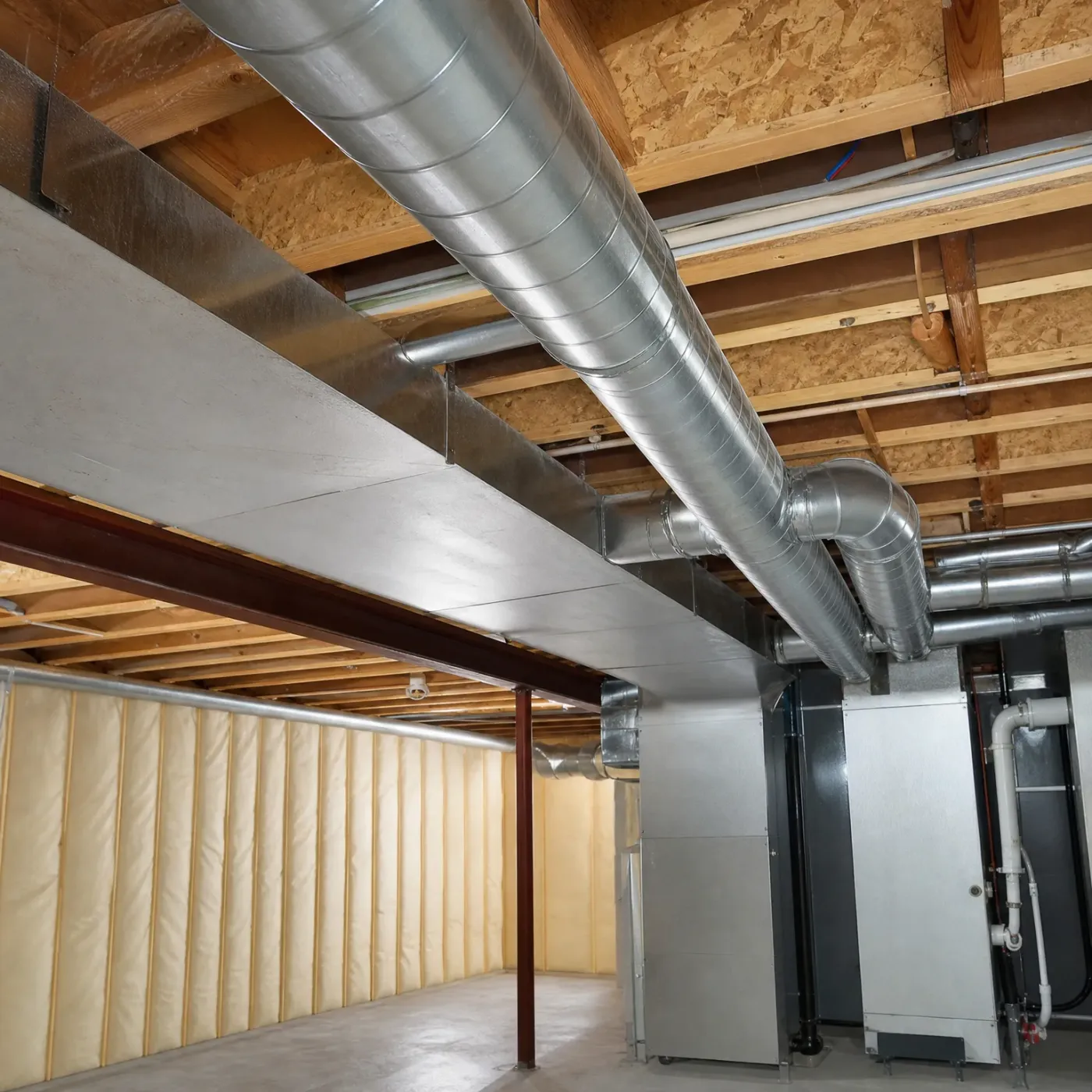
Unfinished basement with exposed wood floor joists, galvanized round and rectangular ducts, insulated foundation walls, a steel beam with support post, and mechanical equipment with piping at the right.

Get matched with a duct system pro in Bonneville County

Skip searching for someone who cleans ducts in Bonneville County.

Your request goes to a Bonneville County pro who takes ductwork jobs.

Get a local pro

You only hire the pro if you want to.

Clean the Ducts or Leave Them

Worth doing

  • Nobody in the house can remember the last time the ducts were cleaned, so dust and debris have had years to build up inside the runs.
  • Someone in the house has started sneezing or had worse allergy symptoms since moving in, and the ducts haven't been checked as a cause.
  • A renovation or pest problem put drywall dust, insulation, or droppings into the system that a filter alone won't catch.
  • You're about to close up the house for a new furnace or AC install and want the ductwork clear before the new equipment runs air through it.
  • Visible dust is kicking out of the vents when the furnace or AC first kicks on each season.

Skip it for now

  • The ducts were cleaned within the last few years and nobody has reported new breathing or allergy issues since.
  • The filter gets changed on schedule and still looks reasonably clean when it's pulled, which means less dust is making it past it into the ducts.
  • Nobody in the house has had new allergy symptoms, coughing, or sinus trouble that wasn't there before.
  • The house is new enough that the ducts haven't had decades to accumulate dust the way older systems in the county have.
  • There's no recent renovation, rodent problem, or water damage that would have put debris or contamination into the system.
Unfinished basement with bare concrete floor and walls, exposed wood joists, metal ductwork, a furnace unit, steel support posts, and a small window.

Ducts doing their job

Air moves through clean sheet-metal runs without pulling extra dust into the rooms above. The furnace pulls return air, pushes it out through the ducts, and nothing inside those runs is working against it. This is what a system looks like when cleaning isn't due yet.

Empty basement with bare concrete walls and floor beneath an exposed wood-joist ceiling carrying galvanized sheet-metal ductwork, round ducts and pipes.

Ducts that need attention

Dust has settled along the bottom of the runs and built up around the joints where the galvanized sections meet. Every time the furnace kicks on, some of that gets carried back into the house. This is the point where cleaning stops being optional.

How do you know if your ducts actually need cleaning?

You're trying to figure out if duct cleaning is worth paying for, not just whether it exists as a service. That's a fair question in a place like Bonneville County, where dust and dry summer air move through the house for months and the furnace runs hard al…

Look inside a return vent before you call anyone

Pull a return air grille off the wall and look at the inside edge of the duct, past where you can reach with a rag. A thin gray film is normal. A layer thick enough to see from across the room, or dust that falls out when you tap the metal, means it's built up for years. Check the supply vents too, the ones blowing air into each room. If you see dust marks fanning out on the wall or ceiling around a vent, air is carrying particles out with it. A technician checks the same spots with a camera run further into the trunk line, but what you can see at the vent usually tells you whether it's worth the call.

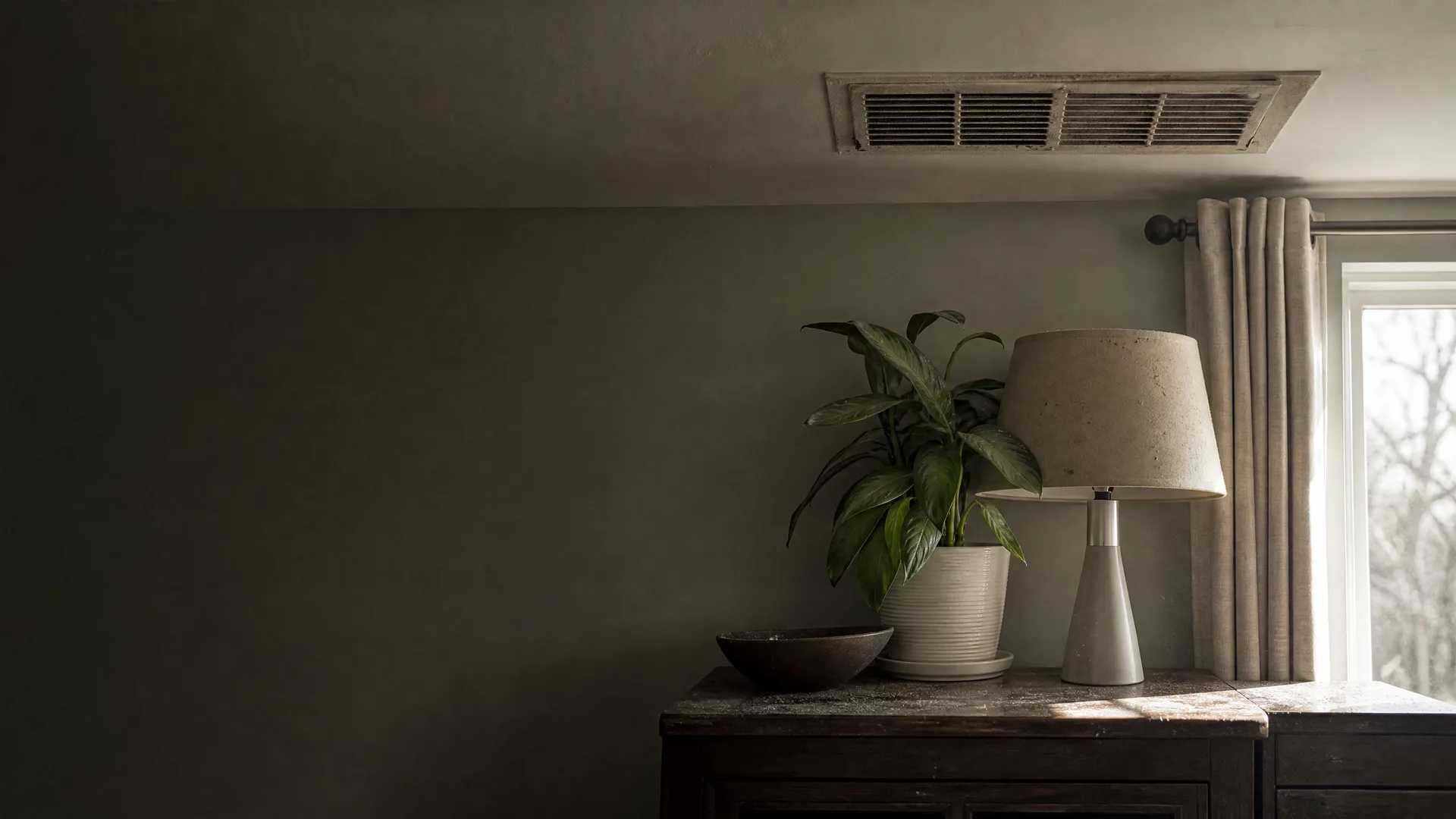
A dimly lit interior wall with a ceiling air vent above a wooden sideboard holding a potted plant, a shallow bowl, and a table lamp beside a curtained window.

It's a spring afternoon and the sun through the window is showing you something you'd missed all winter. The ceiling vent grille in the living room has a gray line of dust along its slats, thick enough to see from the couch. You run a finger along the top of the entertainment stand below it and it comes back coated. You can't remember the last load of dust like this settling so fast after you wiped the room down a few days ago. The air handler kicks on in the next room, and you watch a little more drift down onto the shelf before it even settles. Outside, Idaho Falls is dry and bright, the kind of day that makes a dusty vent easy to notice.


What's actually coming out of your vents right now

Hold your hand near a supply vent when the furnace kicks on. If you feel a puff of dust or catch a faint burnt or musty smell in that first minute, that's what's sitting in the runs getting pushed into the room. Check the return grille too, the one the furnace pulls air back through. A gray buildup there, especially if it's thicker than what collects on the furniture nearby, means the system is moving more than air. Look at the floor or windowsill under a vent you don't use often. A fine layer of dust settling there faster than the rest of the room points to the same thing. None of this means the furnace is failing, but a house member with allergies who's been sneezing more since fall is worth paying attention to.

A woman wrapped in a thick textured blanket sits on a sofa with an open book on her lap, beside a lit lamp and bookshelf, with a frost-patterned window behind her.
An older woman with grey-blonde hair in an updo and a beige turtleneck sweater smiles while looking to the side in a warmly lit kitchen, with a round loaf of bread on the counter in front of her and a dark window showing snow outside.

Half the homes here were built by 1985

If your house went up in 1985 or earlier, its ducts have had that many years to collect dust, and nobody can tell you the last time someone looked inside them. A newer system has had less time to build that up.

ACS 2020-2024

A man in a dark jacket and khaki pants walks through an open gate in a stone wall toward a woman standing in the open front doorway of a single-story white house with a dark shingled roof and river-rock accents.

So is it worth it

If you've read this far because you genuinely can't remember the last time anyone looked inside your ducts, that's your answer. Get it done once. If someone in the house has new allergy symptoms, or that vent grille had a visible line of dust on it, the same answer holds. If the ducts were cleaned a few years back and nobody's symptoms have changed, you can let it go for now.

Either way, the next step is the same: finding a contractor who does this work in Bonneville County, getting them on the phone, and explaining your situation before you even get a number back. That's the part that takes the time, not the decision you just made. Answer a few questions about your house and what you're seeing, and a contractor who handles duct cleaning in your area will reach out to you directly, already knowing what you told them.

Interior corner of a living room with a beige upholstered armchair holding a textured pillow and throw, a eucalyptus arrangement in a ceramic vase on a wooden table in the foreground, a blurred glass-front cabinet behind, and a potted plant on a sunlit window sill.
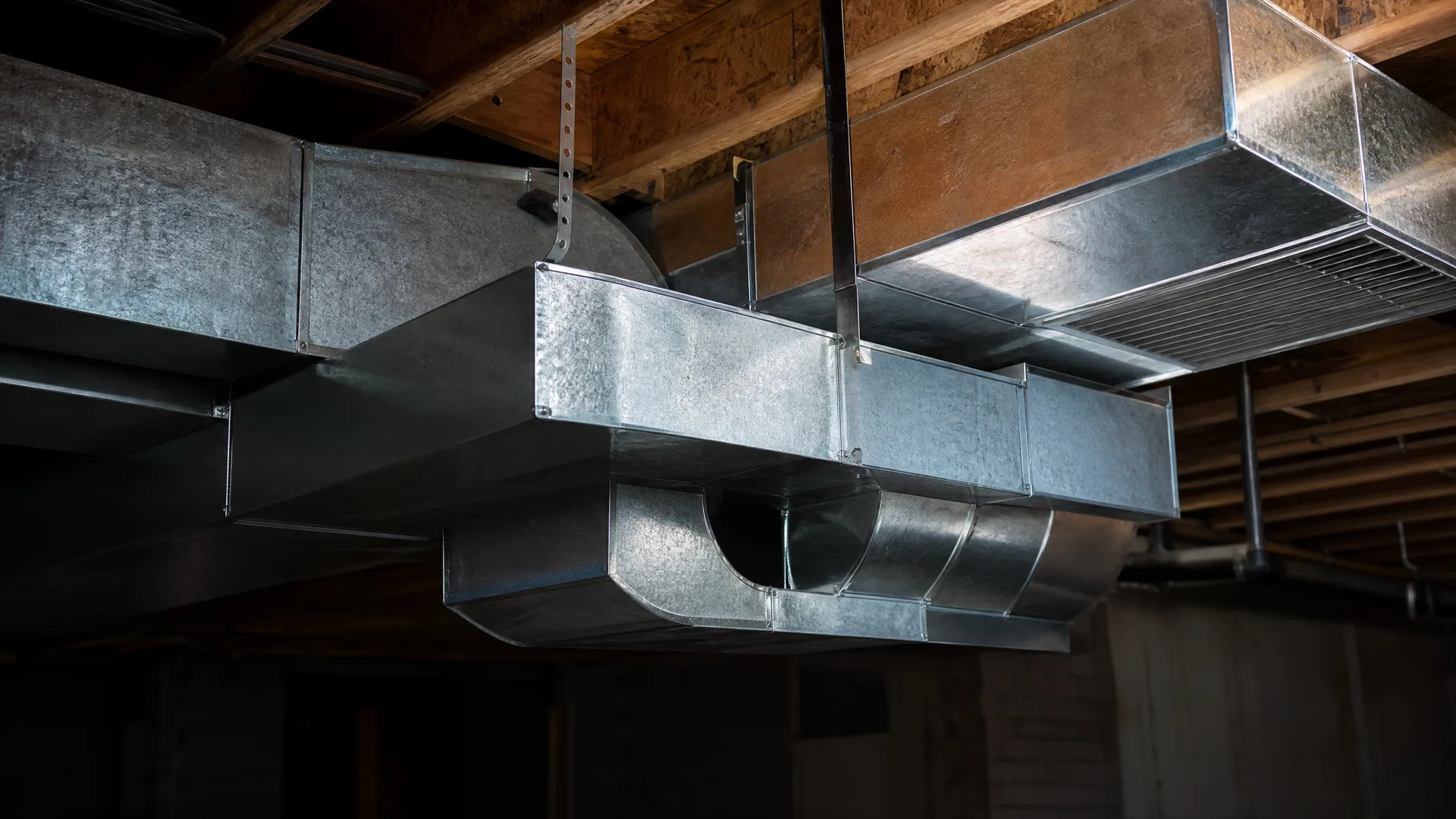
Galvanized sheet metal HVAC ductwork with rectangular trunks and round takeoffs suspended from wooden floor joists in an unfinished basement ceiling.

Find a duct system cleaning pro in Bonneville County

Duct and vent cleaningDucts or ventsBonneville County, ID
Step 1 of 2

What ZIP code is the job in?