Mini Split Installation in Boise City, ID
A new system here will heat from October through May and cool from June through August every year. Tell us about the house, and a licensed contractor who covers Ada County will get in touch.
Tell us about the job
It takes about a minute.
What a mini-split in Boise City has to handle
Boise homes need heat or cooling 11 months out of the year. Winter nights average 25°F from December through February, and a mini-split's heat pump has to keep pulling warmth out of air that cold for months at a stretch. Come summer, it switches over and holds against afternoons averaging 88°F. Only a few weeks in between ask nothing of it.
Any mini-split installed new has to meet the federal minimum for split-system heat pumps, 14.3 SEER2 for cooling and 7.5 HSPF2 for heating. That's the floor, not a feature, and it applies whether the unit is replacing an old one or going into a room that never had one.
- 8 months
- October through May, your system heats
- 3 months
- June through August, it cools
- 25°F
- the average winter night it heats against
- 88°F
- the average summer afternoon it cools against
NOAA nClimDiv, 1991–2020 normals
Idaho requires HVAC contractors to hold a state license.
Idaho licenses HVAC contractors through the state HVAC Board. That license belongs to the contractor, not to any single job, so the same license covers a mini-split install the same as it would a furnace or a water heater.
For this job, that license is what stands behind the person working on your mini-split. In most cities and counties, an installation like this also needs a permit from the local building office and an inspection once the work is done, so someone outside the contractor checks how it was put in.
Sources: Idaho Legislature · Idaho Division of Occupational and Professional Licenses
- Is a mini split worth it?
- For most homes here, yes, because a mini split heats and cools the same room without ducts to install or lose air through. Winters get down to 25°F on average and homes need heat from October through May, so the unit has to carry real load most of the year, not just take the edge off. A heat pump mini split handles both jobs with one system, and a contractor can size it to the room or rooms you need covered.
- How many rooms can a mini split cover?
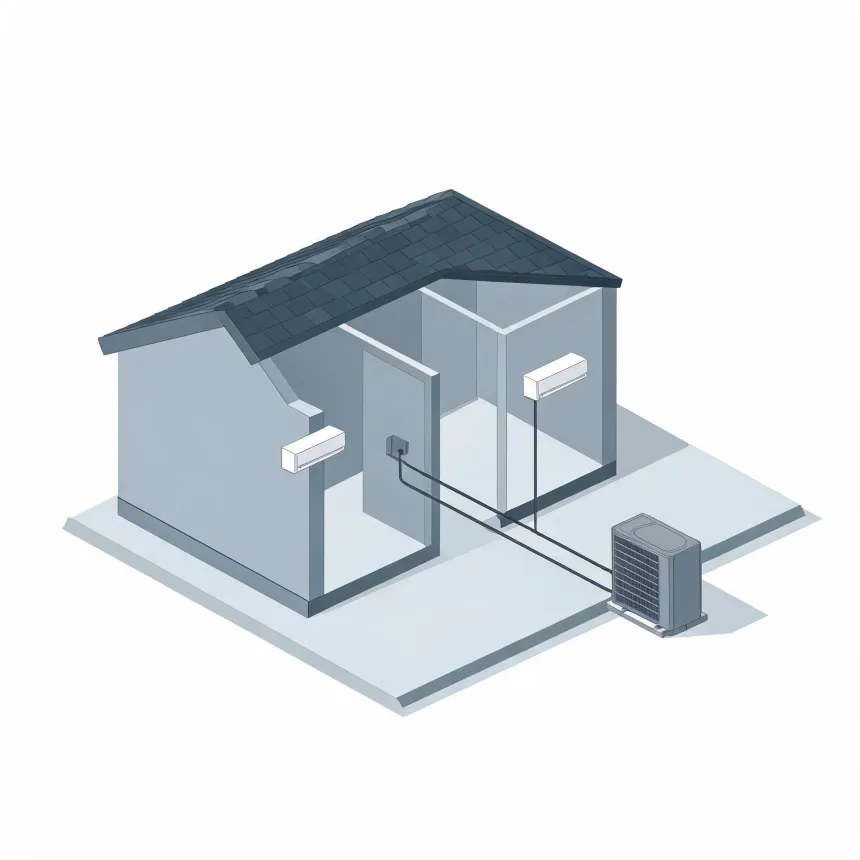
- A single outdoor unit can run one indoor head or several, up to eight on most multi-zone systems. Each indoor head heats and cools the room it's mounted in, so a one-room addition needs just one head, while covering several rooms means a multi-zone system with a head in each. The right setup depends on the size and layout of the rooms, which is something a contractor works out room by room.
- Can a mini split heat a whole house?
- It can, if there's an indoor head in every room that needs heat, sized for the whole house rather than one room. A single-zone system only heats the space where its head is mounted. Whether it can keep up on the coldest nights, when lows here average 25°F, depends on the specific units and how the house holds heat, so a contractor needs to size the system to the house before you'd know it can carry the whole load.