Mini Split Installation in Mountain Home, ID
A new system here will heat from September through June and cool from July through August every year. Tell us about the house, and a licensed contractor who covers Elmore County will get in touch.
Tell us about the job
It takes about a minute.
A mini-split here runs almost all year
Mountain Home needs heat from September through June, 10 months a year, then cooling through July and August. A mini-split installed here spends most of its life in heating mode. Winter nights average 21°F from December through February, and that cold is real load on the heat pump side, not backup duty. Summer afternoons average 83°F, and the same system has to switch over and keep up through the two months of cooling that follow.
Any new mini-split has to meet the federal minimum for a split-system heat pump. That is 14.3 SEER2 for cooling and 7.5 HSPF2 for heating, with no separate, lower bar for ductless units. This area has logged 84 winter storms and 36 damaging wind events over the past ten years, and 11% of Idaho households went at least 24 hours without power in 2024. A mini-split needs power to run in either mode, so how the installation handles an outage is worth working out up front.
- 10 months
- September through June, your system heats
- 2 months
- July through August, it cools
- 21°F
- the average winter night it heats against
- 83°F
- the average summer afternoon it cools against
NOAA nClimDiv, 1991–2020 normals
Idaho requires HVAC contractors to hold a state license.
Idaho licenses HVAC contractors through the HVAC Board. That license is held by the contractor, not issued for each job, so what stands behind your installation is the company's record with the state, tested and on file, rather than a one-time approval for this particular unit.
Because the contractor is licensed, that license is what backs the work on your mini-split. In most cities and counties the installation also needs a permit from the local building office, with an inspection once the work is done, so someone outside the contractor checks the job as well.
Sources: Idaho Legislature · Idaho Division of Occupational and Professional Licenses
- Is a mini split worth it?
- For most homes here, yes, especially if a room runs hot in summer or cold in winter without ductwork to fix it. Homes here need heat from September through June and cooling in July and August, so a mini split earns its keep nearly all year instead of sitting idle. It also gives you heat if the gas furnace goes down, since it runs on electricity alone. A contractor can look at your house and tell you whether one unit or a multi-zone setup makes sense for what you need.
- How many rooms can a mini split cover?
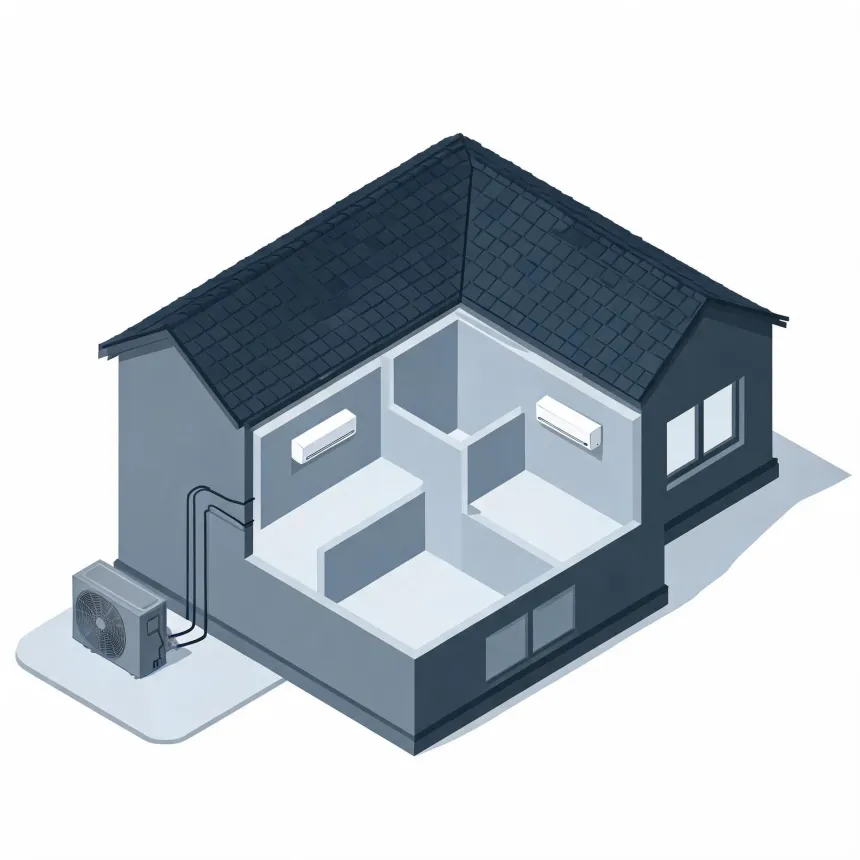
- A single outdoor unit can run one indoor head or several, depending on the system. Multi-zone systems support more than one indoor head off a single outdoor condenser, each one heating or cooling its own room on its own thermostat. How many rooms you can cover comes down to the total heating and cooling load of those rooms, not just a room count. A contractor will size the system to your house rather than guess at a number.
- Can a mini split heat a whole house?
- It can, if the system is sized and placed for the whole house rather than one or two rooms. A multi-zone mini split with a head in each main living area can carry the heating load on its own, even through winter nights here that average 21°F. Where that gets uncertain is older, drafty homes or unusual floor plans, and a contractor will need to run the numbers on your house before saying a mini split can do it alone. Some homeowners keep a mini split as the main heat and their furnace as backup rather than replacing it outright.