Mini Split Installation in Hailey, ID
A new system here will heat from September through June and cool from July through July every year. Tell us about the house, and a licensed contractor who covers Blaine County will get in touch.
Tell us about the job
It takes about a minute.
A mini-split here works nearly the whole year
Winter nights in Hailey average 14°F from December through February, and homes need heat from September through June. That is ten months of heating, and then July arrives, when afternoons average 78°F and the same system switches over to cooling. Eleven months of the year, the mini-split is the thing keeping the house at the right temperature.
A new unit has to be sized to hold heat at 14°F, not just to cool a warm afternoon. Any ductless heat pump manufactured from 2023 on has to meet 14.3 SEER2 for cooling and 7.5 HSPF2 for heating, the same federal minimum as any other split-system heat pump. With winter doing most of the work here, the heating side of that rating matters as much as the cooling side.
- 10 months
- September through June, your system heats
- 1 months
- July through July, it cools
- 14°F
- the average winter night it heats against
- 78°F
- the average summer afternoon it cools against
NOAA nClimDiv, 1991–2020 normals
Idaho requires HVAC contractors to hold a state license.
The license is issued to the contractor, not to this job. Idaho's HVAC Board tests and records the contractor as a business, so that license stands behind every job they take on, this mini-split included, rather than being something applied for one installation at a time.
For this job, that license is what backs the person doing the work. In most cities and counties the installation will also need a permit from the local building office, with an inspection once the unit is in. That covers the installation itself, the mounting and the wiring to it, separate from the license that covers the contractor.
Sources: Idaho Legislature · Idaho Division of Occupational and Professional Licenses
- Is a mini split worth it?
- For most homes here, yes. The heat has to run September through June, and a mini split is a heat pump, so the same system covers that stretch and the short cooling season in July. At 14°F outside, a cold climate mini split can still pull heat from the outside air, which matters for winter nights here. Whether it makes sense for your house depends on the layout and what's heating it now, and a contractor can walk through that with you.
- How many rooms can a mini split cover?
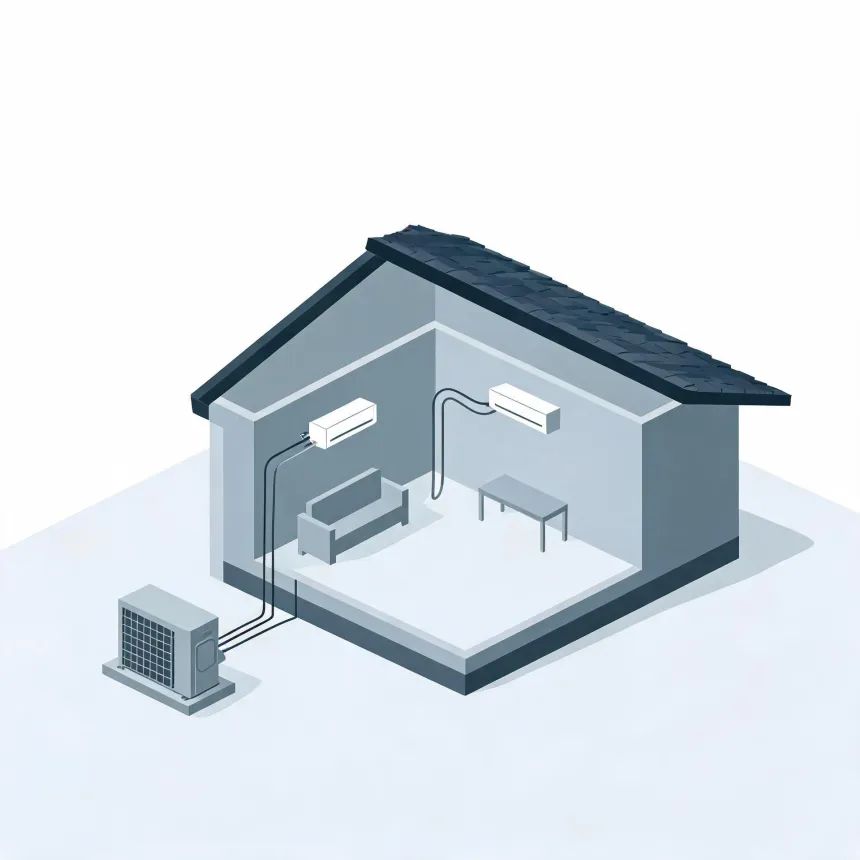
- A single outdoor unit can run one indoor head or several. Each head heats and cools the room it's mounted in, so coverage comes down to how many heads you install, not just the size of the outdoor unit. A contractor sizing the system will look at the square footage and layout of each room you want covered.
- Can a mini split heat a whole house?
- It can, if there are enough indoor heads placed to reach every room, or if the layout is open enough for fewer heads to cover it. Homes here need heat from September through June, so the system has to be sized for winter nights averaging 14°F, not just a milder design day. A cold climate mini split is built to keep producing heat at those temperatures, but getting even heat to every room takes the right number of heads in the right places, which is worth having a contractor lay out for your house.