Mini Split Installation in Blackfoot, ID
A new system here will heat from September through June and cool from July through August every year. Tell us about the house, and a licensed contractor who covers Bingham County will get in touch.
Tell us about the job
It takes about a minute.
What a mini-split in Blackfoot has to handle
Winter nights here average 16°F from December through February. A mini-split's heat pump has to keep pulling warmth out of that cold air for ten months straight, September through June. Summer only asks two months of cooling, with afternoons around 81°F. That long heating stretch and short cooling one is what the unit needs to be sized and rated for.
Any mini-split installed new has to meet the federal minimum for a split-system heat pump. That floor is 14.3 SEER2 for cooling and 7.5 HSPF2 for heating, whatever size or brand fits your home. Bingham County has also seen 134 winter storms and 109 damaging wind events over the last ten years, and statewide, 11% of households lost power for at least a day in 2024. A mini-split needs power to run, so what happens to your heat when the power drops is worth asking about before one goes in.
- 10 months
- September through June, your system heats
- 2 months
- July through August, it cools
- 16°F
- the average winter night it heats against
- 81°F
- the average summer afternoon it cools against
NOAA nClimDiv, 1991–2020 normals
Idaho requires HVAC contractors to hold a state license.
The license is held by the contractor, not issued for each job. It means the state has tested this contractor and keeps a record of them before they ever get to your house. It does not mean anyone from the state checks the mini-split once it is on your wall.
That check comes from the local building office instead. In most cities and counties in Idaho, installing a mini-split needs a permit, and the work gets an inspection once it is done. That inspection is what confirms the installation itself was done right at your address, separate from whatever the contractor's license already tells you about them.
Sources: Idaho Legislature · Idaho Division of Occupational and Professional Licenses
- Is a mini split worth it?
- For most homes here, yes, since a mini split can carry both the ten months of heating and the two months of cooling this area needs. Winter nights averaging 16°F call for a heat pump that keeps working at low temperatures, and cold-climate mini splits are built for that. A contractor can look at your house and tell you what size and how many zones make sense for the heat you actually need.
- How many rooms can a mini split cover?
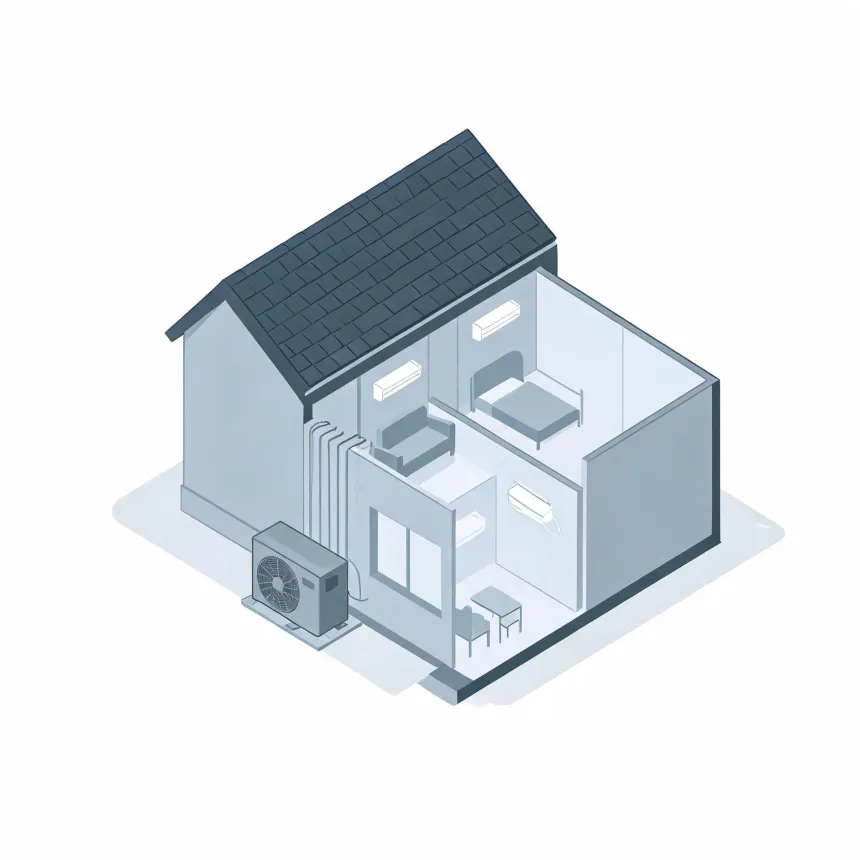
- That depends on how many indoor heads the outdoor unit runs. Each indoor head heats and cools one room or open area, so a multi-zone system is really several indoor units sharing one outdoor unit. A contractor sizes the system to the rooms you want covered and how they're laid out, since a house with a lot of separate rooms needs a different setup than one open floor plan.
- Can a mini split heat a whole house?
- It can, if enough zones are installed to reach every room, but a single indoor head is only built to heat the space it's in. Whole-house coverage means placing heads where the rooms are and sizing the outdoor unit to carry all of them at once, including on the coldest nights when it's 16°F outside. A contractor can walk your house and tell you how many zones it would take to cover it fully.