




Musty smell from vents in Twin Falls, ID

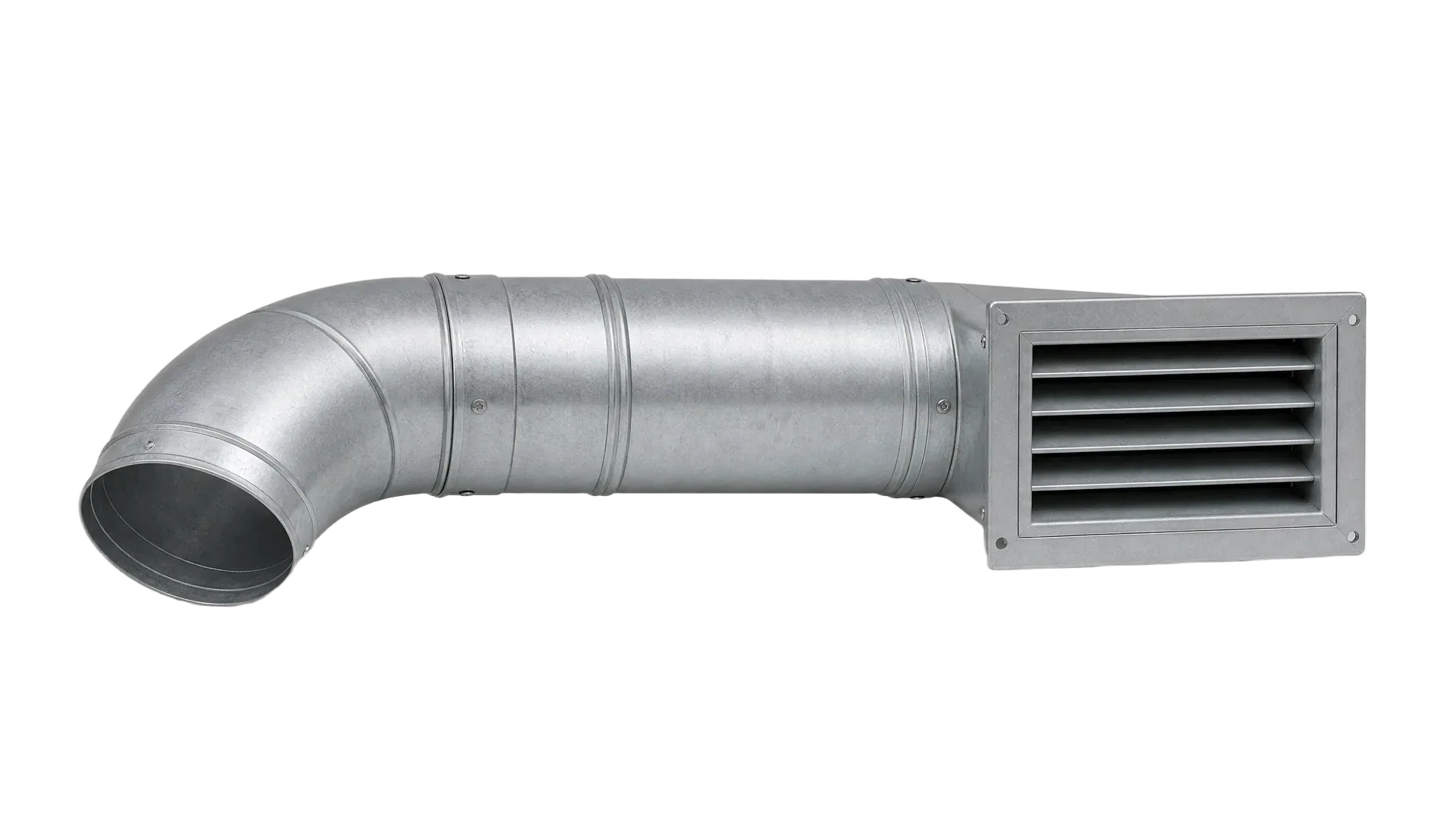
A galvanized metal round duct with a 90-degree elbow connected to a rectangular louvered vent grille, shown against a plain gray background.
Find my pro

A musty smell from your vents usually means mold or mildew growing somewhere in the duct system, often in the cooling coil or the drain pan under it, where condensation sits during Twin Falls summers. It can also come from dust and debris that have built up inside the ducts over time and started to break down. Summers here get hot and dry, so the air conditioner runs hard for months, and any moisture it pulls out of the air has to drain away properly or it sits and grows something. If the smell only shows up when the AC or furnace first kicks on, that points straight to the system itself rather than the house around it. It is worth taking seriously. Mold spores circulating through the air you breathe can affect anyone in the house, especially if someone already has allergies or asthma. A duct cleaning, done right, removes the growth and the buildup feeding it rather than just covering the smell.

Why would your ducts grow mold in the first place?

  • Half the homes here were built by 1982

    Half the homes in Twin Falls County were built in 1982 or earlier, and ductwork that old has had decades to collect the dust mold feeds on.

  • Heat runs September through May

    Heat runs here from September through May, nine months of air moving through the same ducts where moisture and dust can settle.

  • Cooling runs July through August

    Cooling only runs in July and August, but those two months are when the coil sweats and gives mold the damp spot it needs.

ACS 2020-2024 · NOAA nClimDiv 1991-2020

An older man with gray hair and a beard, wearing a dark jacket dusted with snow, stands smiling in a dimly lit hallway with lamps and a living room visible behind him.
A gray-haired, bearded man in a dark snow-dusted coat stands smiling in a dimly lit entry hall with a staircase, a lit table lamp, a framed picture, and a living room visible through a doorway.
An older man with white hair and a beard, wearing a dark snow-dusted coat and scarf, stands in a warmly lit interior hallway with a framed landscape picture, a table lamp and a potted plant behind him, and a snowy view through a window at left.
A gray-haired, bearded man in a dark coat dusted with snow stands smiling in a dimly lit room with a lamp, mirror, framed art, and a sofa in the background.

Why does it smell worse when the air kicks on?

You probably notice it most in the first minute after the furnace or AC starts up, a damp, musty smell that fades once the air has been moving a while. It might be stronger in certain rooms, or show up only when you run the AC hard during a hot stretch. Some households also deal with more sneezing or a stuffy feeling indoors that eases up when they leave the house. None of that means the system is unsafe to run. But mold in the ducts spreads on its own, and the longer it sits, the more of the house it reaches every time the air comes on.

Galvanized sheet-metal ductwork and pipes running along an unfinished basement ceiling beside a plain beige wall, with a gray equipment cabinet below.

A smell that fades on its own

Some musty smells thin out after a few minutes of running and barely register after that. The moisture that caused it was minor, or it's sitting somewhere the airflow reaches and dries out once the system has been on a while. That doesn't mean nothing is growing back there, but it's a lighter case than what keeps coming back strong, and a cleaning can usually clear it without more digging.

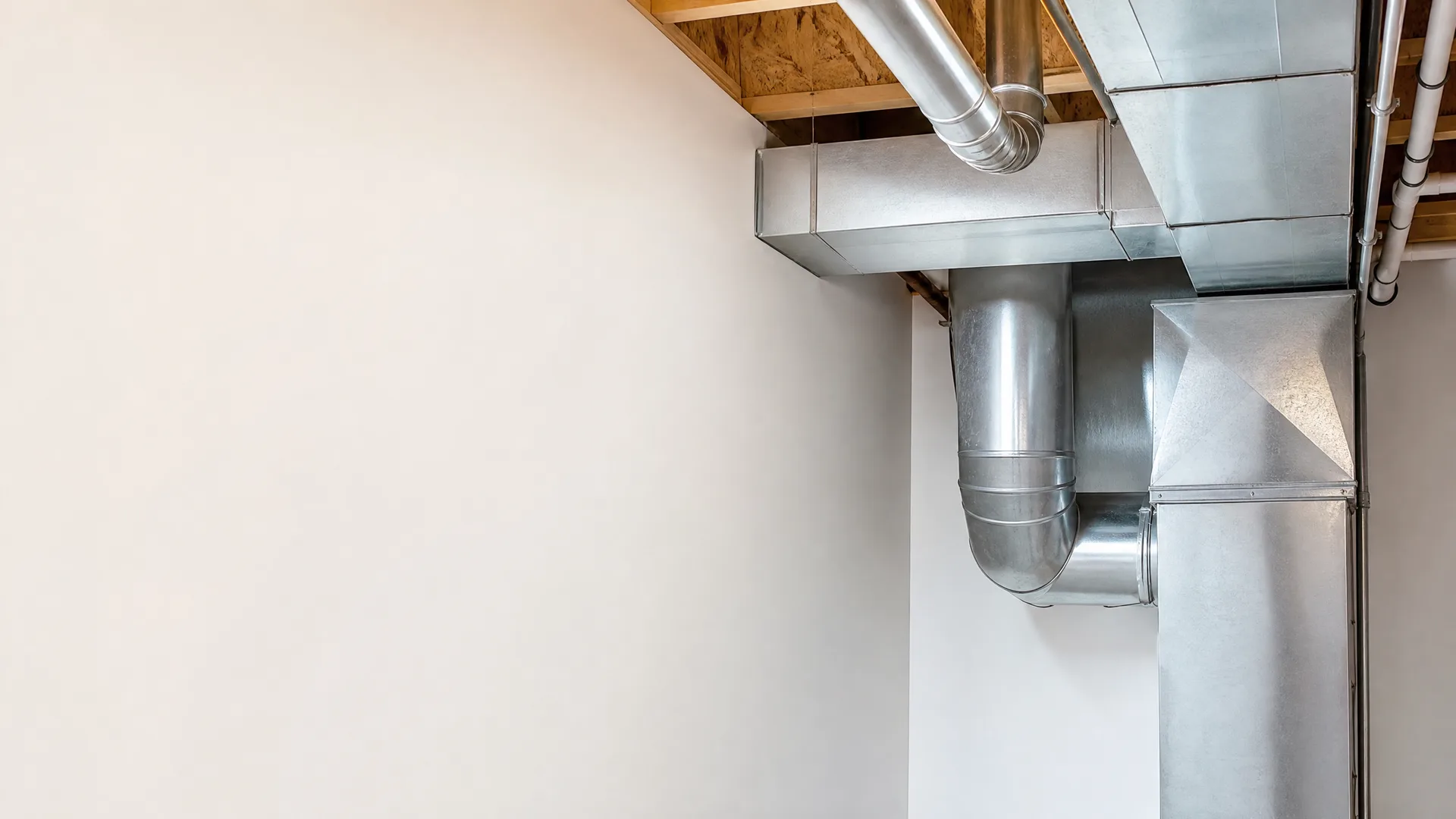
Galvanized sheet metal rectangular and round HVAC ducts running along a ceiling and down a white interior wall, with exposed wood joists and subfloor above.

A smell that keeps coming back strong

If the smell returns full force every time the system starts, and it's been doing that for months, something in the ducts is staying wet or is coated heavily enough that drying doesn't help. That's often the coil or drain pan, or a section of duct that holds moisture longer than the rest. This case is worth having looked at directly, since cleaning alone may not reach what's actually causing it.

Clean the ducts or live with it

Clean the ducts

  • A contractor brushes and vacuums the supply and return runs, pulling out the dust and debris mold has been feeding on.
  • The cooling coil and drain pan get cleaned too, since that's usually where the moisture that starts the smell is sitting.
  • Once the buildup is gone, there's nothing left in the ducts for mold to grow on, even after the coil sweats again next summer.
  • It addresses the dust that's been collecting since the ductwork went in, which for half the homes in Twin Falls County means decades.
  • It's a one-time service that resets the system, though whatever let moisture collect in the first place is still there.

Leave it alone

  • The smell doesn't go away on its own, since the mold or mildew causing it stays put whether or not the air is running.
  • It may fade a few minutes after startup, but that just means the airflow is pushing it around, not clearing it out.
  • Dust keeps building on top of whatever's already there, giving mold more to feed on every month the system runs.
  • Nine months of heat a year, September through May, means a lot of time for a small problem to turn into a bigger one.
  • Skipping it costs nothing up front, but the smell tends to come back stronger and show up in more rooms over time.
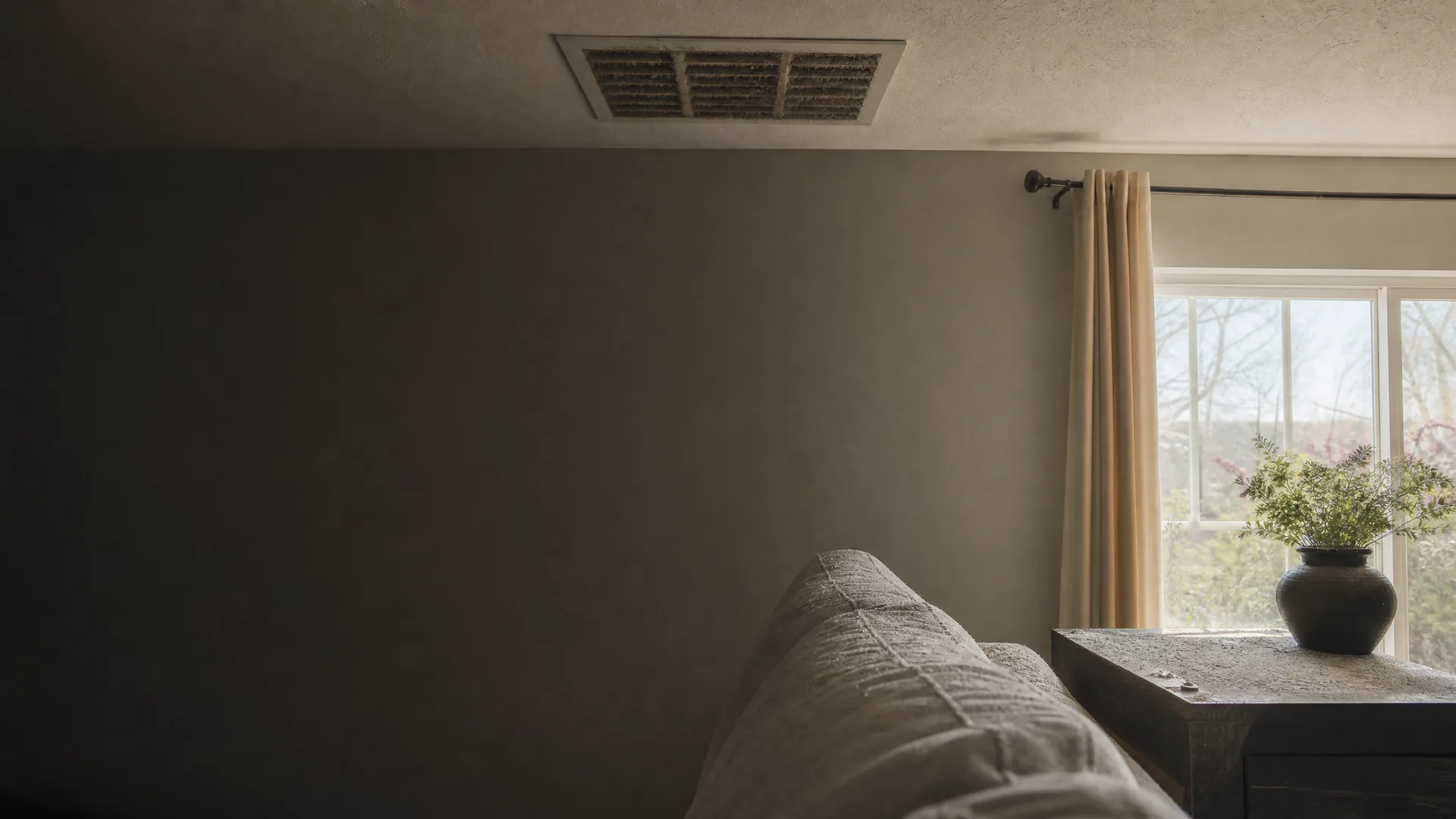
Dim interior corner of a room with a ceiling air vent, a beige wall, a cream curtain beside a window showing bare trees, and a dark ceramic vase of flowers on a wooden side table behind a light upholstered sofa back.

Spring sun is coming through the living room window, bright enough that you finally notice the ceiling vent. The grille is gray with dust, and a thin film of it has settled on the TV stand and the tops of the picture frames below. You run a finger along the louvers and it comes away dark. The furnace hasn't kicked on in a while with the weather this mild, but the smell is still there when the air does move, faint and damp. You stand on the couch cushion to get a better look at the grille and wonder how long that dust has been sitting up there, and how much of it is falling on the room every time the system runs.

Get matched with a duct system pro in Twin Falls County

A musty smell that keeps coming back isn't something a filter change or a scented vent clip fixes. If mold has settled into the duct lining or the coil, it stays there until someone gets in and removes it, and every month it sits is another month that air moves through your house before it reaches your kids or your lungs. Twin Falls summers push the AC hard enough to keep that coil wet for hours at a stretch, so the conditions that started the smell are still there, running every day the system does. You don't need to know whether it's the coil, the drain pan, or dust built up in the runs. A contractor who does this for a living can tell by looking and knows what a proper cleaning in a house like yours takes. Send the request and that part of it is off your plate.

A duct system moves the same air through the house again and again, so anything growing inside it gets carried into every room on that line, not just the one near the vent.

Wiping down a grille or swapping a filter only touches the air passing through at that moment. The mold stays on the duct walls and keeps seeding the next pass.

Power here costs 11.78 cents per kilowatt-hour

At 11.78 cents a kilowatt-hour, running the blower longer than usual to chase a musty smell out of the ducts costs you very little. There's no reason to ration airflow while you wait for a cleaning, cheap power means the fix matters more than the electric bill.

EIA-861 2025

The smell showed up this year

If this is new, something changed. Maybe the coil has been wetter than usual because the AC has been running harder through a hot stretch, or a condensate drain is draining slower than it should. A duct system that was fine last summer can still pick up mold this summer if moisture had a place to sit. New doesn't mean minor. It means whatever's growing in there hasn't had years to spread through the whole system yet, which is worth knowing before a contractor looks at it.


It's been there for years

If the smell has come and gone every summer for as long as you remember, it's had time to work into the duct lining itself, not just the coil or drain pan. That changes what cleaning it out involves, since a contractor is dealing with growth that's settled in rather than something fresh. It also means every summer it's been running, that air has carried whatever's growing through the whole house. Long-standing doesn't mean worse necessarily, but it does mean more of the system has likely been exposed.

A woman wrapped in a thick fleece blanket sits on a sofa holding an open book, beside a lit table lamp and a frost-covered dark window.
A smiling older woman with gray shoulder-length hair in a cream cable-knit turtleneck sweater stands behind a wooden board holding a round loaf of bread, in a warmly lit kitchen with a dark window and shelves behind her.

A smell you notice at the register

Lean in close to the vent and the musty smell is sharp, but you can't smell it anywhere else in the room. That points to something local, right behind that one grille.

Connect with a pro

A smell that fills the room

The whole room smells musty, not just the air coming out of the vent. That points to the duct system itself, carrying the smell to every room on that line.

Connect with a pro
A woman in a long cream cardigan and jeans stands at an open wooden front door of a gray shingled house with stone-based porch columns, with a second person visible inside, and potted flowers and shrubs beside the entry.

A musty smell has a source, and it can be found

A musty smell from your vents means moisture and dust have found each other somewhere in the duct system, most often at the cooling coil or the drain pan beneath it. That's the whole mechanism. It isn't mysterious and it isn't something the house just does. It gets worse when the air kicks on because that's when the moving air carries whatever is growing there into the rooms you live in, and it eases off once things dry out, until the next time the system runs.

Knowing that doesn't get the duct system cleaned. That part takes someone who can get into the supply and return runs and the coil itself, with the right equipment, and confirm what's actually sitting in there before pulling it out. A Twin Falls contractor who takes on this kind of job will look at your system specifically, not a general description of one, and work from what they find. Once you send the request, the next step is theirs to run down, not yours.

A shallow dark wooden bowl and a stack of books rest on a wooden table in front of a beige sofa with linen and green cushions, with a tall ceramic vase of thin branches beside a window in the background.
A single-story white stucco house with dark roof, stone-clad entry tower and three dark garage doors, lit from within at dusk, with a curved concrete driveway and dark mulch beds with boulders and bare young trees in the foreground under an orange and blue sunset sky.

Ductwork Cleaning

A duct system pro near you

Duct and vent cleaningDucts or ventsTwin Falls County, ID
Step 1 of 2

What ZIP code is the job in?

  • A pale ceramic vase holding dried hydrangea blooms sits on a wooden windowsill in sunlight, with green foliage blurred beyond the window glass.
    • A local pro who knows ducts gets your details and gets in touch.
    • Your duct cleaning request goes to a local pro who does this work.
  • Sunlit window seat with a cushioned bench and three textured throw pillows beside a dark wooden round side table holding a small stone bowl and a potted green plant.
    • Send the request and finding a pro stops being your problem.
    • After this form, you can stop searching for a duct system pro.
  • A potted olive-like tree in a wide beige ceramic planter sits on a pale stone ledge beside a black-framed window with blurred greenery outside.
    • Skip searching for someone who cleans ducts in Twin Falls County.
    • One form replaces the calls you'd make to find a duct system pro.
  • A wooden bench by a black-framed window holds a beige striped pillow, a fringed knit throw, and a pale ceramic vase with olive branches, with green foliage and a white house visible outside.
    • The pro who gets in touch is licensed in Idaho and works in Twin Falls County.
    • A licensed pro who works in Twin Falls County gets your request.