

Why your house is so dusty in Twin Falls, ID

Skip searching for a duct system pro and answer a few questions instead.

Skip calling around

The dust is coming through your ducts. Twin Falls sits on dry, open ground, and summer air here carries fine dust that works its way into the house through windows, doors, and the gaps around them. Your duct system pulls that air through the house and recirculates it every time the furnace or AC runs. If the filter is the wrong size, loose in its slot, or overdue for a change, it stops catching that dust and starts pushing it back out through every vent. Dry winter air makes it worse, since static holds dust in the air longer instead of letting it settle. A duct system that has not been cleaned in years can also be holding dust in its bends and joints, feeding it back into the house long after the filter is changed. If you are wiping down the same surfaces every few days, the ducts are a likely source, not just the air outside.

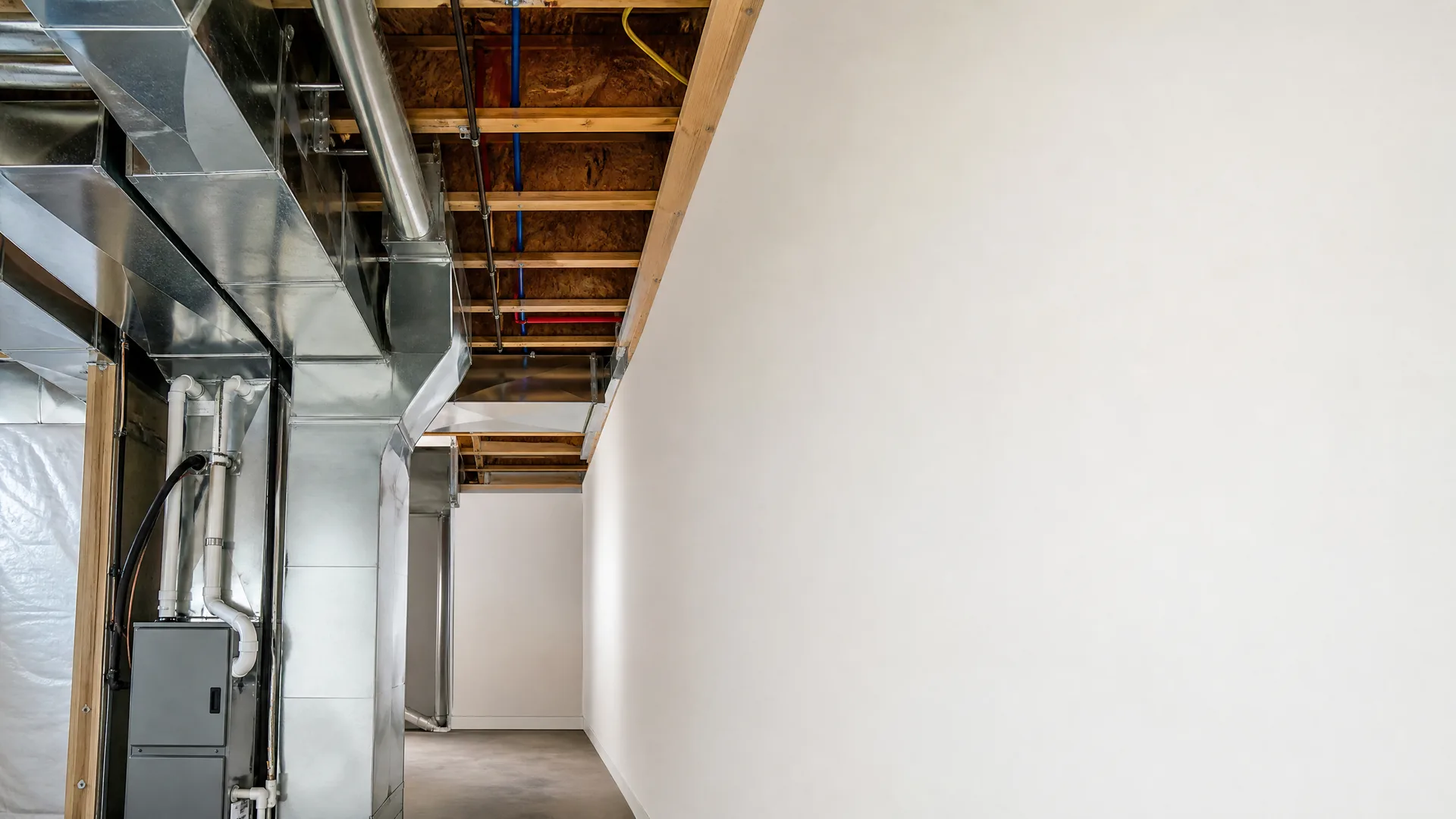
Unfinished basement corridor with exposed wood floor joists, pipes and wiring overhead, sheet-metal HVAC ductwork and an electrical panel along the left wall, and a blank white wall on the right.

Where the dust actually settles

Dust riding the return air doesn't stay in the ducts. It settles on the coil, on the blower wheel, and on the inside walls of the supply trunk, then gets pulled loose a little at a time every time the system runs. A blower wheel caked with dust moves less air for the same amount of work, so the furnace or AC runs longer to do the same job.

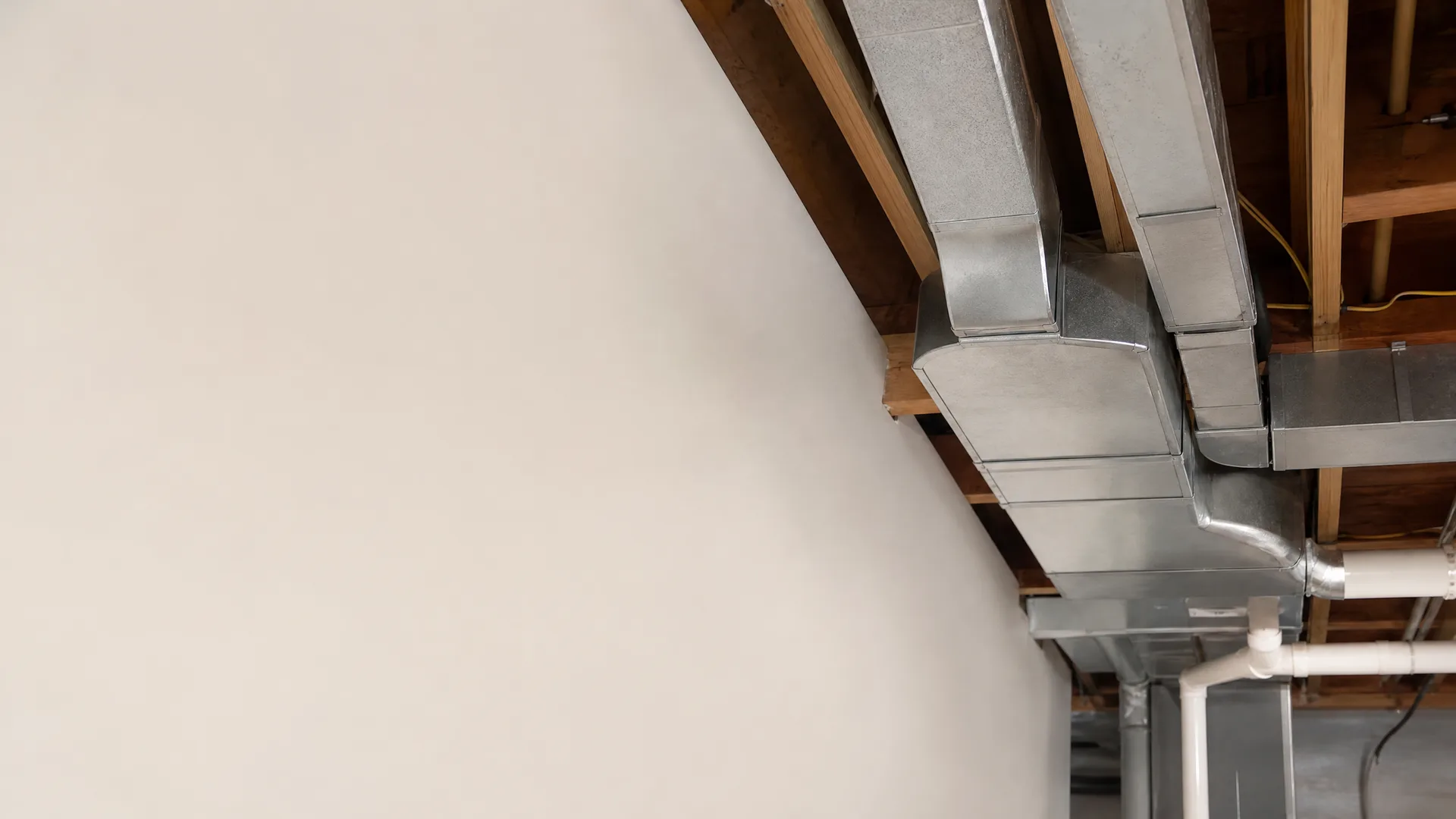
Interior basement ceiling with exposed wooden joists, sheet-metal HVAC ducts, and white PVC pipes beside a plain off-white wall.

Why filters alone fall short

A filter only catches what passes through its face, and air finds the path around it long before it finds the path through it. Gaps at the frame, a filter sized a little loose, or a door left open while the system runs all give dust a way past. Once it's in the ducts, cleaning the filter every month doesn't touch what's already coating the inside of the system.

Why does dust keep coming back in a Twin Falls house?

  • Half the homes here were built by 1982

    Half the homes in Twin Falls County were built in 1982 or earlier. Older ducts and gaps give dry dust more ways into the system.

  • Heat runs September through May

    Heat runs about nine months a year here, September through May. That's nine months of the blower pulling air, and dust, through the ducts.

  • Cooling runs July through August

    Cooling runs about two months a year, July and August, right when dry summer dust is heaviest in the air outside.

ACS 2020-2024 · NOAA nClimDiv 1991-2020

Empty unfinished basement with bare concrete floor, insulated walls with vapor barrier between wood studs, exposed wood joists, galvanized sheet-metal ductwork, a recessed light, and a steel support column.

Air moving clean

This is what a duct system looks like when it's keeping dust out of the air instead of spreading it. The runs are sealed at the joints, so the air pulled through the house is air that actually passed through the filter, not air pulled in around a loose seam.


Empty basement room with bare concrete walls and floor, exposed wooden floor joists overhead, large galvanized sheet-metal ducts with a vent grille, colored pipes, and a single lit bulb.

A gap dust can use

Sheet metal trunks like these pick up small separations at the joints over time, especially where they cross a long run of joists. Each gap is a place where dusty basement air gets pulled into the system and mixed straight into the air moving through your house.

Why does your house need dusting every few days

A film on the TV stand by the next day after you wipe it. Dust along the floor vents and a gray coat inside the return grille. Sneezing that eases up when you leave the house. Some rooms worse than others, usually the ones farthest from the furnace. You might notice it more by a supply vent, where air blows straight into the room and drops dust close by. Left alone, that dust builds up inside the furnace itself, on the blower wheel and the coil, and a dirty blower moves less air for the same effort. The filter can only catch what passes through it on its way back to the furnace.

Unfinished basement with bare concrete floor and walls, exposed wood joists, large galvanized sheet-metal ductwork, PVC and copper piping, and a gray furnace unit beside wood stud framing.

Ducts doing their job

This is what a duct system looks like when it isn't the problem. The runs are sealed, the joints are tight, and the furnace pulls air through the filter instead of around it. Dust still settles on furniture, but the system isn't the one feeding it.

Basement ceiling with large galvanized sheet-metal ductwork, round metal pipes and plumbing lines running beneath wood joists, above a bare concrete wall and floor.

Ducts adding to it

A loose joint here lets in air that never touched the filter, pulling basement dust and fine grit straight into the supply. The staining on that foundation wall points to moisture finding its way in too, and damp dust is what cakes onto the coil instead of blowing through.

A smiling woman with long brown hair in a dark sweater sits at a light stone kitchen counter with a glass of red wine, with a dimly lit living room in the background.
A smiling woman with dark hair pinned up, wearing a beige sweater, sits looking off to the side in a kitchen with a glass of red wine in front of her, a stainless steel refrigerator, marble counter and a potted plant behind her.
A smiling woman with dark shoulder-length hair in a navy sweater sits at a kitchen counter with a glass of red wine, with a lit living room and pendant lights behind her.
A woman in a dark gray sweater laughs while seated at a white marble counter with a glass of red wine, with a blurred living and dining room behind her.

No calling every shop in Twin Falls County

A duct system that's spreading dust instead of catching it isn't something you can see from the living room. You'd have to pull the return grille, check the trunk for gaps, look at the coil and blower wheel yourself, and know what you're looking at once you do. That's a different job than wiping shelves. It calls for someone who opens up ducts in Twin Falls houses for a living and knows where dry dust gets in on a system your age, whether that's a joint that was never sealed right or a return pulling air from a spot it shouldn't. Finding that person usually means calling around, describing the same dusty rooms three or four times, then weighing quotes you have no way to judge. Hand off the details once here and one local contractor who does this work gets them, not five companies competing for your callback. You keep dealing with the dust either way until it's handled. This just skips the part where you're the one tracking down who can handle it.

Cleaning without fixing the leaks

Getting the ducts cleaned pulls out what's already settled on the coil, the blower wheel, and the inside walls of the trunk. The air coming through the vents right after is noticeably better. But if the gaps where dust gets in are still open, dust starts collecting again the same way it did before. In a lot of Twin Falls homes, especially the older ones, cleaning alone buys you a few months before you're back to wiping the TV stand every day.

Cleaning paired with sealing the ducts

Cleaning takes out what's already there. Sealing the joints and gaps in the ductwork stops the dry outside dust from getting pulled back in every time the furnace or the AC runs. Done together, the air moving through the house is air that actually passed through the filter, not air pulled in around a gap in the trunk. That's the difference between a house that stays clean for a season and one that's back to dusty vents within a few weeks.

A smiling middle-aged man in a dark knit sweater sits at a dimly lit dinner table with a glass of red wine, a bowl of food, and a lit candle in the foreground.
A woman with long wavy brown hair in a knit sweater reclines on a couch with eyes closed under a textured blanket, an open book on her lap, beside a lit table lamp and potted plant.
A closed silver laptop and a light ceramic mug of dark coffee sit on a wooden table, with a window showing a sunset at left and a kitchen counter with a cutting board and potted plant in the background.

Dust that keeps coming back has a cause, not just a cure

The dust in your house is dry ground air getting pulled through gaps and circulated by a duct system that wasn't sealed to keep it out. Cleaning clears what's already on the coil, the blower wheel, and the trunk walls. Sealing the gaps is what stops the next load from building back up. A house with both done holds a clean house a lot longer than one with just the cleaning.

Finding someone to look at both parts usually means calling around, explaining the same gray film and the same sneezing to each one, then sitting on quotes trying to tell them apart. Here you put in your address once and it goes to a contractor working in Twin Falls County, someone who deals with this same dry dust and these same duct runs every year and knows where they tend to give out. One call, one person who already knows the ground you're standing on.

A gray upholstered sofa with a textured cushion sits beside a dark round side table holding a vase of green foliage, with a table lamp and sheer-curtained window behind.
A white clapboard house with black-trimmed windows and a dormer, photographed at dusk with lit windows, an illuminated porch and dark front door, flanked by potted hydrangeas, a stone walkway, clipped hedges and lawn.

Ductwork Cleaning

No phone calls to make

Duct and vent cleaningDucts or ventsTwin Falls County, ID
Step 1 of 2

What ZIP code is the job in?

  • An olive-green upholstered armchair with a cream knit throw and pillow, beside a matching ottoman holding a mug on a wooden tray and a book, with a dark wood bookshelf, candles, a large leafy plant, and a patterned rug nearby.
    • Get matched with someone who does this kind of work in Twin Falls County.
    • Get matched with a Twin Falls County pro who cleans ducts.
  • Two stacked hardcover books, the top one green, sit on a round dark wood table beside a ceramic mug and a potted fern, with a leather armchair, green cushion and knitted throw behind near a curtained window.
    • Send the form and finding a duct cleaner is handled.
    • One request and the duct cleaning stops waiting on you.
  • Living room interior with a stone fireplace and wooden mantel holding ceramic vases and a framed artwork, a round wood coffee table with a dark vase of greenery, a shallow bowl, books and a stone cup, and a beige sofa with gray pillows and a dark throw in the foreground.
    • Answer a few questions about the duct cleaning and skip the search.
    • Answer a few questions instead of calling shop after shop.
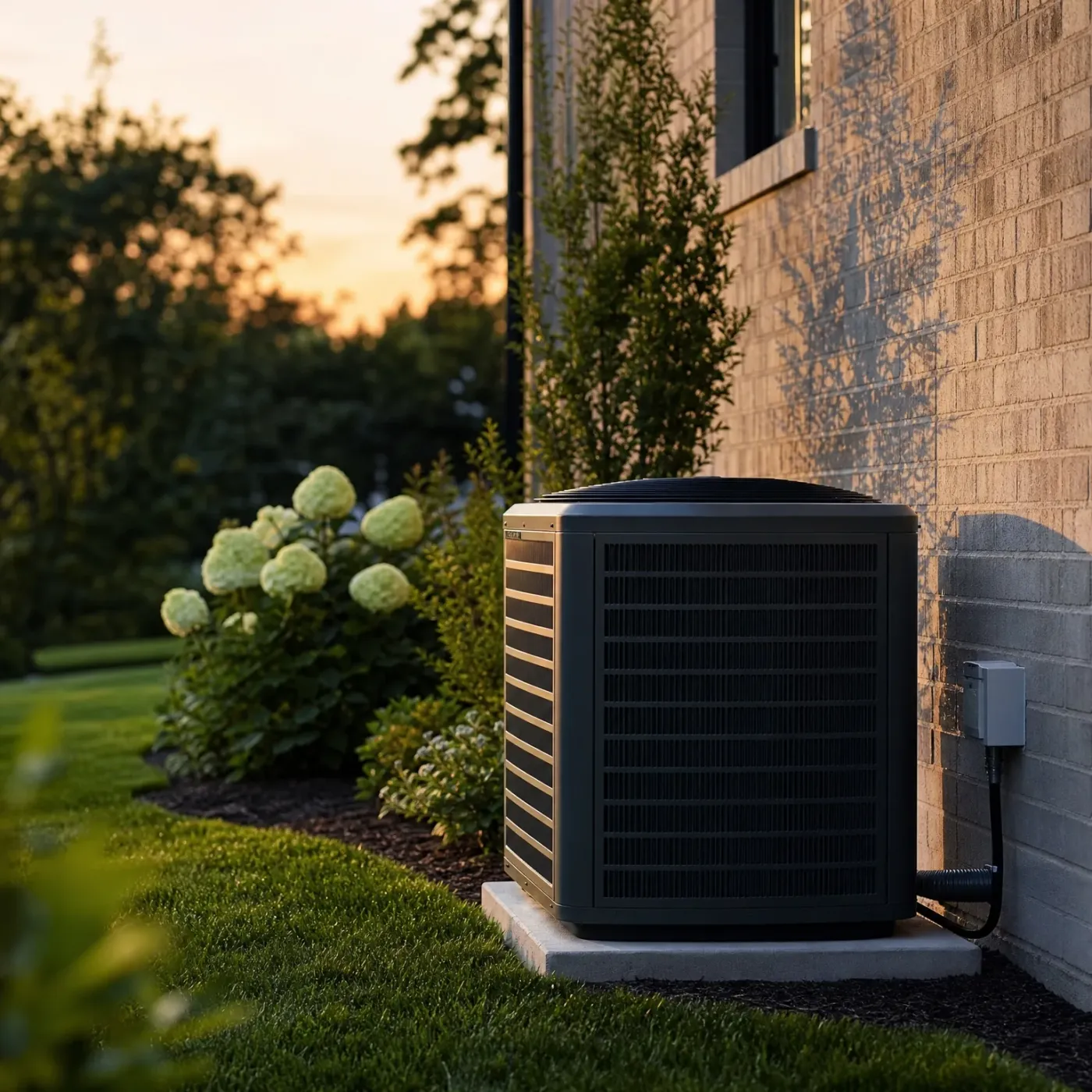
  • An outdoor air conditioning condenser unit on a concrete pad beside a brick house, with a wall-mounted disconnect box and conduit, lawn and flowering shrubs at left, and a sunset sky in the background.
    • Your request stays with one local pro.
    • Your duct cleaning request goes to one local pro.