How heat moves through the vent
- Hot air from the dryer has to travel the full length of the vent before it ever reaches outside.
- A straight, short vent clears that air in a few minutes; every extra foot or turn slows it down.
- Lint collects fastest at elbows and joints, where the airflow has to change direction.
- Once lint narrows the duct, the hot air moves slower and more of its heat transfers into the duct walls and the room around it.
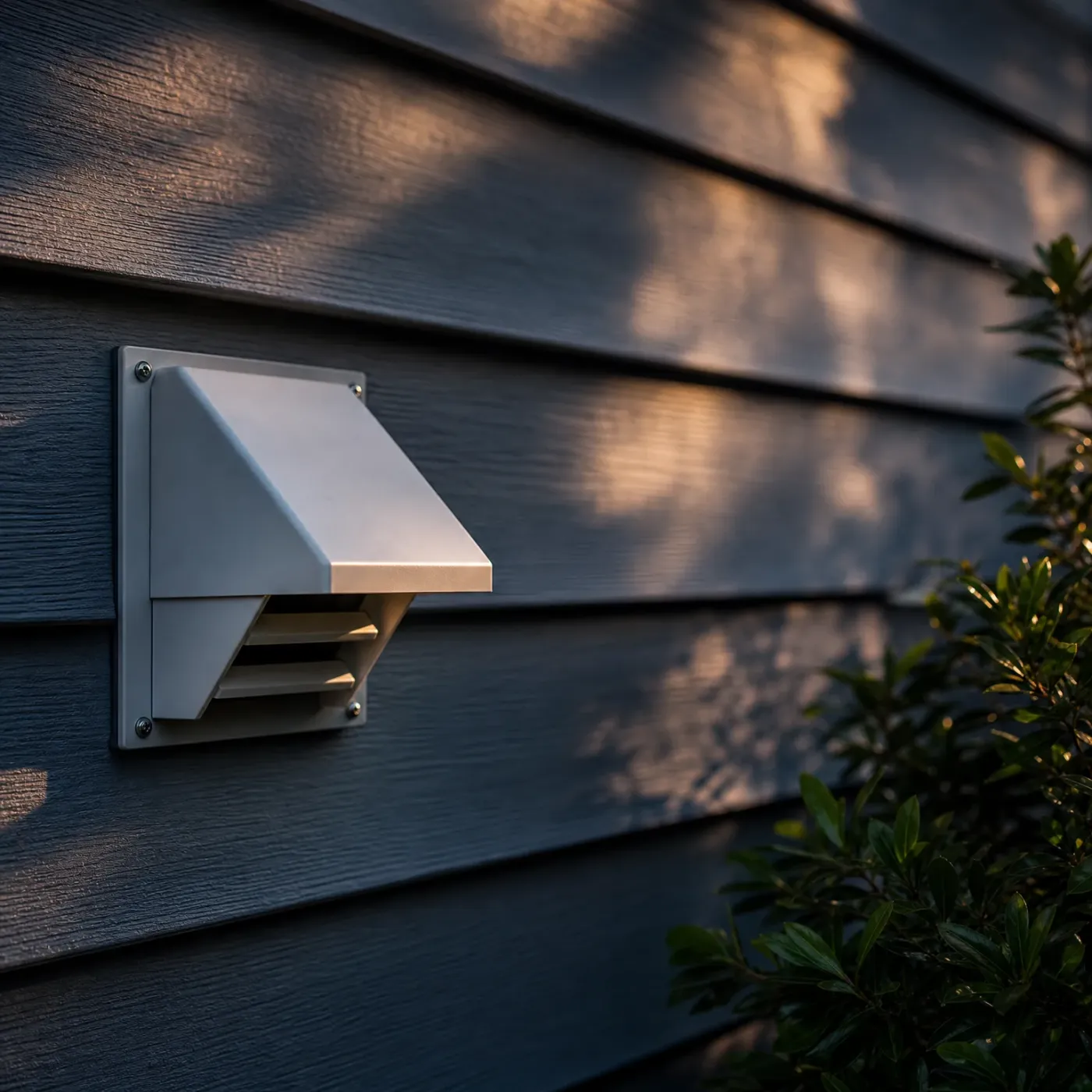
- A dryer vent flap that won't open all the way traps exhaust air behind it instead of releasing it outside.
- The longer hot air sits in the duct before escaping, the warmer the wall and the room next to it get.
A dryer doesn't heat the room on purpose. It heats the room when the air it pushes out can't get outside fast enough. That air starts hot and has to travel the whole length of the vent, through every turn, before it reaches the outside wall or roof. On a short, straight run, that trip takes a few minutes and the air stays moving the whole way. Add a few elbows, or a longer run than the dryer was built for, and the air slows down. Lint doesn't collect evenly along a duct. It builds up fastest where the duct bends, because that's where airflow has to change direction and the lint has somewhere to catch instead of just blowing through. As that lint narrows the opening, the same volume of hot air moves through a smaller space, slower than it should, and more of its heat passes into the duct wall instead of carrying outside with the air. The vent flap at the outside end matters too. It's supposed to swing open fully when the dryer runs and close when it's off. If lint or a weak spring keeps it from opening all the way, exhaust air backs up behind it instead of releasing. However it happens, slower air means more time in the duct, and more time in the duct means more heat left behind in the wall next to your laundry room.