
Birds nesting in a dryer vent in Idaho Falls, ID
Get matchedSpring in Bonneville County is nesting season, and a dryer vent hood is a warm, sheltered spot a bird can tuck into fast. Once there's a nest inside, lint has nowhere to go and your dryer has to work harder to push air out. Left alone, that's a fire risk, not just a slow dryer. You don't have to figure out how deep the nest goes or whether it's still active before you do anything about it. Answer a few questions about your home and your vent, and you'll be matched with a contractor near Idaho Falls who handles this kind of cleaning. They'll reach out to you directly. No climbing up to check the hood yourself, no guessing whether it's safe to run a load in the meantime. Once you send the form, it's off your plate.
Why do birds keep nesting in my dryer vent?
Spring comes around and you notice chirping behind the dryer, or lint that won't clear the way it used to. It's not the first time either. If this has happened more than once, it's worth knowing why your vent keeps drawing birds back instead of some other spot on the house.
A dryer vent hood is one of the few warm, dry openings on the outside of your house
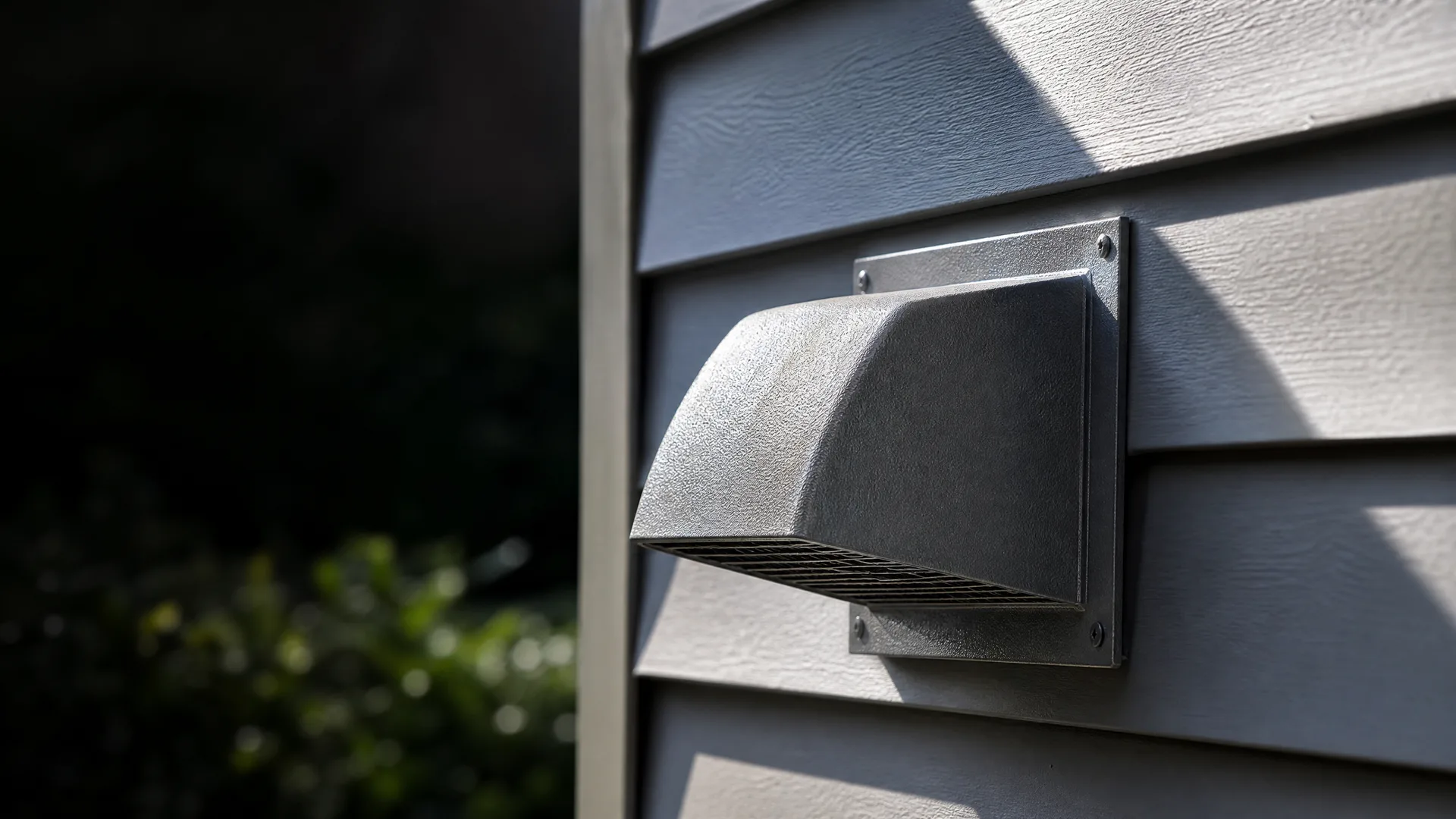
Birds look for a gap that keeps wind and rain off their eggs, and a dryer vent hood does that better than most ledges or gutters. The flap on most hoods is light enough to push open, and once a bird gets past it there's a straight, sheltered run right into the duct. Bonneville County's spring nesting season lines up with the first warm stretch after a hard winter, so a vent that sat unused for months is exactly the kind of spot a bird checks first. If one nest has been built there, the same hood will draw another bird next spring unless something changes about the opening itself.




Which Vent Cover Keeps Birds Out
Louvered or flap vent hood
- The flaps only open when the dryer is running, so there's no gap for a bird to walk into when the machine sits idle.
- Weak springs or a buildup of lint can leave the flaps hanging open, which is exactly what lets a bird get a look inside.
- These covers are common on older installations around Idaho Falls and tend to be the ones a contractor finds packed with nesting material.
- They cost less to install than a guard-style cover, but they need checking each spring since the hinges wear out over time.
- If the flaps are bent or stuck, a bird can push through even with the dryer running on and off all day.
Guard-style vent cover with mesh
- A rigid screen or mesh guard blocks the opening year-round, whether the dryer is running or not.
- This keeps birds and rodents out without relying on moving parts that can wear down or jam with lint.
- Mesh openings still have to be wide enough to let air move freely, or lint builds up on the screen instead of clearing the vent.
- It holds up well through hard winters here since there's no spring or hinge that can freeze or seize.
- A contractor can swap a flap hood for one of these during a cleaning visit if the current cover is what let birds in.

You run a load after dinner and come back to switch it over. The towels are still damp, heavier than they should be after a full cycle, and the room smells faintly warm instead of clean. You open the lint trap and it's clear, so that's not it. Outside, near the vent hood, there's been chirping on and off for a few days, the kind you figured was just a bird passing through the yard. You pile the damp towels on top of the dryer and stand there a second, working out whether to run it again or go check the vent before it gets dark. Another April evening in Bonneville County, and the dryer isn't the problem so much as whatever's living in its exhaust.
The right pro for this job
A nest doesn't come out on its own, and poking at it from outside the hood usually just packs it in tighter against the duct wall. Getting it clear means opening the line enough to pull the whole nest, not just what's reachable from the yard, and checking that the vent run itself is unobstructed all the way to where it ties into the dryer. That matters more in Bonneville County than it would somewhere milder. Your dryer is already working against a hard winter and whatever moisture it's pulling out of a load, and a blocked vent on top of that means longer cycles and a motor running hotter than it should for months at a stretch. Spring nesting season doesn't stop at one bird or one visit either. If something let a bird in once, the same gap is there for the next one unless it gets addressed. Handing this off now means it gets looked at properly instead of becoming a routine you repeat every spring.
How the Vent Actually Blocks Up
- A dryer vent run is one straight-ish metal duct from the back of the machine to a hood outside, usually ten to twenty feet.
- The hood has a damper or flap meant to keep it shut except when the dryer is actually blowing air through it.
- A nest usually sits right inside the hood opening or a foot or two back, not deep in the duct run.
- Lint sticks to nest material because it's already warm and slightly damp from past cycles, and that mix packs together instead of blowing loose.
- A blocked vent forces the dryer's exhaust fan to push against resistance it wasn't built for, which raises the air temperature inside the drum.
- Clearing it means taking the hood off or opening the duct at a joint, not just reaching in from outside with a hand or hook.
A dryer vent is simpler than people picture. It's one duct, metal, running from the back of the dryer to a hood on the outside wall, usually somewhere between ten and twenty feet depending on where the machine sits in the house. That hood is supposed to stay closed except when the dryer is running, held shut by a damper or a set of flaps. Birds don't care what it's for. They see a sheltered opening a foot or so wide, out of the wind, and they build right there, usually within a foot or two of the opening rather than pushing deep into the duct itself.
Once nest material is in the hood, lint starts collecting on it fast. The lint coming through is already warm and carries a bit of moisture from the cycle, and that's exactly what makes it stick to twigs and grass instead of blowing on through and out. Over a few loads it packs into something closer to felt than lint.
That packed mass forces the dryer's exhaust fan to push air against resistance it was never built to handle, and the drum runs hotter than it should as a result. Because the blockage sits at the hood end, not buried in the duct, clearing it means opening the line there, either pulling the hood off or breaking the joint nearest it. Reaching in from the yard with a hand or a hook mostly just pushes the nest further back in.
How many people are actually relying on this dryer to work
2.9 people per household on average
With 2.9 people in the average Bonneville County household, this dryer is probably running most days, which means a blocked vent gets found fast or it gets bad fast.
Half the homes here were built by 1985
Half the homes here were built in 1985 or earlier, old enough that the original vent hood may have a worn flap or no damper at all, nothing to keep a bird out.
Power here costs 11.19 cents per kilowatt-hour
At 11.19 cents per kilowatt-hour, power here is cheap, but a dryer fighting a blocked vent still runs longer to dry the same load, and that adds up over a season.
ACS 2020-2024 · EIA-861 2025
Why lint buildup matters so much
A dryer pushes hot, damp air through the duct with every load. When a nest blocks part of that path, the air that would normally carry lint outside slows down and drops it along the way instead, right where the duct is already narrowed. That lint is dry and it sits close to the heating element each time the dryer runs. A clear vent lets heat and moisture escape in a few minutes. A blocked one holds both inside the duct, which is how a small nest turns into a real fire risk instead of just a nuisance behind the wall.
What a longer dry cycle is telling you
Idaho Falls winters push dryers harder since towels and jackets hold more moisture coming out of the cold. If a load that used to take forty minutes now takes over an hour, the vent is the first place to look, not the dryer itself. The drum, the heating element and the belt haven't changed. What's changed is how much air can get out the back of the machine and down that duct to the hood. A nest from this spring narrows that path every month it's left in place, so cycle times tend to creep up rather than jump all at once.
2.9 people per household on average
At 2.9 people, this house is probably running a load most days, sometimes more than one. That's more chances for a blocked vent to show up as a long dry time before it turns into something worse, but it also means less time where a nest can sit there unnoticed.
ACS 2020-2024
A bird in the vent doesn't fix itself, and running the dryer anyway just packs the nest in tighter. The fix is mechanical: open the line, pull the nest out whole, check that the damper swings freely again, and confirm air is moving at the hood like it should. That's not a job for a shop vac through the lint trap. Once you send the request, you're done chasing this yourself. A contractor who works on vents in Bonneville County homes takes it from there and gets in touch to sort out the rest. Your dryer goes back to drying a load in one cycle instead of two, the warm damp smell clears out of the laundry room, and the nest doesn't come back the next time something tries to build there. Spring brings this around every year here, but once the line is clear and the damper's working, it's clear. You don't have to climb up and check the hood yourself or guess whether what you're hearing is birds again.
Matched to your dryer vent job