
HVAC Installation in Rigby, ID
A new system here will heat from September through June and cool from July through August every year. Tell us about the house, and a licensed contractor who covers Jefferson County will get in touch.
Tell us about the job
It takes about a minute.

Rigby asks for heat almost every month of the year
Winter nights here average 11°F from December through February, and homes need heat from September through June, ten months straight. A new furnace has to hold up through that whole stretch, not just the coldest weeks. Summer is short, just July and August, with afternoons averaging 83°F, but the system still has to switch over and cool the house those months.
Nearly half of homes here heat with gas, and a new gas furnace has to meet the federal efficiency minimum set for that fuel. The county has logged 58 winter storms and 144 damaging wind events over the past ten years, and statewide, 11% of households went at least 24 hours without power in 2024. A new system should be sized and installed with that in mind, not just for a calm day in September.
- 10 months
- September through June, your system heats
- 2 months
- July through August, it cools
- 11°F
- the average winter night it heats against
- 83°F
- the average summer afternoon it cools against
NOAA nClimDiv, 1991–2020 normals
Idaho requires HVAC contractors to hold a state license.
The Idaho HVAC Board issues that license, and it's tied to the contractor, not to any single job. That means the same license has to be in place whether the work is a repair call or a full system installation like this one, and it's the state's record of who is qualified to do HVAC work in Idaho.
For an installation, that license is what backs the person doing the work, but it isn't the only check on this job. In most cities and counties here, swapping in a new furnace, air conditioner or heat pump needs a permit from the local building office, and the work gets inspected once it's done. That inspection is separate from the state license. It's the local check that the installation itself, the gas connections, the wiring, the venting, was done right.
Sources: Idaho Legislature · Idaho Division of Occupational and Professional Licenses
- When should I replace my HVAC system?
- Once repairs start happening every year, or the system can no longer keep the house warm when it's 11 below outside, it's time to replace it rather than fix it again. Age matters too. A furnace or air conditioner in the later years of its life is more likely to fail on the coldest night of the year, and with heat needed here from September through June, that failure matters more than it would somewhere warmer. A contractor can look at the specific unit and tell you whether another repair makes sense or whether you're just delaying the inevitable.
- Should I replace my furnace and air conditioner at the same time?
- If both are old, replacing them together is often worth considering, since a furnace and air conditioner installed years apart may not match well when one finally fails. They're built to work as a pair, sharing the same blower and coil in many systems, so pairing an old unit with a new one can mean the new one never runs at its best. That said, with only two months of cooling here against ten of heat, a homeowner with a healthy air conditioner and a dying furnace may reasonably choose to replace just the furnace. A contractor can look at the age and condition of both and tell you whether pairing them makes sense for your house.
- What happens during an HVAC installation?
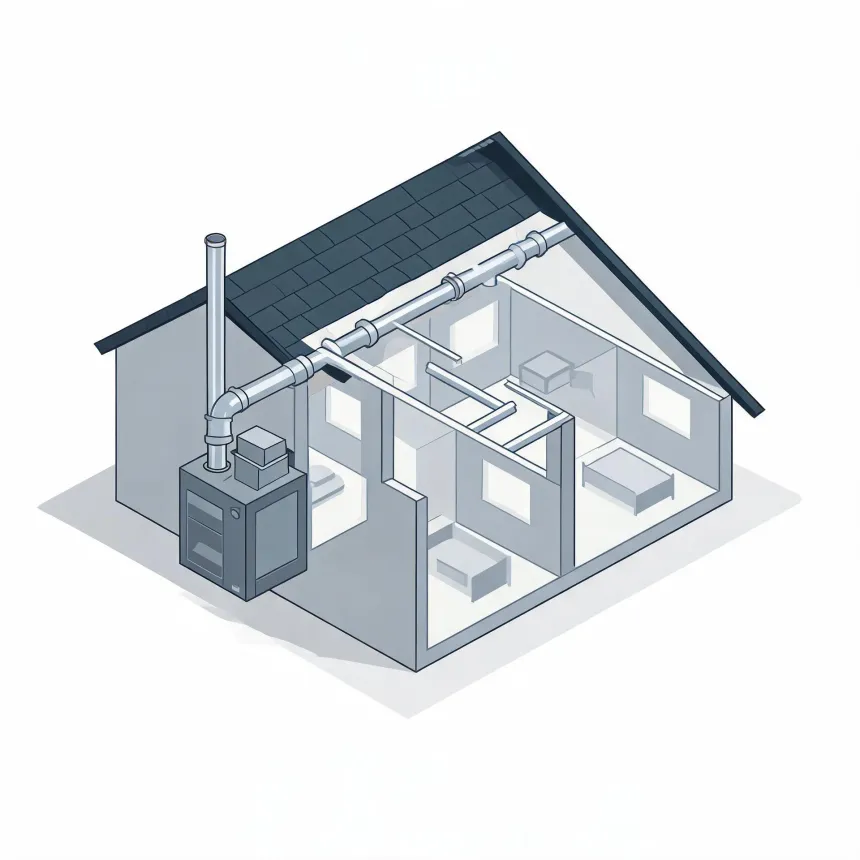
- A contractor removes the old furnace, air conditioner or heat pump and sets the new equipment in its place, connecting it to the ductwork, gas line or refrigerant lines, and electrical wiring the system needs to run. Once it's connected, they test it, checking airflow, checking that the system reaches the temperature it's set to, and checking for gas or refrigerant leaks. Because replacing this kind of equipment needs a permit in most cities and counties here, the job also includes an inspection once the work is done. That inspection isn't extra red tape. It's confirmation that the gas line, the electrical work, and the venting were all done to code before the system runs all winter.