Mini Split Installation in Rigby, ID
A new system here will heat from September through June and cool from July through August every year. Tell us about the house, and a licensed contractor who covers Jefferson County will get in touch.
Tell us about the job
It takes about a minute.
A mini-split here works nearly the whole year
Rigby needs heat from September through June and cooling in July and August. That is 12 months of the year asking something of a mini-split, with only a short break between seasons.
Winter nights average 11°F here, which is real cold for a heat pump to pull warmth from. Look for a unit rated to perform at low temperatures, not just one that meets the minimum. Any mini-split installed new has to meet the federal floor of 14.3 SEER2 for cooling and 7.5 HSPF2 for heating, but in a place this cold, the heating rating matters more than most.
- 10 months
- September through June, your system heats
- 2 months
- July through August, it cools
- 11°F
- the average winter night it heats against
- 83°F
- the average summer afternoon it cools against
NOAA nClimDiv, 1991–2020 normals
Idaho requires HVAC contractors to hold a state license.
The license is issued to the contractor, not to the job itself. It covers the person or company doing the work, tested and put on record by Idaho's HVAC Board, rather than something pulled fresh for each installation.
For a mini-split installation, that license is the credential behind whoever does the work. Most cities and counties also require a permit from the local building office and an inspection once the installation is finished, which checks the job itself rather than the contractor.
Sources: Idaho Legislature · Idaho Division of Occupational and Professional Licenses
- Is a mini split worth it?
- For most homes it comes down to what you're heating or cooling and how the space is set up now. A mini split puts heat right where you need it, room by room, without ductwork, so it works well for additions, garages, or rooms that rely on window units or space heaters. Winters here get down to 11°F on average, so ask the contractor whether the unit you're looking at is rated to keep producing heat at that temperature, since not every model performs the same in real cold.
- How many rooms can a mini split cover?
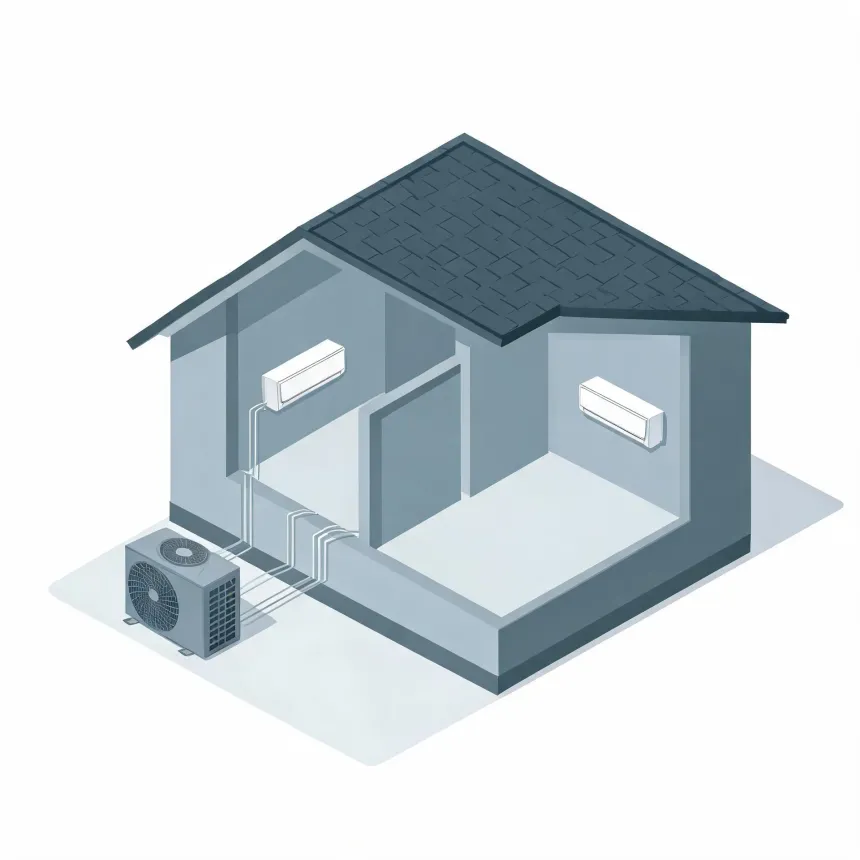
- A single outdoor unit can run one indoor head or several, depending on the system. Each indoor head heats and cools the room it's mounted in, so the number of rooms you can cover comes down to how many heads that outdoor unit supports and how it's sized for those spaces. A contractor will look at the square footage and layout of the house before saying how many zones make sense.
- Can a mini split heat a whole house?
- Yes, if it's sized and placed for that job. A multi-zone system with an indoor head in each room can heat an entire house the same way a furnace does, just without ducts. Homes here need heat from September through June, so the system has to be sized to keep up on the coldest nights, not just the mild ones. That sizing is worth having a contractor work out room by room rather than guessing at it.