Is duct cleaning worth it in Boise City, ID

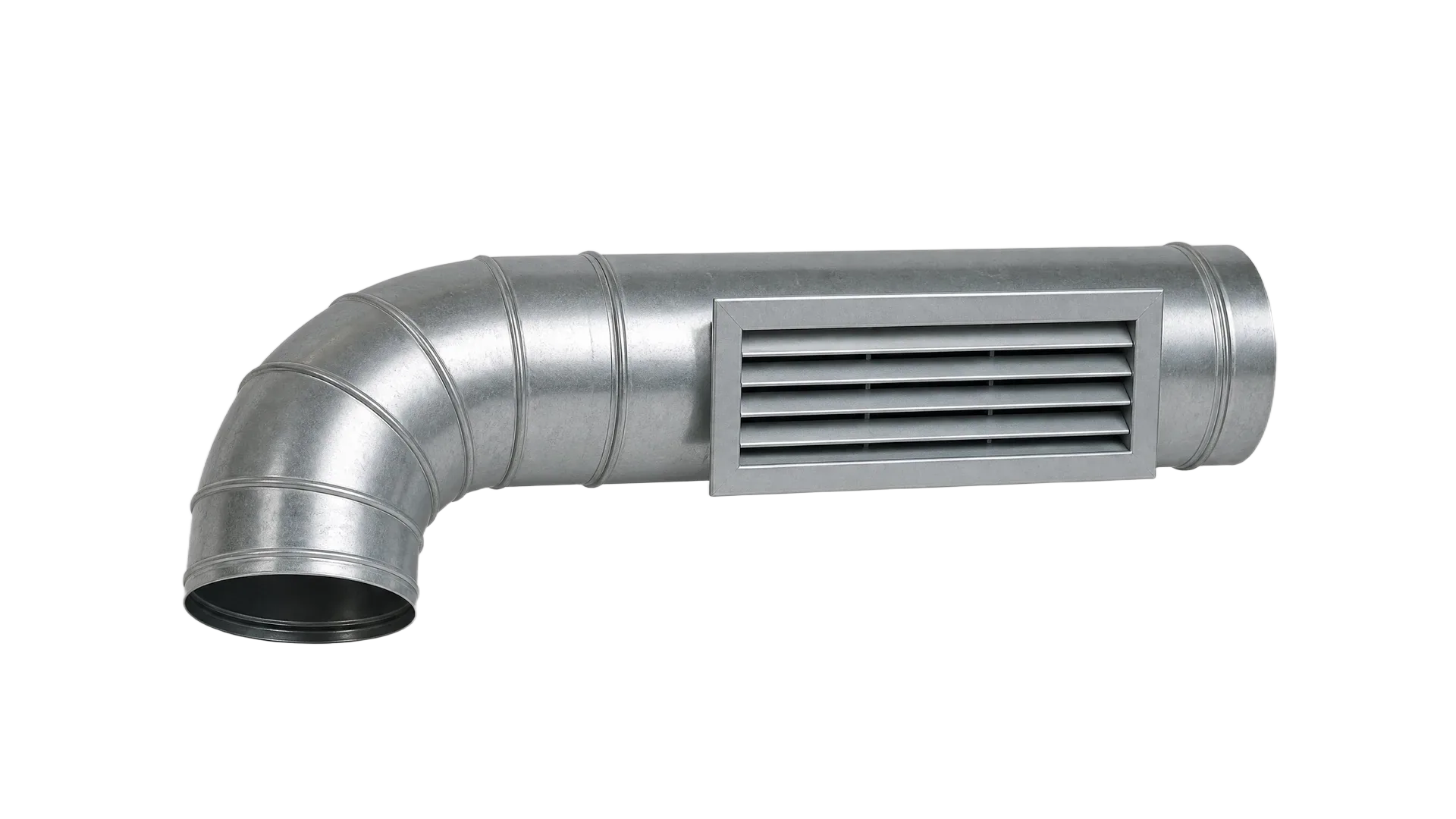
A galvanized steel round duct section with a 90-degree elbow and a rectangular louvered grille on its straight run, shown against a plain gray background.
Find my pro

It depends on what's going on with your system, but for most homes in Boise City it isn't something you need on a schedule. Duct cleaning helps when there's a real reason for it: a renovation that left drywall dust in the vents, signs of rodents, visible mold around a return, or a musty smell when the furnace kicks on. Boise's dry summers mean less of the moisture that feeds mold growth in ducts compared to damper climates, so that particular risk is lower here than it is elsewhere. Without one of those triggers, cleaning ducts that are otherwise working fine doesn't do much for your air or your furnace. Where it does matter is catching the reason behind the dust or the smell in the first place, since cleaning the ducts without fixing what's causing the problem means it just comes back.

So does your Boise City home actually need its ducts cleaned?

  • Half the homes here were built by 1997

    Half the homes in Ada County were built in 1997 or earlier. An older duct system has had more years to collect dust, and more chances for someone to have patched or added to it.

  • Heat runs October through May

    Furnaces here run October through May, about eight months of the year. Dust and debris sitting in the ducts gets pushed through the house for most of the year.

  • Cooling runs June through August

    Air conditioning runs June through August. Dust that settled in the ducts over winter gets stirred up again as soon as the AC kicks on for summer.

ACS 2020-2024 · NOAA nClimDiv 1991-2020

Empty basement with bare concrete walls and floor, a small window at left, and exposed wood joists with galvanized sheet metal ductwork and pipes overhead.

Clean, working ductwork

Metal ducts and flex pipe like this carry air without adding anything to it. No dust ring at the seams, no buildup inside the runs. Air moves through clean and the system doesn't have to work around anything blocking the duct itself.

Dusty sheet-metal HVAC ducts with a rectangular vent register run beneath wooden floor joists above an empty concrete-walled basement.

Ductwork that needs attention

This is what points to a real problem, not just age. Dark grime coating the duct like this usually means something upstream, a dirty filter, a leak drawing in dust from the crawl space, that's worth finding before cleaning it again.

What's making you wonder about your ducts

Dust that settles back on the furniture a day after you clean it is usually the first thing people notice. You might see a gray ring around the vent covers, or dust kicked up when the furnace or AC first kicks on for the season. Some homes get a musty smell through the vents, especially if there's been any water in the basement or crawlspace. If anyone in the house has had worse allergies or a stuffy nose that doesn't match the pollen count outside, that's worth paying attention to too. None of this means the ducts are the cause. But if the dust keeps coming back fast, or the smell doesn't clear, it's reasonable to want someone to look at what's actually in there before you decide it's nothing.

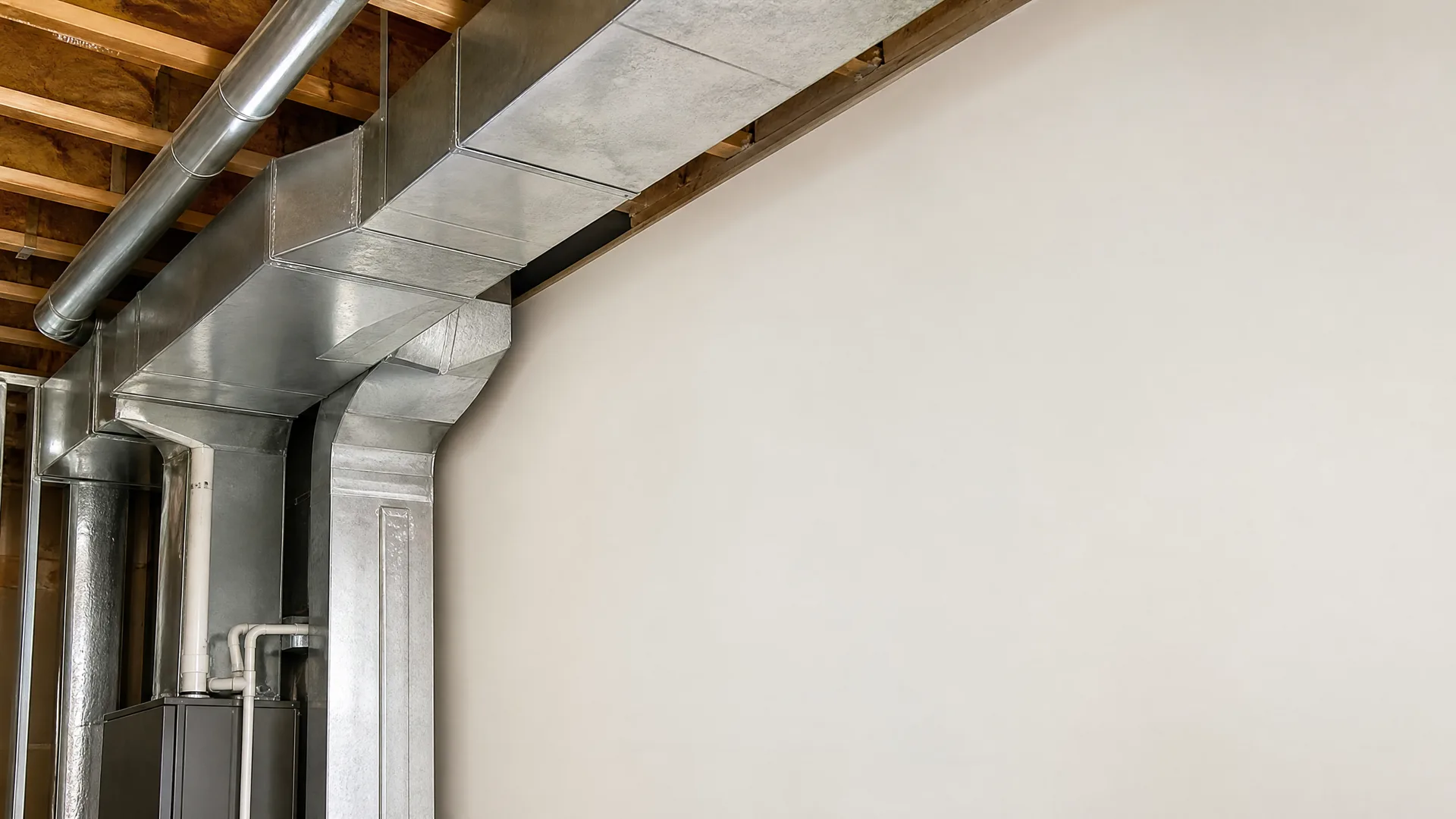
Galvanized sheet metal HVAC ductwork and insulated pipes running along a wood-framed basement ceiling beside a blank off-white wall.

What dust does inside a duct

Dust sitting in a duct doesn't move on its own. It takes air pulling across it, and the strongest pull in your system is right at the furnace and AC blower. That's why buildup shows up first at the seams closest to the unit and at the vent covers nearest the return. If you want to check your own system, a flashlight at the return grille will show you more than a guess ever could.

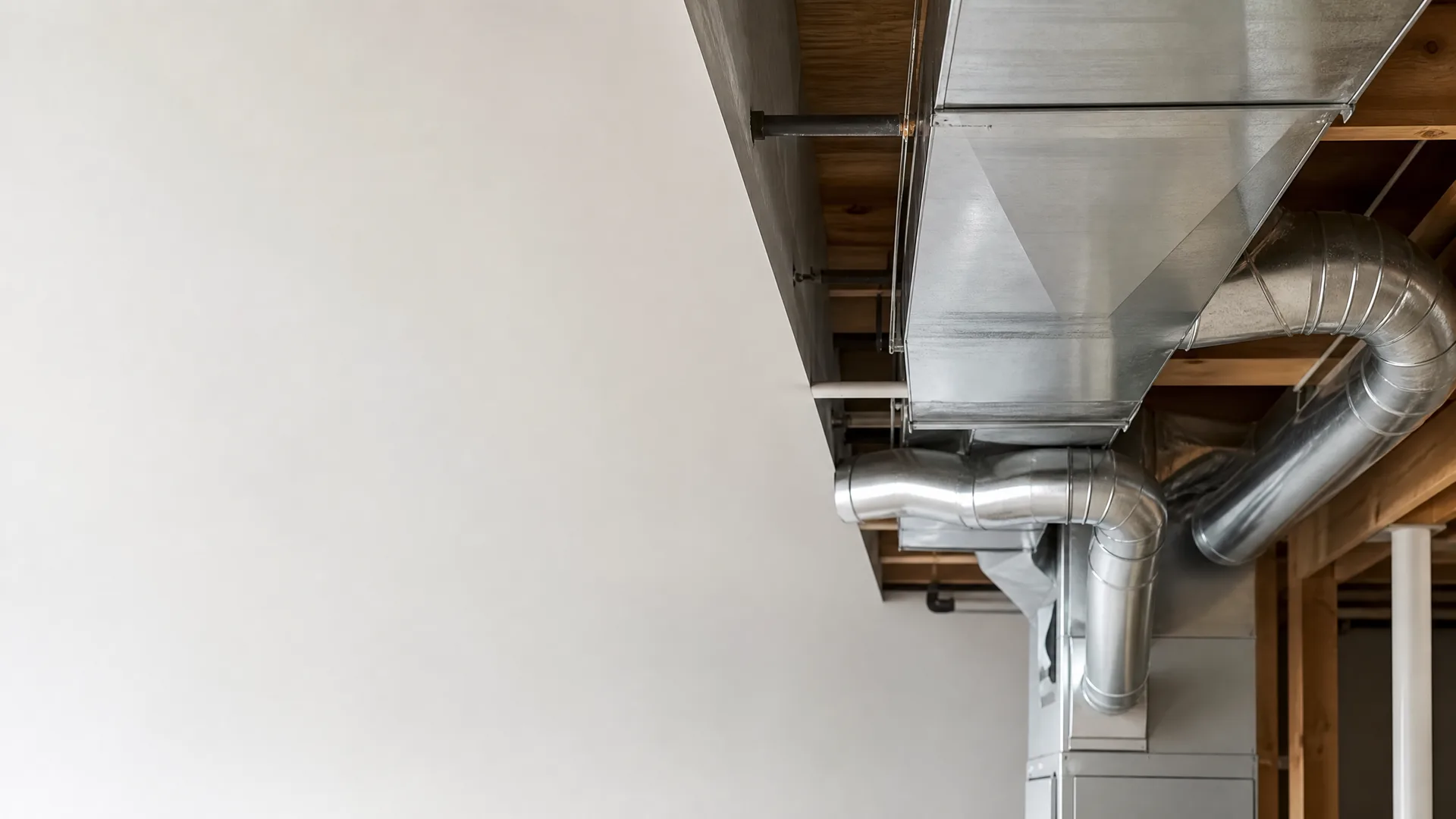
Galvanized sheet metal HVAC ductwork and flexible round pipes running along a wood-framed ceiling beside a plain white wall.

Why sealed runs matter more here

Ada County winters push furnaces hard for months, and a duct system that's gained a gap or a loose joint over the years will pull in attic or crawlspace air along with the dust there. That's a different problem than dust sitting in a clean run, and cleaning alone doesn't fix it. A contractor checking your ducts for cleaning will usually check the seams too, since the two issues show up together more often than not.

What actually happens inside the ductwork when it gets cleaned?

You've seen what's going on inside your ducts, or at least you're picturing it. What you probably haven't seen is what a contractor actually does once they're out there. It's not someone wiping down a vent cover with a rag. There's equipment involved, and the process goes through your whole system, not just the parts you can reach.

A contractor seals off your vents, then uses a vacuum and agitation tool to knock dust loose and pull it out through one collection point

The contractor covers each supply and return vent except one, then hooks a high powered vacuum to that opening so the whole duct system is under negative pressure. A brush or air whip goes into the runs ahead of the vacuum and knocks dust off the duct walls and seams, the same places where buildup collects first near the furnace and blower. The vacuum pulls everything loose out through the one open vent instead of letting it scatter back into the house. Once the main trunk lines are done, the contractor works through each branch run the same way. The furnace blower compartment and coil get cleaned separately, since that's where the air actually moves fastest and dust collects hardest.

A basement with a gray furnace on a concrete pad connected to large sheet-metal ducts running along an exposed wood joist ceiling, with PVC pipes and plastic sheeting on the walls.

Ductwork doing its job

That plenum and the round runs overhead move air from the furnace to every room. No rust streaks, no gaps at the joints, nothing hanging loose near the condensate line or conduit. Air goes where it's supposed to and nothing in the run is adding dust to it.

Galvanized sheet metal HVAC ductwork with a vent grille running along a wooden joist ceiling above a bare concrete wall.

Ductwork worth a second look

Those rectangular runs crossing the joists are exposed enough that you can see them from the basement. If a seam has pulled apart or a run near the register vent is crushed or disconnected, air is leaking into the joist space instead of reaching the room it was built for.

A woman in a cream turtleneck sweater stands beside a large window with snow outside, looking to the side, in a dimly lit living room with a sofa, lamps, candles and framed artwork.
A woman in a light gray cable-knit turtleneck sweater stands by a window looking outside at snow, with a living room behind her containing a stone fireplace, lit lamp, framed pictures, and a sofa with a plaid throw.
A woman in a dark gray turtleneck sweater stands by a window with snow visible outside, in a dimly lit living room with a gray sofa, lamp, framed painting, and dark-framed glass door.
A woman in a cream turtleneck sweater stands by a window looking out at falling snow and snow-covered trees, with a dimly lit living room containing a sofa, lamp and fireplace behind her.

A local pro for your ductwork cleaning

Your request goes to one pro, not a list of companies.

No fee to send it, and nothing to sign.

How a duct cleaning actually works

  • A contractor seals the duct openings in every room before starting so the whole system is tested under one negative pressure.
  • A vacuum collection unit connects to the trunk line and pulls air through the ducts at a strong, steady suction.
  • Each duct run gets agitated from inside with a brush or compressed air whip to knock buildup loose before it's pulled out.
  • Supply and return sides both get cleaned, since dust collects differently depending on which way the air is moving.
  • The furnace blower compartment and coil area get cleaned separately, since that's where dust mixes with moisture and sticks hardest.
  • Registers and grilles come off the wall or floor and get cleaned on their own before going back on.

A thorough duct cleaning isn't a tech running a shop vac along the floor registers. It starts with sealing off every duct opening in the house except the one where the vacuum connects, so the whole system pulls negative pressure from one end to the other. That vacuum unit is the real equipment here, strong enough to pull air the length of every run in the house, not a handheld unit. Once the suction is on, the contractor works each duct run with a brush or a compressed air whip fed in from the register end, knocking dust and debris off the metal so the vacuum can carry it out rather than just stirring it around. Supply runs and return runs get this treatment separately, since air moves through them differently and dust settles on different sides of the duct depending on which way it's traveling. The furnace itself gets attention too. The blower compartment and the coil sit right where dust meets condensation, and that combination sticks to metal in a way dry duct dust never does, so it takes its own cleaning pass rather than relying on suction from the vents. Last, the registers and grilles come off the wall or floor entirely. They collect a layer of dust and hair right at the surface that a vacuum run through the duct behind them won't touch, so they get wiped down or washed separately before they go back on. Done this way, the whole path air travels through your house gets covered, not just the parts you can see.

Unfinished basement with galvanized sheet-metal rectangular and round ductwork running along a wood-joist ceiling, two steel support columns, a small window, and a furnace unit against the far right wall.
Round and rectangular runs sit tight at every joint, carrying air from the furnace without feeding dust back into it.
An unfinished basement with bare concrete walls and floor, showing exposed wooden floor joists, pipes, wiring, and metal HVAC ducts with a vent grille overhead.
Joists and pipes crowd the same space where a gap or a loose run can leak heated or cooled air into the basement instead of the house.
  1. A contractor checks each room register and seals off supply and return openings.

  2. A vacuum unit hooks to the trunk line and draws the whole system under suction.

  3. A whip or brush works loose the dust built up inside each run.

  4. Loosened debris gets pulled through the ducts and out into the vacuum unit.

Basement ceiling with galvanized sheet metal rectangular ducts and round pipes running between wooden joists above a bare concrete wall and floor.
Before you get your ductwork cleaning
Unfinished basement with bare concrete walls and floor, showing exposed wood floor joists overhead with sheet-metal rectangular ductwork, insulated flexible ducts, and pipes.
After you get your ductwork cleaning

Skip it for now

If your ducts are sealed and nothing's been disturbed, cleaning won't do much. Changing the filter on time does more for your air than a cleaning would.

Find a licensed ductwork pro

Get it looked at

If you've had rodents, a renovation, or visible mold near a vent, a contractor can tell you whether cleaning will actually fix what you're seeing.

Find a licensed ductwork pro

Power here costs 11.78 cents per kilowatt-hour

At 11.78 cents per kilowatt-hour, running your blower motor longer than it needs to doesn't hit your bill that hard. Clogged ducts make the furnace and AC push harder for the same airflow, but here that strain shows up more in wear on the equipment than in what you pay for power.

EIA-861 2025

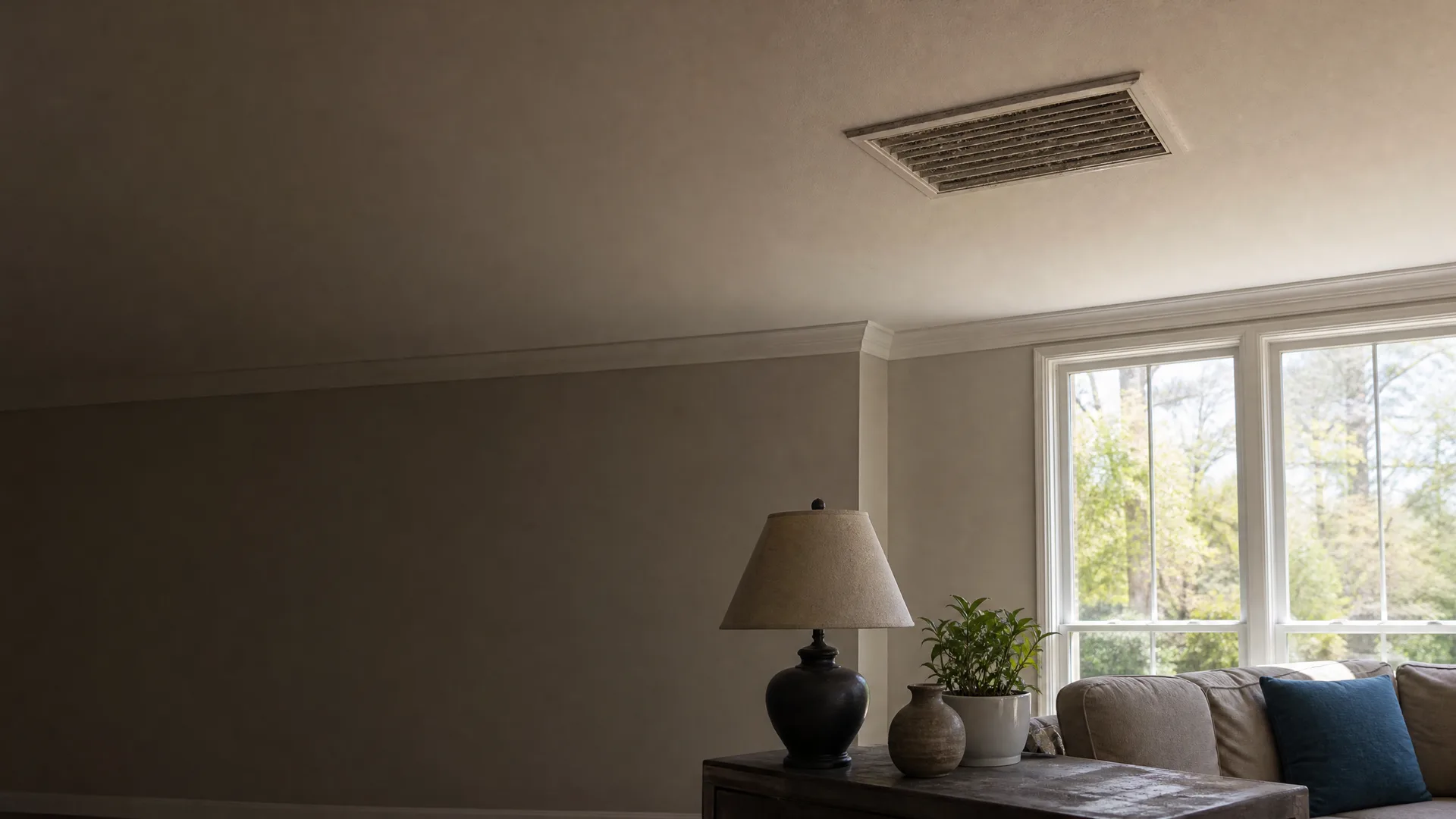
A ceiling air vent in a living room with beige walls, a table lamp and potted plant on a wooden console, a sofa with a blue cushion, and a window showing green trees outside.

It's late April, and the afternoon sun is coming in through the window behind the couch. You're on the floor folding laundry, and the light catches the ceiling vent above you just right. There's a gray ring around the grille, thicker on one side where the air comes out. You run a finger along the coffee table and it's dusty again, even though you wiped it down yesterday. The furnace kicks on for a few minutes, the air moves, and a little more settles on the lamp shade next to the couch. You make a note to deal with it and go back to the laundry.

A woman stands in the open front doorway of a single-story house with a covered porch, stone column bases and a dormer window, facing a man in a dark cap and gray polo shirt seen from behind in the foreground.

So is it worth it?

For most homes around Boise City, duct cleaning isn't something to do on a schedule. It's worth it when there's a reason: a renovation, rodents, mold near a vent, or a system nobody's looked at in years and might have problems beyond dust. Short of that, a clean filter changed on time does more for your air than a cleaning would.

If you've got a reason, the next step is having someone who works on duct systems in Ada County every season take a look at yours. A contractor who does this locally knows what tends to go wrong in homes built when yours was, and what's worth fixing versus leaving alone. You'll hear from one contractor, not a handful of them, so you can ask what you're actually dealing with and get a straight answer about your own ductwork.

A living room corner with a beige upholstered armchair holding navy and striped cushions, a small round wooden side table with a carved bowl and a potted green plant, a framed landscape picture on a pale wall, built-in shelving, and a curtained window.
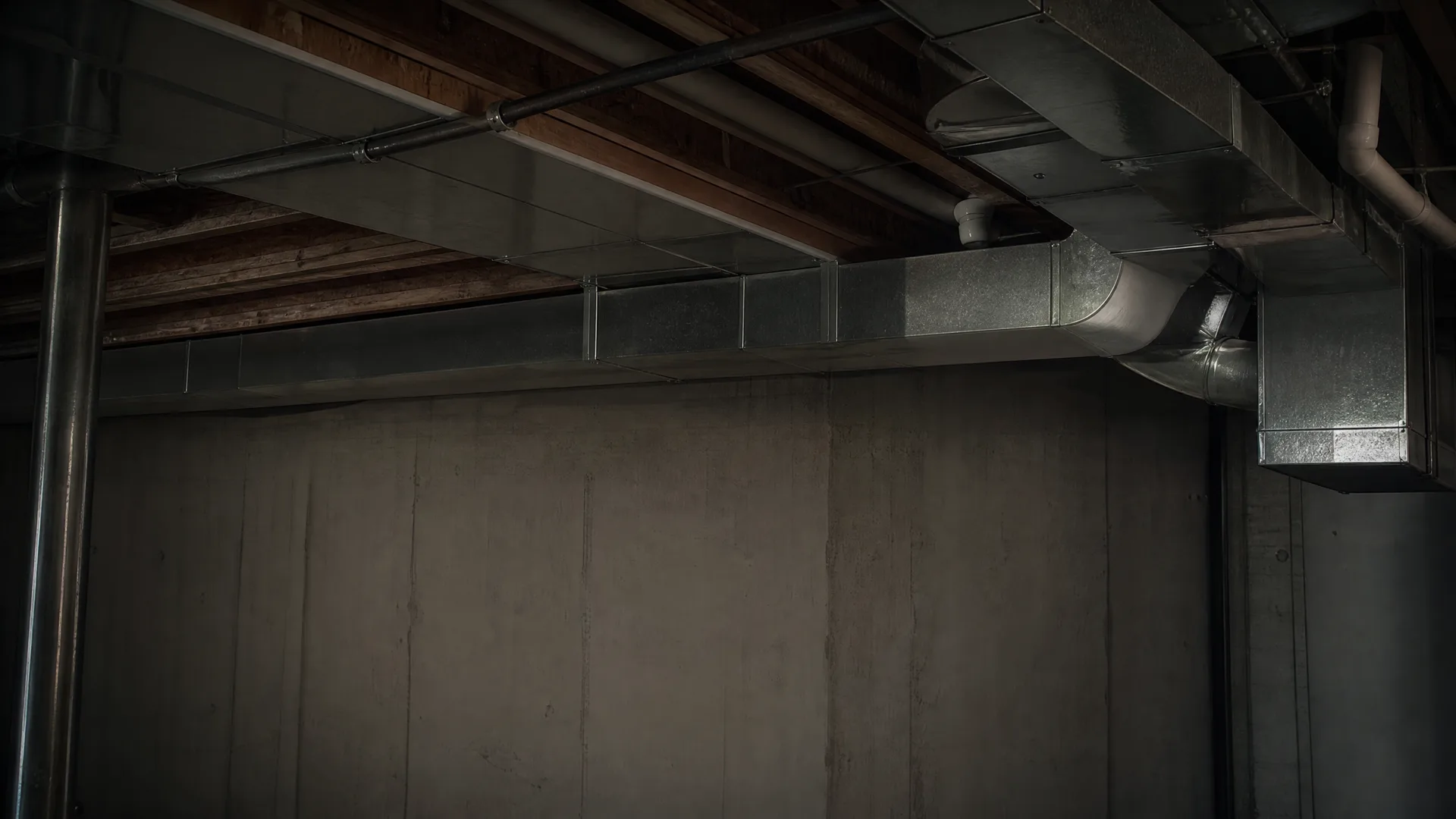
Dimly lit basement interior with galvanized sheet-metal ductwork and round pipes running along wooden floor joists above a bare concrete wall.

A pro who works on ducts

The pro who reaches out is licensed in Idaho.

Duct and vent cleaningDucts or ventsAda County, ID
Step 1 of 2

What ZIP code is the job in?