Mini Split Installation in Idaho Falls, ID
Tell us about the house, and a licensed contractor who covers Bonneville County will get in touch.
Tell us about the job
It takes about a minute.

Ten months of heat, one job that matters most
Idaho Falls needs heat September through June. That is ten months of the year the mini-split has to work, with winter nights averaging 15°F from December through February. A heat pump has to pull warmth out of air that cold, night after night, for most of the year.
Summer only averages 77°F in the afternoon, so cooling asks little of the system here. The real test is the ten-month stretch of heat, and any unit installed new has to meet the federal minimum of 7.5 HSPF2 for heating along with 14.3 SEER2 for cooling. That is the floor. In a place where heat is the job most months of the year, how well a unit clears that floor is what decides how the house feels in January.
- 10 months
- September through June, your system heats
- 15°F
- the average winter night it heats against
- 77°F
- the average summer afternoon it cools against
Idaho requires HVAC contractors to hold a state license.
The license is issued by the state's HVAC Board, and it belongs to the contractor, not to any single job. That means the person or company installing the mini-split had to qualify to the state once, not each time they take on new work. It also means the state keeps a record of who they licensed, so the credential is tied to a name, not just a business card.
For the mini-split going in at your home, the license tells you the contractor is the one the state holds accountable, but the installation itself still needs to be checked. In most cities and counties in Idaho, putting in a mini-split needs a permit from the local building office and an inspection once the work is finished. That inspection is what confirms the unit was installed correctly, separate from whatever the contractor's license already covers.
Sources: Idaho Legislature · Idaho Division of Occupational and Professional Licenses
- Is a mini split worth it?
- For most homes here, yes, especially since heat is needed ten months of the year. A mini split uses a heat pump to move heat instead of burning fuel to make it, so it can heat efficiently even as temperatures drop toward winter lows. Many models keep working well below freezing, which matters when your winter nights average 15°F. Whether it makes sense for your house depends on your current setup and what rooms you need covered, so a contractor should look at the specific home before you decide.
- How many rooms can a mini split cover?
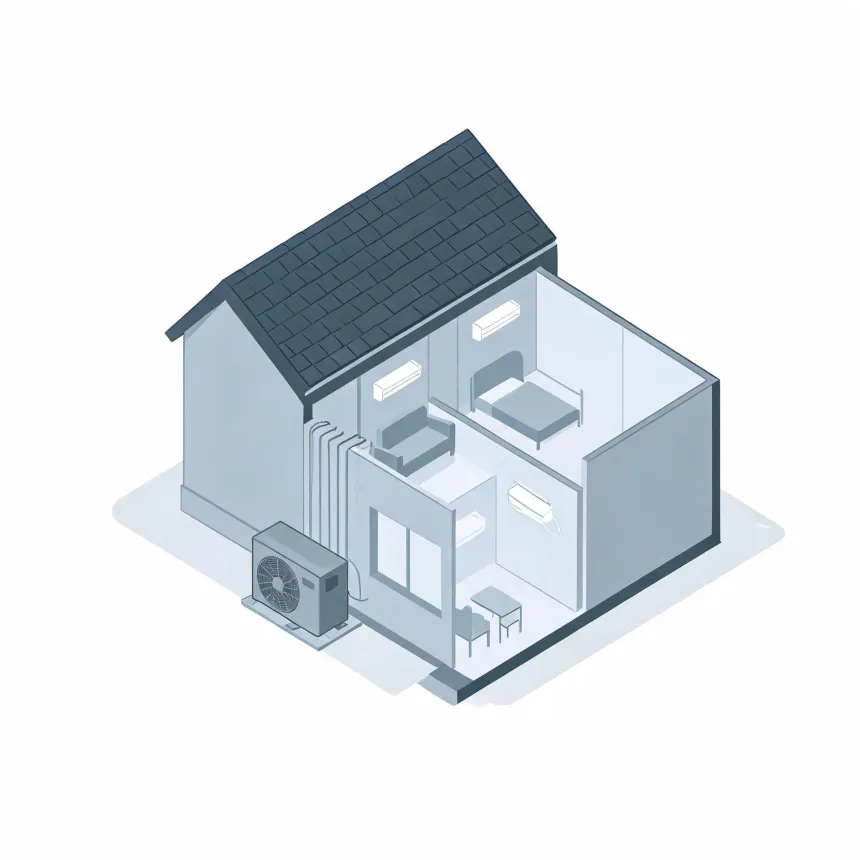
- A single outdoor unit can run one indoor head or several, depending on the system. Single-zone systems heat and cool one room or open area. Multi-zone systems connect several indoor heads to one outdoor unit, with each head controlled on its own thermostat so different rooms can run at different settings. How many zones your house needs comes down to room sizes, layout, and where heat loss is worst, which is something a contractor has to measure in person.
- Can a mini split heat a whole house?
- It can, but it takes the right number of zones placed where the heat loss is greatest. A single indoor head warms the room it's in and whatever space is open to it, not the rooms down a hallway or behind closed doors. Whole-house coverage usually means one outdoor unit feeding several indoor heads, sized for how cold it gets here in the winter. Given that homes in this area need heat from September through June, sizing the system correctly for your coldest nights matters more than it would somewhere milder.