A broad sagebrush plain with scattered yellow-flowering shrubs leads to a dark forested mountain ridge under a partly cloudy sky.Find a dryer vent pro

Signs of a clogged dryer vent in Coeur d'Alene, ID

Get matched with someone who does this kind of work in Kootenai County.

A load that used to dry in an hour now takes two, or three, and the clothes come out hot but still damp. That's usually the first thing you notice. The outside vent hood barely moves when the dryer runs, or the laundry room gets warmer than it should. Lint shows up around the dryer drum or behind the machine when you pull it out. Any one of these points the same direction: air isn't getting out the way it's supposed to.

In Kootenai County, that matters more than it might somewhere else. Summers here run hot and dry, and a dryer fighting a blocked vent runs hotter and longer than it's built for. Most homes in the area heat with gas, and a gas dryer pushes combustion byproducts out through that same vent line. When the line is clogged, that air has fewer places to go.

You don't have to figure out whether what you're seeing is a clogged vent, a bad lint screen, or something else in the line. That's a judgment call that's easier to make once you've got someone looking at the actual vent run, not just guessing from the symptoms.

Sending the form here doesn't commit you to anything. It gets your situation in front of a contractor who works on dryer vents in this area, and they'll follow up with you directly. From there it's a conversation, not a job you have to manage on your own. You've already done the hard part, which is noticing something's off. The rest is someone else's job now.

Why does my dryer take two cycles to dry clothes?

It's annoying enough to notice. You run a normal load, and an hour in the clothes are still damp, so you run it again. Maybe it's been happening for a few weeks now, maybe it just started. You're not sure if it's the dryer itself giving out or something else going on, but running every load twice isn't something you want to keep doing all winter.

A blocked vent, not the dryer, is the usual cause

A dryer works by pushing hot, damp air out through the vent while pulling fresh air in. When lint builds up in that vent, the air has nowhere to go, so the moisture sits in the drum instead of leaving the house. The dryer still heats, still tumbles, but the clothes stay wet because the damp air just isn't being carried away anymore. This is why the fix is rarely a new dryer. Most machines run for years past the point where the vent should have been cleaned. If both cycles leave clothes damp and the first few minutes of each one feel hotter than usual in the laundry room, that's the vent telling you it's full.

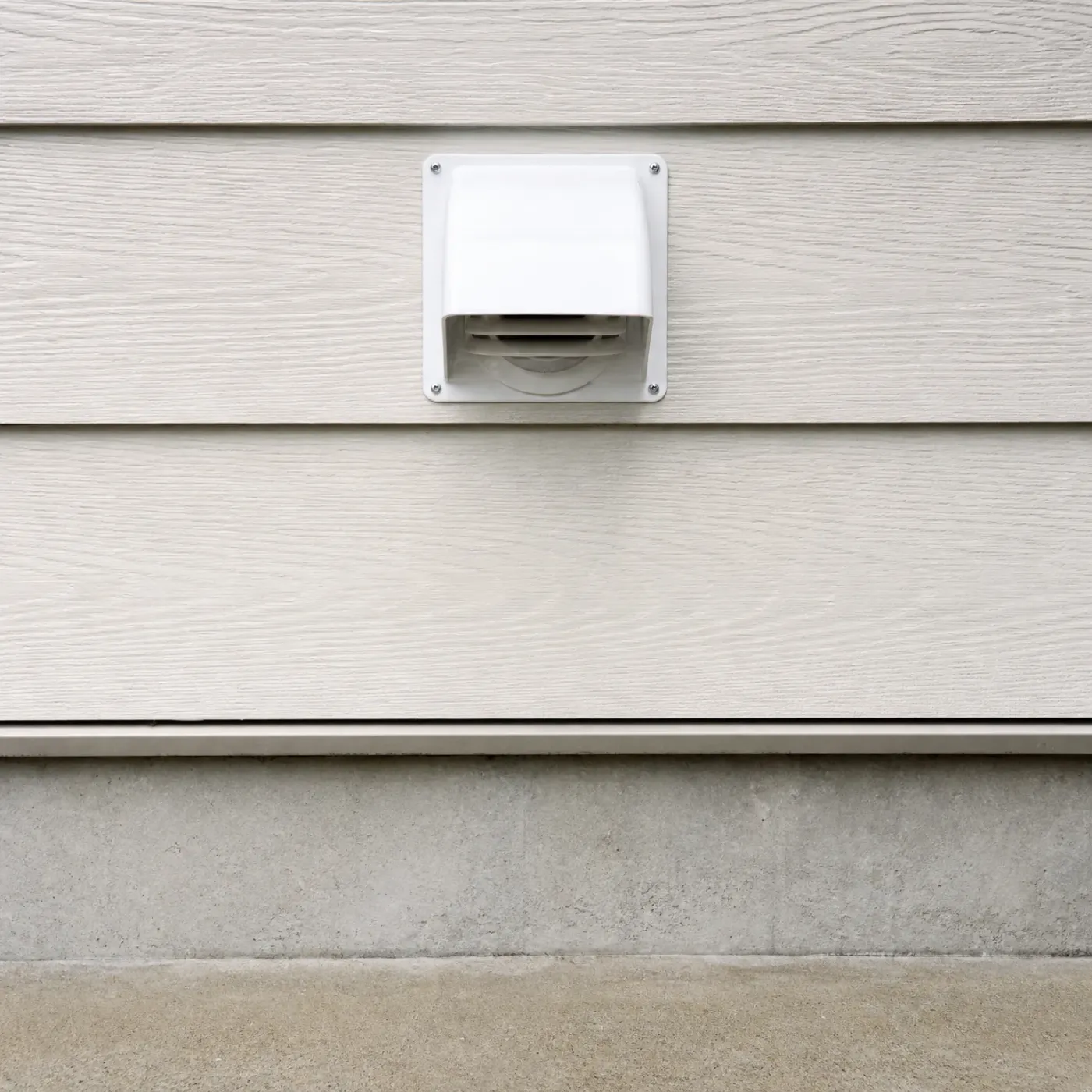
A white hooded dryer vent with a grille mounted on tan horizontal lap siding above a concrete slab.

Vent clear and open

Air pushes the flap open wide and shuts it down once the dryer stops. Walk outside while a load is running and you'll feel a strong, steady stream of warm air coming out. That's what lets a load finish in one cycle instead of two.
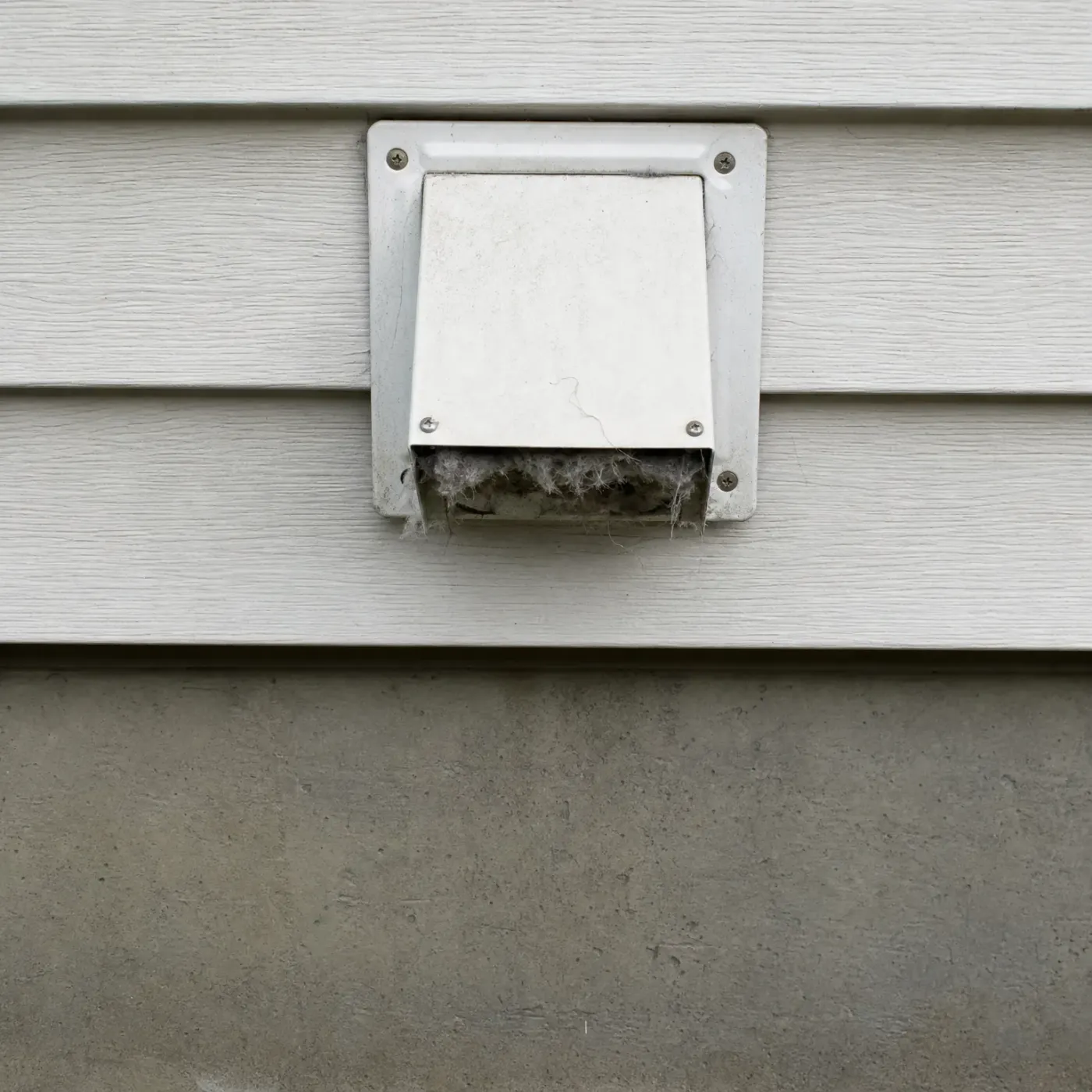

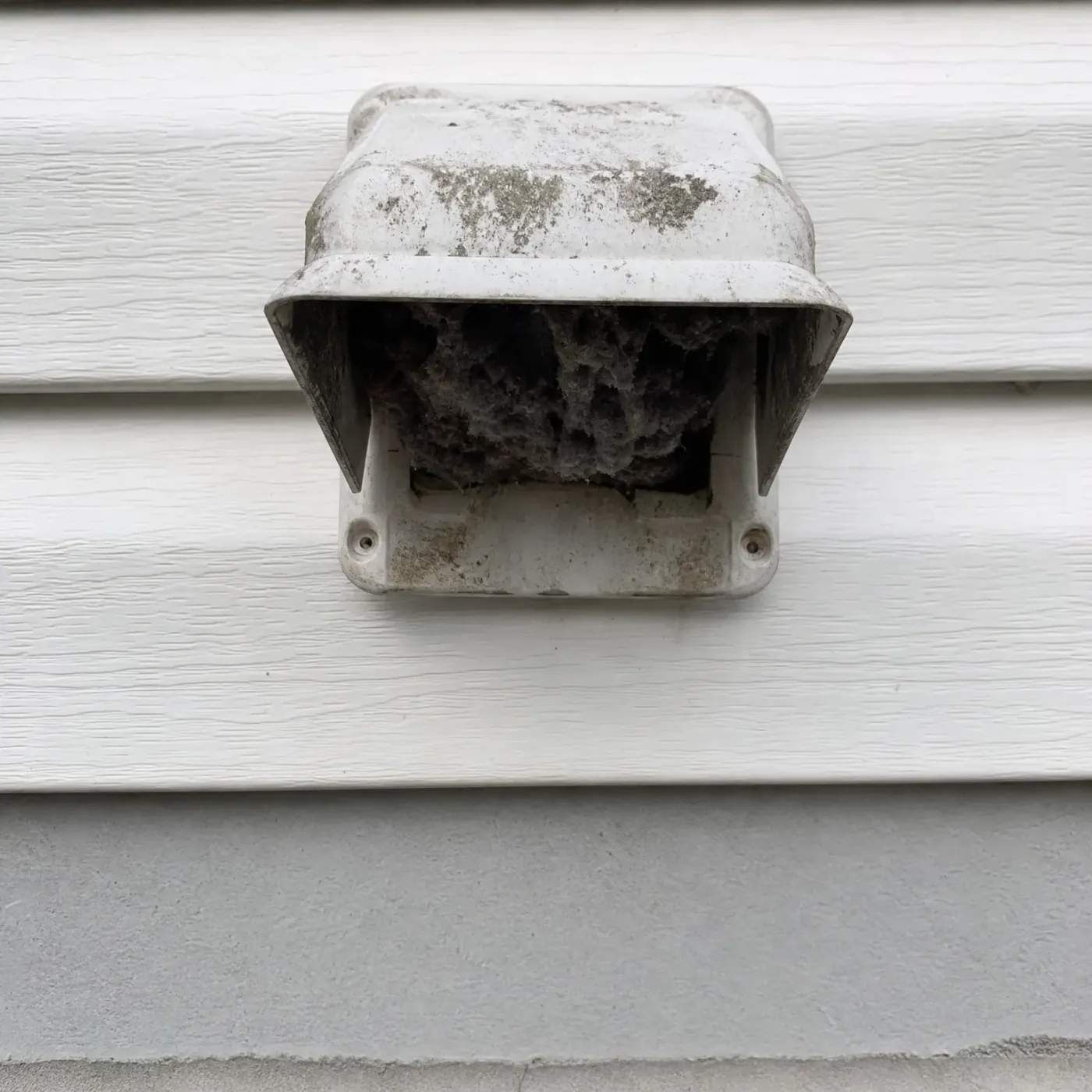
A white plastic dryer vent hood with a hinged flap mounted on light grey horizontal lap siding, with lint clogging the opening beneath the flap and a concrete foundation wall below.

Vent packed with lint

The flap sits propped open because lint has built up behind it, so it never closes all the way. Outside air and pests can work their way in through the gap. Inside, the dryer is pushing against that blockage every time you run it.

Why does a clogged vent matter more for your house?

  • 2.53 people per household on average

    Most Kootenai County households run 2.53 people, which means more laundry loads a week and more lint moving through the vent to catch somewhere.

  • Half the homes here were built by 1996

    Half the homes here were built in 1996 or earlier, so the vent run and hood on a lot of these houses have had decades to collect lint and sag.

  • Power here costs 12.31 cents per kilowatt-hour

    Power here runs 12.31 cents per kilowatt-hour, cheap enough that a dryer running two cycles instead of one still adds up on the bill without you noticing.

ACS 2020-2024 · EIA-861 2025

Why lint builds up so fast

Lint doesn't just come from the trap. A good amount of it slips past the screen and rides the airflow down the vent line, where it catches on screws, on bends in the duct, or on the flap itself. Over time that catch point narrows the path air can move through. The dryer still runs the same, but less air gets out, so less moisture leaves with it. That's why the clothes stay damp even though nothing about the cycle changed.

Why a long duct run adds risk

The farther the laundry room sits from an outside wall, the longer the vent run has to be to reach it. A longer run means more turns, and every turn is a place lint can settle instead of riding straight through. A short, straight shot to the outside clears itself out more easily than a run that bends twice through a wall cavity or down past a foundation. If your laundry room is tucked away from an exterior wall, the vent behind it is working harder to move the same air.

An older man with gray hair and a beard, wearing a dark coat flecked with snow, stands smiling in a dimly lit home hallway with lamps, a framed picture, and a wooden door.
A gray-haired, bearded man in a dark coat dusted with snow stands just inside an open door of a warmly lit home, looking off to the side.
An older bearded man in a dark snow-dusted coat and gray scarf stands just inside a dimly lit home entry, with a framed picture, lit table lamp, and an adjoining room with a fireplace behind him, and snow visible through the open door.
A gray-haired bearded man in a dark coat and scarf dusted with snow stands smiling in a dimly lit entryway with a white front door, a side table with a lit lamp, an oval mirror, and a patterned rug.

Get matched with a dryer vent pro in Kootenai County

A clogged vent is a fire risk before it is a comfort problem, and that is what moves this from "get to it eventually" to "handle it now." Lint is fuel, and a dryer running hot air into a line that can't clear itself is exactly the setup house fires start from. You've already noticed the long cycles and the weak airflow at the hood. The next sign, if you wait, isn't something you'll see in the laundry room. Coeur d'Alene summers are dry, and dry lint catches faster than damp lint does. Winter doesn't make it safer either, since the dryer still runs the same loads whether it's July or January. A contractor who clears vents for a living can tell you in minutes whether yours is a quick clean or something more, and that's one less thing on your list once it's out of your hands.

What a clogged vent costs you

A dryer fighting a blocked vent runs longer to finish the same load, and that time adds up across a year of laundry. The motor and heating element work harder for longer stretches too, which wears them down faster than they would otherwise. You might also notice the outside of the dryer or the exhaust line feels hotter than usual partway through a cycle. None of this shows up as one big event. It shows up as a dryer that needs replacing sooner than it should have, and as higher power bills every month it runs long, even with power priced as low as it is here in Kootenai County.

What it puts at risk in your house

Heat has nowhere to go when a vent is blocked, so it builds up inside the duct and around the dryer itself instead of venting outside. That trapped heat is what starts dryer fires, not the dryer running normally. If your laundry room is near bedrooms or sits off a hallway with little airflow, a blocked vent means that heat and the smell of hot lint build up in a space you walk through every day. It's also worth checking the vent hood outside for lint caught in the flap or on the screen, since that's often the first visible sign something is narrowing the line.

A woman with dark shoulder-length hair sits wrapped in a gray fleece blanket on a sofa with an open book on her lap, beside a lit lamp and a dark window.
A woman in a cream knit sweater sits in an armchair indoors, eyes closed and smiling, beside a window showing yellow and orange autumn foliage, with a mug on a wooden side table and shelves holding vases behind her.

A dryer only pushes air one way, out through the duct to the damper outside. When something narrows that path, the pressure backs up all the way to the drum, and the dryer has no way to tell you except by running longer and hotter. Inside the cabinet, near where the exhaust duct connects, there's a thermal fuse whose only job is to blow if that hot air can't get out fast enough. If you've replaced that fuse more than once, the fuse was never the problem. The duct itself matters too. Rigid or semi-rigid metal duct is standard for a reason: flexible foil duct sags between the studs, and lint settles in every low spot it creates. Outside, the damper is the flap that swings open when the dryer runs. Go out and check it while a load is going. A strong push of air holds it open. A weak flutter means something between the drum and that flap is already restricting flow, and the blower is working harder than it was built to.

How the vent actually fails

  • Airflow in a dryer only moves one direction, so a blockage anywhere downstream backs up pressure all the way to the drum.
  • The thermal fuse sits near the exhaust duct inside the dryer and is built to blow if hot air can't escape fast enough.
  • A dryer that trips its thermal fuse repeatedly is usually telling you the vent, not the fuse, is the actual problem.
  • Standard vent runs use rigid or semi-rigid metal duct because flexible foil duct sags and catches lint at every low point.
  • The outside flap is called a damper, and a weak outward push against it is the clearest sign the line is restricted.
  • Every extra foot of clogged duct forces the blower wheel to work against more resistance than it was sized for.
A white plastic dryer vent hood on horizontal lap siding, clogged with thick gray lint and dirt, above a lighter concrete foundation wall.
Before you get your dryer vent cleaning
A white hooded dryer vent with a louvered flap mounted on beige horizontal lap siding above a concrete foundation wall.
After you get your dryer vent cleaning

2.53 people per household on average

At 2.53 people, most households here run a load of laundry most days. That's steady lint moving through the same vent line week after week, with no break long enough for a partial clog to go unnoticed before it becomes a full one.

ACS 2020-2024

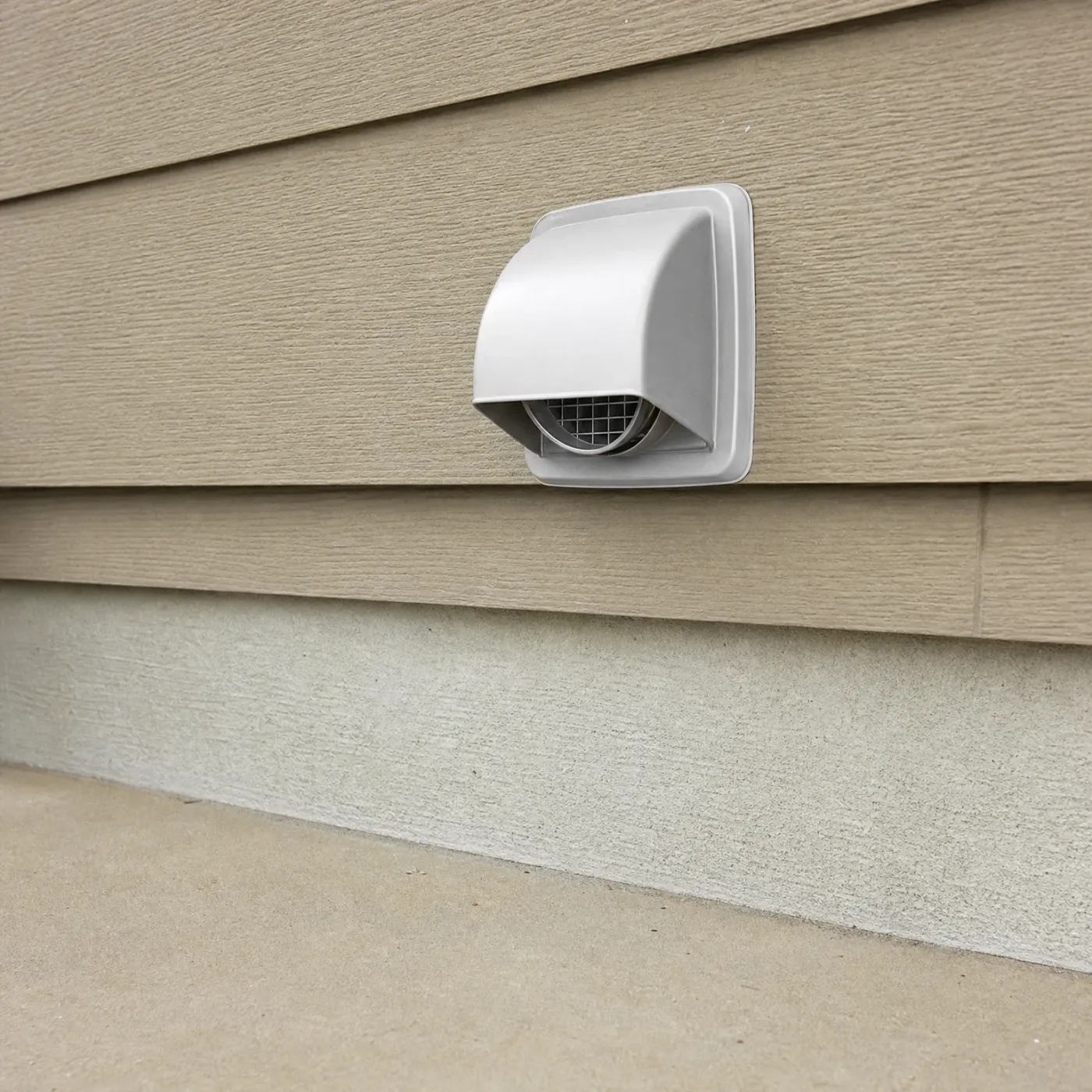
A white plastic hooded dryer vent cover mounted with screws on beige horizontal lap siding, next to a plain pale wall surface.

A short run, cleared early

Someone cleans the trap after every load and checks the outside hood a couple times a year. The dryer still finishes a towel load in one cycle, same as it did the day it was installed. No burning smell, no hot top panel, nothing to think about. Catching a partial clog here means a brush and a shop vac handle it in a few minutes, not a full line replacement later.

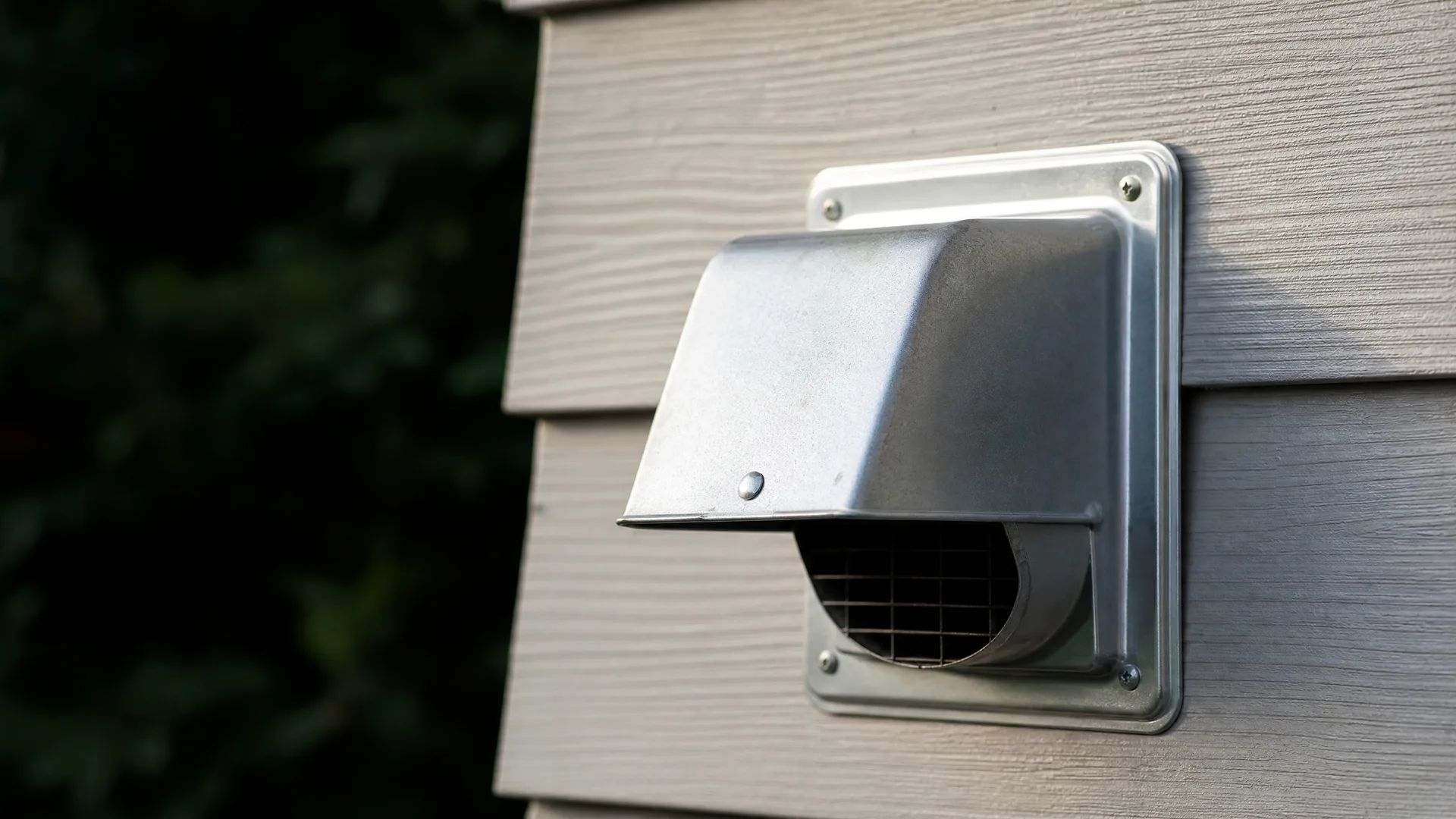
A metal louvered exterior vent hood screwed to a beige horizontal lap siding wall, with a blank light-colored surface filling the left half of the frame.

A long run, ignored

Nobody's looked at the vent since the house was bought. Lint has been building behind a bend in the line for a couple of years, a little more with every load. Cycles run long now, the laundry room runs warm, and the hood outside barely flaps. By the time someone notices, the clog isn't a quick clean anymore. It's packed the length of the duct, and clearing it takes more than a pass with a brush.

A dryer that takes two cycles to dry a towel load, a vent hood that barely moves air, a burning smell, or a laundry room that runs warmer than the rest of the house are the signs, and any one of them means lint has narrowed the line enough to matter. You don't need all of them before it's worth a look. Long Kootenai County winters and the daily laundry load a house this size runs mean a partial clog doesn't stay partial for long. Once you've noticed the signs, the next step is getting the vent cleared, not waiting to see if it gets worse. Submitting the form here hands that off: a contractor who cleans dryer vents gets your details and reaches out to you, so you're not the one calling around and explaining the problem from scratch. The dryer going back to a one-cycle load is the outcome. Getting there starts with sending the request.

A metal hooded dryer vent with a screened opening screwed to gray lap siding, with dark blurred foliage in the background.

Find a dryer vent cleaning pro in Kootenai County

Duct and vent cleaningKootenai County, ID
Step 1 of 3

What kind of equipment?