Why your furnace is blowing dust in Idaho

A local pro who services furnaces gets in touch about the tune-up.

Request a pro

Why is my furnace blowing dust into the house?

Dust coming out of the vents when the furnace kicks on is usually tied to the filter and the long dry stretch Idaho summers put systems through. After months of heat with the furnace sitting idle, the first weeks of running it again in the fall often come with a dusty smell or a visible haze near the registers. You want to know if that's normal or a sign something's wrong before you're running it every day through the winter.

A dirty or clogged furnace filter is pushing dust past itself and into your ducts

When the filter is packed with dust, the furnace starts pulling air around the edges of it instead of through it, and that unfiltered air carries dust straight into your ductwork and out the vents. Idaho's dry summers load filters up fast, since dry air carries more loose dust than humid air does, and a filter that sat untouched since spring is often the real cause. A loose filter that doesn't seal against its frame does the same thing even when it looks clean. Dust can also mean the ducts themselves have buildup that the first real airflow of the season stirs loose. Either way, it's worth checking the filter before assuming it's something bigger.

A gas furnace with two gray access panels stands against a plain wall in a basement, connected to sheet-metal ductwork, white PVC vent pipes, and a yellow gas line.

Why the filter matters most

A furnace filter traps dust before it reaches the blower and the ducts. If it's been sitting since spring, it may already be loaded or sized wrong for the system, and once the blower kicks on in October it pushes whatever didn't get caught straight through the vents. A filter checked and swapped before the first cold night catches most of this before it ever reaches a room.

A gray high-efficiency furnace in a basement corner with white PVC vent pipes, copper and black gas piping, and sheet-metal ductwork beside a plain white wall and wooden stair framing.

What months of idle ducts hold

Idaho's dry summers mean the furnace and ducts sit unused for close to half the year while the AC runs instead. Dust settles in that stretch, on the duct walls, in the blower housing, around the heat exchanger. The first heat cycle of fall stirs all of it loose at once. That first week of dusty air is common, and it usually settles down once the system has cycled a few times and pushed the loose buildup out.

Swap the Filter or Get It Checked

Change the filter yourself

  • A standard filter swap takes a few minutes and costs the price of the filter, nothing more.
  • You can check the size printed on the old filter's frame and match it exactly at any hardware store.
  • It clears the one thing you can see and reach without opening up the furnace cabinet.
  • It won't tell you if dust is getting past the filter frame or coming from a leaky duct joint.
  • If the blower or ducts are the real source, a fresh filter still won't stop the dust next week.

Have it looked at

  • A contractor can check whether the filter is sized right for your system, not just whether it looks clean.
  • They can look at the duct connections and the blower compartment for the gaps a new filter can't fix.
  • They can tell you if months of sitting idle over the dry summer left dust built up inside the cabinet itself.
  • This catches problems a filter swap hides, like a duct seam that's been leaking dust into the air all along.
  • It takes more of your evening than swapping a filter, and it means having someone come to the house.
A furnace in a dim basement with a dirty pleated air filter partially pulled out of its slot, beside a water heater and concrete walls and floor.

You're down in the basement on a Saturday afternoon, light coming in low through the one window near the ceiling. You pulled the filter to check it before the cold really sets in, and it's already grey, matted with dust along one edge. You slide it back a few inches, turn it under the light, slide it out a little more. Behind it the blower housing has a thin film on the edges you can see when you lean in close. You set the filter on top of the furnace and stand there a second, figuring whether to run to the hardware store now or just get someone out to look at the whole system while they're at it.

A pro who works on furnaces

Send the form, and lining up the furnace tune-up stops being yours to chase.

You're not committing to anything by asking.

Dust that clears up on its own

Some dust after the furnace first fires up is normal. It's been sitting since spring, and the ducts collected a little summer dust while the blower was off. Once air starts moving again, a few days of that working through the system and settling into the filter is nothing to worry about. If you changed the filter going into fall and the dust thins out after a week of regular runtime, the furnace is just clearing out what built up over the summer. No reason to call anyone for that. It's the ducts doing exactly what they're supposed to do.


Dust that keeps coming back

If the filter's been in since spring and you're still seeing dust weeks into using the furnace, that's a different problem. A filter that's the wrong size, or one that's been overdue for a change for months, lets dust through instead of catching it. So does a furnace that hasn't had its blower and coil looked at in a while. Idaho's dry summers leave a lot of dust sitting around waiting for that first cold snap, and a system that isn't maintained has nowhere to put it but back into your house. A technician can look at the whole system, not just the filter.

A woman in a dark gray sweater reclines on a light sofa with eyes closed and a slight smile, under a textured gray blanket with an open book resting on her lap, with a lit table lamp and plant in the background.
A smiling bearded man in a navy crewneck sweater sits at a dinner table with a glass of red wine, plates and glasses in the foreground, in a dimly lit room with a lamp and framed picture behind him.

A furnace moves air in a loop, not a straight line. The blower pulls air in through the return duct, pushes it across the heat exchanger to warm it, then sends it out through the supply ducts to every room. The filter sits in that return path, usually in a slot near the blower or at a return grille somewhere in the house. Its job is to catch what's in the air before that air ever touches the blower wheel. When a filter is clogged or missing, dust doesn't get stopped there, so it passes straight through and settles on the blower wheel itself. A blower wheel with dust built up on its blades doesn't move air as cleanly, and some of what's stuck to it breaks loose and travels out through the supply ducts into the rooms you heat. That's a different problem than a dirty filter, and swapping the filter won't fix it. Once dust is coating the wheel, it usually takes someone pulling the blower assembly and cleaning the blades by hand.

A smiling bearded man in a dark green hooded jacket and blue t-shirt sits on a couch in a living room with shelves, a potted plant, and a bowl of popcorn on a wooden table.
A smiling man in a green long-sleeved shirt sits on a beige sofa in a living room, with a bowl of popcorn in the foreground, a large potted plant and shelving behind him.
A smiling man in a dark blue T-shirt sits on a couch in a dimly lit living room with a bowl of popcorn and a remote on a wooden table, a lit floor lamp and bookshelves behind him, and windows showing greenery.
A smiling bearded man in a dark green long-sleeved shirt sits on a leather couch in a living room, with a bowl of popcorn and a remote control on a wooden table in the foreground.

Clean the ducts and call it done

Duct cleaning addresses dust sitting in the ductwork but does nothing for a filter that's undersized or a blower pulling air past the gaps around it every time the furnace runs.

A metal furnace with louvered panels stands against a concrete basement wall, connected to sheet-metal ductwork and a round flue pipe, with wooden framing posts and a pipe nearby.
Before you get your furnace maintenance
A gray gas furnace stands on a concrete basement floor, connected to sheet-metal ductwork, white PVC vent pipes, and a yellow gas line, with plastic sheeting covering the walls.
After you get your furnace maintenance

What a dirty filter costs you

A filter loaded with dust doesn't just let more through. It makes the blower work harder to pull air through it, and that strain shows up on the parts around it. The blower motor runs longer to move the same amount of air. The heat exchanger can run hotter than it should. None of that happens overnight, but a furnace that spends the winter breathing through a clogged filter is working harder every single time it cycles on, whether anyone notices the dust or not.

What a tech checks that you can't

A filter swap handles the one part you can see and reach. A technician opens the cabinet and checks the blower wheel itself for dust buildup on the blades, which throws air out unevenly even with a clean filter in place. They check that the return duct connections are sealed, since a gap there pulls in attic or crawlspace dust that never touches the filter at all. That's the dust a filter change alone won't stop, because it's getting into the system downstream of where the filter sits.

Winter nights average 22°F statewide

Once those cold nights settle in, your furnace isn't cycling on and off anymore, it's running long stretches to hold the house at temperature. That's more air pulled through the filter, hour after hour, which pushes dust through faster if the filter's already loaded.

NOAA nClimDiv 1991-2020 county normals weighted by homes

A gray high-efficiency furnace in a basement with sheet-metal ductwork, white PVC vent pipes, metal plumbing lines, a condensate pump on the floor, and a window showing green trees outside.
A furnace running clean, with a filter rated for it and a blower that isn't straining to pull air past the gaps.
An older metal furnace with PVC and metal pipes stands on a concrete basement floor beside galvanized ductwork, with wooden stairs and a water tank in the background.
A furnace left to run as is, dust working loose around old joints and through a filter that stopped doing its job.
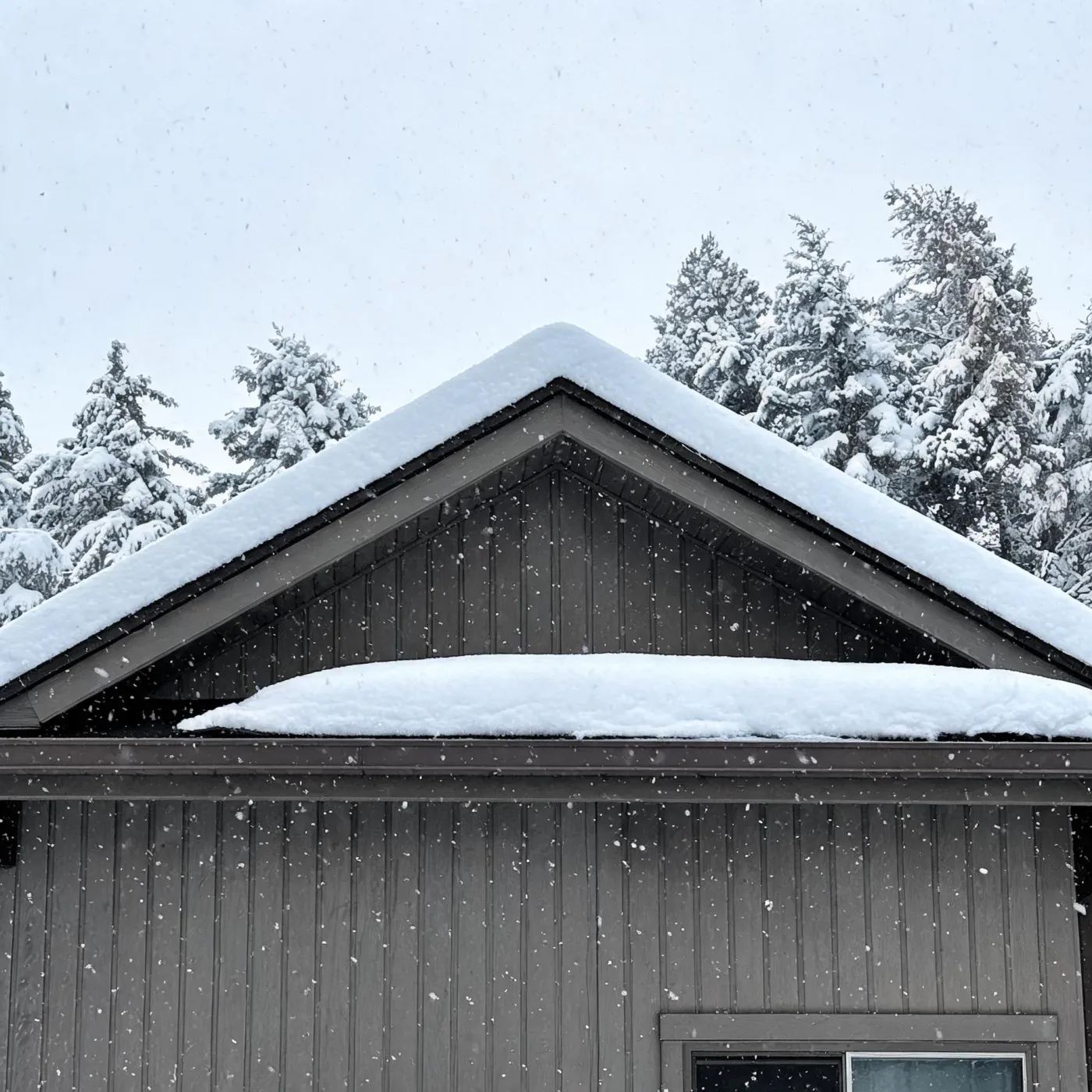
Snow-covered gable roof of a dark brown vertical board-and-batten house during falling snow, with snow-laden conifers behind it under a pale gray sky.

Statewide, winter nights average 22°F. That's the kind of cold that keeps a furnace running long after dark, not just cycling on for a few minutes and shutting off. Long runtimes mean more air pulled through the filter hour after hour, and if that filter's already loaded with the dust that built up over summer, more of it works loose and blows into the house. The colder the nights get, the harder the blower leans on a filter that may not be up to the job. Source: NOAA climate normals.

NOAA nClimDiv 1991-2020 county normals weighted by homes

A woman in a cream sweater and jeans stands in the open doorway of a white stucco house, holding the dark door, while a man in a dark quilted jacket seen from behind walks toward the entry past potted plants.

The dust is telling you something, not nothing

Dust blowing out of your vents has a cause, and it's almost always the filter or a blower pulling air where it shouldn't. Neither one fixes itself. The filter either fits and catches what it should, or it doesn't, and the furnace keeps running the way it's running until something changes that.

A maintenance visit gets a contractor looking at your furnace directly, not guessing from a basement window the way you have been. You fill out one form, and from there the work of finding someone who services furnaces near you is off your plate. A contractor who covers your area gets in touch, and you go from wondering what's loose in that ductwork to having someone who can actually check it. That's the part a filter swap on a Saturday afternoon can't give you.

Interior corner with a beige sofa holding a dark green and a light cushion and a textured throw, a potted small-leaved tree beside a white-framed window, and a dark shallow bowl on a wooden coffee table in the foreground.
A gray high-efficiency furnace with two access panels stands on a concrete basement floor, connected to sheet-metal ductwork and white PVC vent pipes, with wood framing and a gas line nearby.

Get your furnace to the right pro

Tune-up, service, or cleaningFurnace or heatingIdaho
Step 1 of 2

What ZIP code is the job in?